

HER2+ Breast Cancer
Latest News
Advertisement
Latest Videos
































































Advertisement
More News
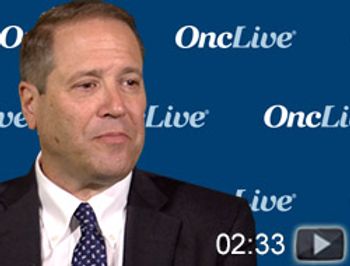
Adam M. Brufsky, MD, PhD, professor of Medicine, associate chief of Hematology/Oncology, co-director of the Comprehensive Breast Care Center, associate director of Clinical Investigation, University of Pittsburgh, discusses resistance to HER2-targeted therapy in breast cancer.

Ruth O’Regan, MD, provides insight on the evolving landscapes of ER-positive and HER2-positive breast cancers, and what regimens remain solid approaches for effective patient outcomes.
Ruth O’Regan, MD, division head of Hematology and Oncology in the Department of Medicine at the University of Wisconsin School of Medicine and Public Health, discusses the potential of future treatments for patients with HER2-positive breast cancer.

Wolfgang Janni, MD, PhD, discusses toxicity management with neratinib and other agents for HER2-positive breast cancer, as well as emerging treatments and impactful trials in the field.

Debu Tripathy, MD, discusses current and emerging treatment strategies in the neoadjuvant setting for patients with HER2-postive breast cancer.
Targeted therapies have improved outcomes for HER2-positive breast cancer, which is characterized by an aggressive tumor phenotype and lower overall survival. However, questions remain on how to predict which patients will benefit from neoadjuvant or extended HER2-targeted therapies and how to treat patients with triple-positive breast cancer.
Wolfgang Janni, MD, PhD, University of Ulm, discusses the future of treatments for patients with HER2-positive breast cancer.







Kent Osborne, MD, director, Dan L. Duncan Comprehensive Cancer Center, Baylor College of Medicine, discusses pertuzumab (Perjeta) in HER2-positive breast cancer.

C. Kent Osborne, MD, sheds light on the current and future treatment of HER2-positive breast cancer.
C. Kent Osborne, MD, director, Dan L. Duncan Comprehensive Cancer Center, Baylor College of Medicine, discusses targeting the HER2 pathway in breast cancer.

The FDA has scheduled an Oncologic Drugs Advisory Committee hearing for May 24, 2017, to discuss a new drug application for neratinib as a treatment for patients with HER2-positive breast cancer following prior treatment with postoperative trastuzumab, according to a statement from the developer of the TKI, Puma Biotechnology.
Wolfgang Janni, MD, PhD, University of Ulm, discusses challenges facing the treatment options for patients HER2-positive breast cancer.

According to results from the PAMELA trial, women with the HER2-enriched subtype of early-stage, HER2-positive breast cancer were more likely to have a pathological complete response when treated with dual HER2-blockade.

Investigators are seeking to determine whether adding tucatinib (ONT-380), a novel small-molecule HER2 inhibitor, to standard therapies will improve outcomes for patients with progressive metastatic HER2-positive breast cancer, including those with brain tumors.
Advertisement
Advertisement
Trending on OncLive
1
FDA Approves Tucatinib Plus Trastuzumab/Pertuzumab as First-Line Maintenance in Advanced HER2+ Breast Cancer
2
VIR-5500 Receives FDA Fast Track Designation in mCRPC
3
Iberdomide Plus Daratumumab/Dexamethasone Yields Significant PFS Benefit in R/R Myeloma
4
FDA Approves Atezolizumab Plus Chemo for Stage III dMMR Colon Cancer
5