


HER2+ Breast Cancer
Latest News
Advertisement
Latest Videos
































































Advertisement
More News
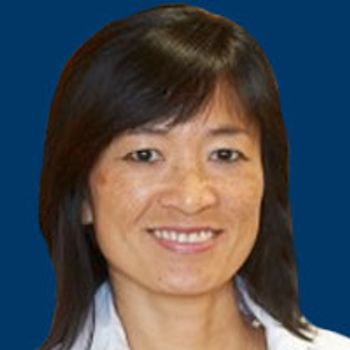
Chau T. Dang, MD, discusses several recent trials investigating novel treatment approaches for patients with HER2-positive breast cancer.

Sara Hurvitz, MD, medical oncologist, General Internal Medicine, Hematology and Oncology at UCLA, discusses steps needed to take in the field of HER2-positive breast cancer from a research perspective.
Chau Dang, MD, medical oncologist, chief, West Harrison Medical Oncology Service, Memorial Sloan Kettering Cancer Center, discusses the potential of neratinib as a combination treatment for patients with HER2-positive breast cancer.

Henry M. Kuerer, MD, PhD, professor of Surgery, PH and Fay Etta Robinson Distinguished Professor in Research, Breast Surgical Oncology, executive director, Breast Programs, director, Breast Surgical Oncology Fellowship Training Program, Department of Surgical Oncology, Division of Surgery, The University of Texas MD Anderson Cancer Center, discusses de-escalating surgery in the treatment of patients with breast cancer.
Denise A. Yardley, MD, senior investigator, Breast Cancer Research Program, principal investigator, Sarah Cannon Research Institute, discusses the unmet need for patients with HER2-positive breast cancer.

In terms of neoadjuvant therapies for patients with HER2-positive breast cancer, dual anti–HER2-directed agents seem to have the most benefit.

A 5-year assessment showed that neratinib reduced the risk of invasive disease recurrence or death by 26% compared with placebo as extended adjuvant therapy for patients with HER2-positive early stage breast cancer following 12 months of trastuzumab.

The biosimilar ABP 980 demonstrated similar pathologic complete response rates as the reference product trastuzumab (Herceptin) in a phase III study for patients with HER2-positive early breast cancer.

Denise A. Yardley, MD, discusses two novel agents on the horizon for HER2-positive breast cancer.
Erika P. Hamilton, MD, director, Breast and Gynecologic Cancer Research Program, principal investigator, Sarah Cannon Research Institute, discusses a phase Ib study examining ONT-380 in combination with trastuzumab emtansine (T-DM1) in patients with HER2-positive breast cancer, and what potential the combination has in the neoadjuvant setting.

Phase III results of the KRISTINE trial demonstrated that patients with HER2-positive early breast cancer had a significantly higher pathological complete response rate when they received the neoadjuvant regimen of docetaxel, carboplatin, and trastuzumab plus pertuzumab versus trastuzumab emtansine plus pertuzumab.
Francisco J. Esteva, MD, PhD, medical oncology, New York Langone Medical Center, discusses a phase III study of the biosimilar version of trastuzumab (Herceptin) in patients with HER2-positive metastatic breast cancer.

A phase III trial investigating the first-in-class immunotherapy vaccine nelipepimut-S (NeuVax) for the prevention of recurrence in early-stage breast cancer has been stopped due to futility.
Anees B. Chagpar, MD, associate professor of Surgery (Oncology) and director of The Breast Center at Smilow Cancer Hospital at Yale-New Haven, discusses how surgical oncologists should approach the treatment of a patient with HER2-positive breast cancer.
A marketing authorization application has been submitted to the European Medicines Agency for neratinib as a potential extended adjuvant therapy for patients with HER2-positive early stage breast cancer following 12 months of trastuzumab.

Advertisement
Advertisement
Trending on OncLive
1
FDA Approves Tucatinib Plus Trastuzumab/Pertuzumab as First-Line Maintenance in Advanced HER2+ Breast Cancer
2
VIR-5500 Receives FDA Fast Track Designation in mCRPC
3
Iberdomide Plus Daratumumab/Dexamethasone Yields Significant PFS Benefit in R/R Myeloma
4
FDA Approves Atezolizumab Plus Chemo for Stage III dMMR Colon Cancer
5