

Immuno-Oncology
Latest News
Advertisement
Latest Videos






























































Advertisement
More News
Pembrolizumab (Keytruda) is associated with an exceptional overall response rate in patients with relapsed/refractory Hodgkin lymphoma.
Robert Ferris, MD, PhD, vice chair for Clinical Operations, associate director for Translational Research, and coleader of the Cancer Immunology Program at the University of Pittsburgh Cancer Institute, discusses the CheckMate-141 trial, which found that treatment with single-agent nivolumab (Opdivo) reduced the risk of death by 30% and doubled 1-year overall survival (OS) rates compared with investigator's choice of therapy for patients with recurrent or metastatic head and neck squamous cell carcinoma (SCCHN).
At a minimum follow-up of 18 months, the combination of nivolumab and ipilimumab reduced the risk of disease progression by 58% compared with ipilimumab alone, and single-agent nivolumab lowered the risk of progression by 45% versus ipilimumab monotherapy in patients with advanced melanoma.
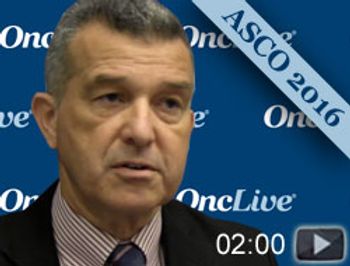
David A. Reardon, MD, discusses results of a cohort from the open-label CheckMate-143 trial, which explored the combination of nivolumab (Opdivo) and ipilimumab (Yervoy) in patients with recurrent glioblastoma multiforme (GBM).
Avelumab demonstrated clinical activity in patients with advanced or unresectable mesothelioma, with an overall response rate of 14.3%.
Treatment with single-agent nivolumab improved overall survival and objective response rates compared with investigator's choice of therapy for patients with recurrent or metastatic head and neck squamous cell carcinoma.
Single-agent nivolumab induced responses in 66% of patients with classical Hodgkin lymphoma who had progressed following autologous stem cell transplant and brentuximab vedotin.
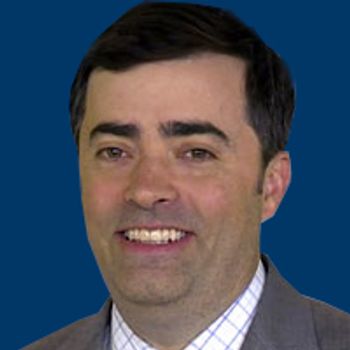
About one third of patients with advanced renal cell carcinoma who were treated with single-agent nivolumab in the second-line setting or later were still alive at 4 and 5 years in long-term follow-up data from phase I and phase II clinical trials.
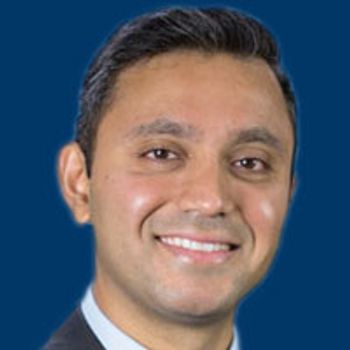
Patients with metastatic urothelial carcinoma who were ineligible for standard cisplatin-based chemotherapy achieved a 24% reduction in tumor size and had a median survival of 14.8 months after taking the immunotherapy agent atezolizumab (Tecentriq).

Bernard A. Fox, PhD, chief, Laboratory of Molecular and Tumor Immunology, Earle A. Chiles Research Institute at Providence Portland Medical Center, discusses the significance of the Immunoscore Validation Project.
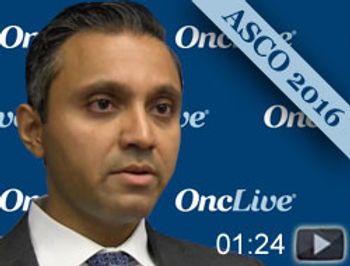
Arjun V. Balar, MD, assistant professor, Department of Medicine, co-leader of the Genitourinary Cancers Program, discusses updated results of cohort 1 of the IMvigor 210 study, which examined the efficacy of atezolizumab as first-line therapy in patients with cisplatin-ineligible locally advanced/metastatic urothelial carcinoma.
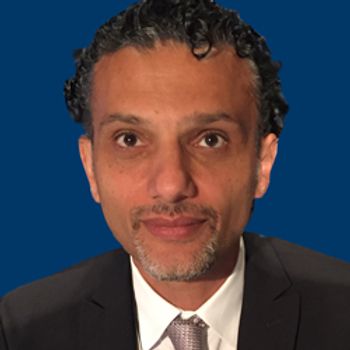
IMAB362 reduced the risk of death or progression by approximately 50% when added to standard chemotherapy for patients with CLDN18.2-positive advanced gastric cancers.
Nivolumab (Opdivo) as a monotherapy and in combination with ipilimumab (Yervoy) demonstrated promising antitumor activity in patients with high microsatellite instability (MSI-H) metastatic colorectal cancer.
Upfront treatment with the combination of nivolumab and ipilimumab demonstrated an objective response rate of 57% in patients with PD-L1-positive advanced non–small cell lung cancer.
The combination of the 4-1BB agonist utomilumab and the PD-1 inhibitor pembrolizumab was safe and effective as a treatment for patients with advanced solid tumors.
Two-year follow-up data showed sustained improvements in overall survival with nivolumab in pretreated patients with either nonsquamous or squamous non–small cell lung cancer in updated findings from the phase III CheckMate-057 and -017 trials.
Single-agent nivolumab demonstrated encouraging signs of activity with a mild adverse event profile for patients with recurrent glioblastoma multiforme.
Treatment with the combination of nivolumab and ipilimumab demonstrated a median overall survival of 7.7 months and a 1-year OS rate of 43% for patients with recurrent small cell lung cancer.
Hossein Borghaei, DO, chief, Thoracic Oncology, director, Lung Cancer Risk Assessment, associate professor, Department of Hematology/Oncology, Fox Chase Cancer Center, discusses 2-year follow-up results of the CheckMate-017 and -057 studies, which compared the efficacy of nivolumab (Opdivo) versus docetaxel in patients with advanced non–small cell lung cancer (NSCLC).

Advertisement
Advertisement
Trending on OncLive
1
FDA Approves Tucatinib Plus Trastuzumab/Pertuzumab as First-Line Maintenance in Advanced HER2+ Breast Cancer
2
Iberdomide Plus Daratumumab/Dexamethasone Yields Significant PFS Benefit in R/R Myeloma
3
FDA Approves Atezolizumab Plus Chemo for Stage III dMMR Colon Cancer
4
VIR-5500 Receives FDA Fast Track Designation in mCRPC
5