
Immuno-Oncology
Latest News
Advertisement
Latest Videos






























































Advertisement
More News
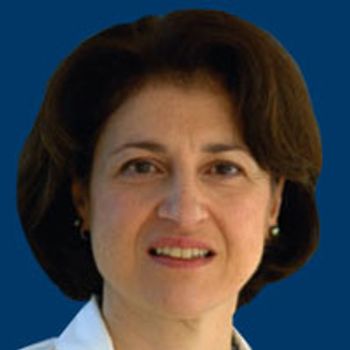
Suzanne L. Topalian, MD, discusses progress in PD-1/PD-L1 immunotherapies and the prospects for developing biomarkers to better identify patients who would benefit from the new agents.

The first prospective study to investigate the use of immunotherapy in patients with squamous cell carcinoma of the anal canal demonstrated promising results following treatment with nivolumab.
Joshua M. Bauml, MD, assistant professor of Medicine, Hospital of the University of Pennsylvania and the Veteran's Administration Medical Center, discusses the preliminary results of the KEYNOTE-055 study, which investigated pembrolizumab (Keytruda) after failure on platinum-based therapy and cetuximab in patients with head and neck squamous cell carcinoma.
David Spigel, MD, chief scientific officer, director, Lung Cancer Research Program, principal investigator, Sarah Cannon Research Institute, discusses the ongoing CheckMate-331 trial, which is investigating nivolumab (Opdivo) versus chemotherapy in relapsed patients with small cell lung cancer (SCLC) after first-line platinum-based chemotherapy.
Ranee Mehra, MD, discusses what the KEYNOTE-012 findings could mean for patients, the growing role for the immunotherapy agent in head and neck cancer, and what else is on the horizon for the treatment landscape.

The EMA's Committee for Medicinal Products for Human Use has granted a positive opinion for use of pembrolizumab (Keytruda) as a treatment for patients with locally advanced or metastatic PD-L1-positive non–small cell lung cancer.

The FDA has granted nivolumab (Opdivo) a breakthrough therapy designation for the treatment of patients with unresectable locally advanced or metastatic urothelial carcinoma after the failure of a platinum-containing regimen.
Robert Andtbacka, MD, associate professor in the Division of Surgical Oncology, Department of Surgery at the University of Utah School of Medicine, discusses the optimal use of talimogene laherparepvec (T-VEC) in patients with melanoma.

At a time when PD-1 inhibitors are dominating the immunotherapy field, a team of researchers is seeking to use groundbreaking CRISPR gene editing technology for the first time in human beings to create an engineered T-cell agent that would knock out the gene that controls the immune checkpoint’s activity.
Michael J. Overman, MD, discusses the findings of the phase II CheckMate-142 study, which examined nivolumab (Opdivo) and ipilimumab (Yervoy) in patients with high microsatellite instability colorectal cancer.
Amid growing evidence of their importance in the immune system, myeloid-derived suppressor cells are gaining traction as a target for anticancer therapies.
Ranee Mehra, MD, chief, Head and Neck Hematology/Oncology, associate professor, Department of Hematology/Oncology, Fox Chase Cancer Center, discusses the results of the KEYNOTE-012 study, which examined the efficacy of pembrolizumab (Keytruda) in patients with recurrent/metastatic head and neck squamous cell carcinoma.
Mark G. Kris, MD, medical oncologist, William and Joy Ruane Chair in Thoracic Oncology, Memorial Sloan Kettering Cancer Center, explains what community oncologists need to know regarding immunotherapy and frontline treatment options for patients with non–small cell lung cancer (NSCLC).
Frontline pembrolizumab (Keytruda) improved overall survival versus chemotherapy in non–small cell lung cancer patients with high levels of PD-L1 expression.
Michael J. Overman, MD, associate professor, Department of Gastrointestinal Medical Oncology, Division of Cancer Medicine, The University of Texas MD Anderson Cancer Center, discusses a study examining nivolumab (Opdivo) monotherapy, ipilimumab (Yervoy) monotherapy, and the combination of nivolumab and ipilimumab in patients with high microsatellite instability metastatic colorectal cancer.
In patients with advanced colorectal cancer, the combination regimen of cobimetinib (Cotellic) and atezolizumab (Tecentriq) was found to demonstrate clinical activity as well as have a good safety profile.
David F. McDermott, MD, provides further insight on the long-term efficacy and safety of nivolumab and its role in renal cell carcinoma, as well as potential combination regimens and challenges with sequencing nivolumab.
Saeed Rafii, MD, PhD, medical director, Sarah Cannon Research Institute, United Kingdom, discusses a phase I/II dose-escalation study examining the efficacy and safety of the PD-1 antibody durvalumab in patients with metastatic urothelial bladder cancer.
Jeffrey S. Weber, MD, PhD, deputy director and co-director of the Melanoma Program, Laura and Isaac Perlmutter Cancer Center at NYU Langone Medical Center, discusses the design and results of the CheckMate-064 trial, which examined outcomes in patients who received nivolumab (Opdivo) given sequentially with ipilimumab (Yervoy) in patients with advanced melanoma.
Sandra Demaria, MD, assistant professor of Radiation Oncology, (Interim), Radiation Oncology, Weill Cornell Medical College and New-York Presbyterian, discusses the synergy with radiation therapy and immunotherapy as a potential combination regimen for patients with cancer.

The combination of the oncolytic virus talimogene laherparepvec (T-VEC) and pembrolizumab (Keytruda) demonstrated evidence of clinical benefit, as well as an acceptable safety profile, in patients with advanced melanoma.
Advertisement
Advertisement
Trending on OncLive
1
FDA Approves Tucatinib Plus Trastuzumab/Pertuzumab as First-Line Maintenance in Advanced HER2+ Breast Cancer
2
Iberdomide Plus Daratumumab/Dexamethasone Yields Significant PFS Benefit in R/R Myeloma
3
FDA Approves Atezolizumab Plus Chemo for Stage III dMMR Colon Cancer
4
VIR-5500 Receives FDA Fast Track Designation in mCRPC
5