






Lung Cancer
Latest News
Advertisement
Latest Videos






































































Advertisement
More News

The subcutaneous administration of atezolizumab produced non-inferior levels of the agent in the blood compared with intravenous atezolizumab in immunotherapy-naïve patients with locally advanced or metastatic non–small cell lung cancer who failed platinum-based chemotherapy.

A discussion on how ADCs affect current standards of care in the non-small cell lung cancer treatment landscape.

Dr Jared Weiss presents the profile of a 70-year-old male patient with SCLC who received chemotherapy in the second line setting for discussion to the panel.

Panelists review the data behind treatment options for non–small cell lung cancer expressing EGFR exon 20 insertion mutation.

A brief review of suboptimal outcomes with immunotherapy in the setting of EGFR-mutant advanced non–small cell lung cancer.

Dr Vivek Subbiah explains the clinical trial data that led to the approval of lurbinectedin for SCLC treatment.
Dr Subbiah discusses research from the 2022 ASCO Annual Meeting, including phase 2 data (NCT04165772) in mismatch repair–deficient, locally advanced rectal cancer; findings from DESTINY-Breast04 (NCT03734029) in HER2-low unresectable and/or metastatic breast cancer; a first-in-human study (NCT04585750) in TP53-mutant advanced solid tumors; and data from LIBRETTO-001 (NCT03157128) in RET fusion–positive solid tumors.

Roy S. Herbst, MD, PhD, discusses the importance of evaluating ways of altering tumor host factors to improve response to immunotherapy in patients with lung cancer.
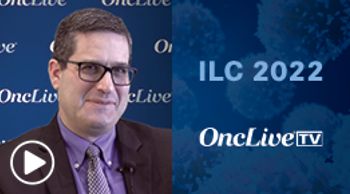
Daniel Morgensztern, MD, discusses ongoing research with amivantamab-vmjw in non–small cell lung cancer.

Lyudmila A. Bazhenova, MD, discusses NTRK inhibition with larotrectinib and entrectinib in patients with NTRK fusion–positive non–small cell lung cancer.

Daniel Morgensztern, MD, discusses updates on the investigation of bispecific antibodies and bispecific T-cell engagers in non–small cell lung cancer and small cell lung cancer.
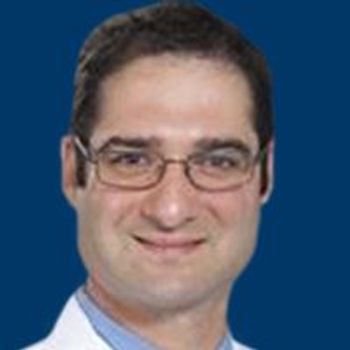
Jonathan Wesley Riess, MD, MS, discusses a phase 1 trial examining the combination of sapanisertib and telaglenastat, and explains why glutaminase inhibition is being investigated as a novel way to treat select patients with non–small cell lung cancer.

EGFR TKI–Based Combos Could Lead to More Tailored First-Line Treatment Options in EGFR-Mutated NSCLC
Leveraging EGFR TKIs as a backbone for combination therapies will be pivotal for expanding treatment options and delivering more personalized therapies in the first-line setting for patients with non–small cell lung cancer harboring EGFR mutations.

PD-L1 and tumor mutational burden are established biomarkers for leveraging immunotherapy in non–small cell lung cancer; however, their use may not be appropriate in determining treatment decisions for all patients.

With two highly selective and active RET inhibitors approved for use in patients with metastatic RET alteration–positive non–small cell lung cancer, the dilemma is not determining which agent to select but ensuring that next-generation sequencing is done up front and in the presence of acquired resistance.
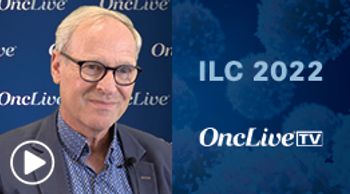
Paul Baas, MD, PhD, discusses the benefits of immunotherapy in subpopulations of patients with mesothelioma.
Karen Reckamp, MD, compares capmatinib and tepotinib, 2 drugs that are approved for the treatment of MET exon 14–mutated non–small cell lung cancer.

The panel discusses the second line treatment options in SCLC and how they choose among the various options based on patient and disease characteristics.
Vivek Subbiah, MD, MPH, presents the patient profile of a 60-year-old man with SCLC who progressed on frontline therapy.
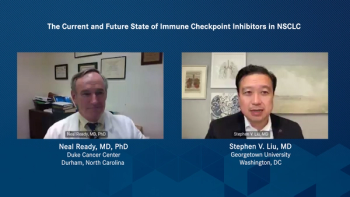
A brief discussion on when it is appropriate to discontinue chemoimmunotherapy in patients with advanced non–small cell lung cancer.
Shifting their focus to chemoimmunotherapy combinations in advanced NSCLC, experts review clinical trial data from KEYNOTE-189, IMpower150, and EMPOWER-Lung 3.

Ignacio I. Wistuba, MD, explains how major pathological response and pathological complete response should be interpreted and their role as clinical end points.

Thought minimal residual disease can serve as an indicator for poor outcomes for patients with non–small cell lung cancer, it is not necessarily a predictor of response to immunotherapy.

A pre–new drug application meeting was held with representatives from Turning Point Therapeutics, Inc. and the FDA to discuss repotrectinib as a potential therapeutic option for patients with ROS1-positive advanced non–small cell lung cancer.
Press Release
Cancer experts at the Sylvester Comprehensive Cancer Center: Annual Oncology Update shared important progress across a wide range of cancers — prostate cancer, breast cancer, colon cancer, and more — that was presented at the American Society of Clinical Oncology 2022 Annual Meeting, the largest gathering of cancer clinicians and scientists in the United States.
Advertisement
Advertisement
Trending on OncLive
1
FDA Approves Tucatinib Plus Trastuzumab/Pertuzumab as First-Line Maintenance in Advanced HER2+ Breast Cancer
2
GI Cancer Monthly Rewind: Key News and Expert Insights You May Have Missed in September 2026
3
FDA Grants Breakthrough Device Designation to Natera’s Multi-Cancer Early Detection Assay
4
Five Under 5: Top Oncology Videos for the Week of 10/5/2026
5