





Lung Cancer
Latest News
Advertisement
Latest Videos
































































Advertisement
More News

Drs Benjamin Levy, Neil Morganstein, and Bhuvana Ramkumar discuss challenges of procuring for molecular testing in patients with NSCLC.

Mark A. Socinski, MD, has become internationally known for his research into the molecular drivers of lung cancer and his contributions to the refinement of multidisciplinary care.

Drs Socinski and Vachani explain the typical adverse events seen with anti-HER2 therapies and how to manage them.
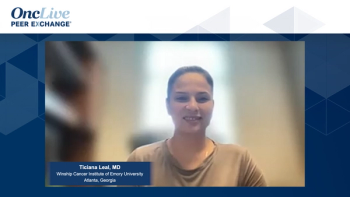
Drs Timothy Craig Allen and Ticiana Leal review the HER2-targeted therapies in NSCLC, including mechanism of action and supportive clinical trial data.

Smoking is associated with the most widely known cancer causing carcinogen across the world. However, a second, more insidious factor has been increasingly recognized for its role in promoting cancer growth: obesity.

Drs Vamsidhar Velcheti and Solange Peters discuss the optimum length for immunotherapy treatment in resectable NSCLC, highlighting the issue of payer authorizations.

Oncologists explain data from the NADIM II and AEGAN clinical trials investigating treatments for neoadjuvant immunotherapy in resectable NSCLC.

Melissa L. Johnson, MD, expands on the updated data from the POSEIDEN trial, the rationale for investigating the combination, and what these results mean for the treatment of metastatic non–small cell lung cancer.
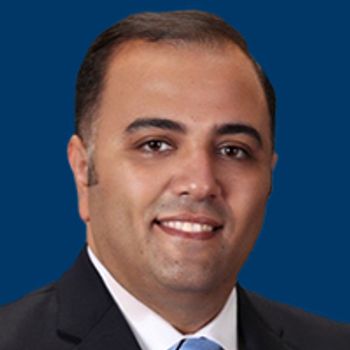
The addition of dostarlimab to chemotherapy led to an improvement in objective response rate vs pembrolizumab plus chemotherapy in patients with newly diagnosed metastatic nonsquamous non–small cell lung cancer.
Jonathan Spicer, MD, explains the role of molecular testing in patients with stage I-IIIA NSCLC, and how it informs treatment decision-making.
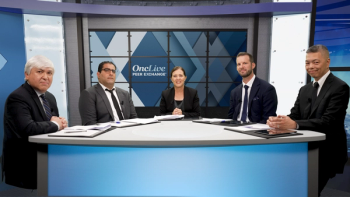
A panel of lung cancer experts provides an overview of molecular testing in early-stage non-small cell lung cancer (NSCLC) and recommendations for biomarkers to test for and at what treatment stages to perform testing.
The FDA has granted a fast track designation to eftilagimod alpha for use in combination with pembrolizumab as a frontline treatment for patients with stage IIIB/IV non–small cell lung cancer.
Melissa L. Johnson, MD, discusses the evolution of frontline treatment in non–small cell lung cancer.

The FDA has granted a fast track designation to sapanisertib as a potential therapeutic option in patients with unresected or metastatic squamous non–small cell lung cancer whose tumors harbor an NRF2 mutation and who have previously received platinum-based chemotherapy and immune checkpoint inhibition.
Solange Peters, MD, PhD, presents the case of a 72-year-old man with HER2-amplified NSCLC and starts a discussion on the recommended treatment plans.

Dr Mark A Socinski reviews the currently available treatment options for NSCLC, including targeted therapies.
Anil Vachani, MD, MS, explains whether he orders biomarker testing for all patients with HER2-mutated NSCLC.
Drs Allen and Socinski discussion the role of HER2 alterations in NSCLC and how it differs from breast cancer.
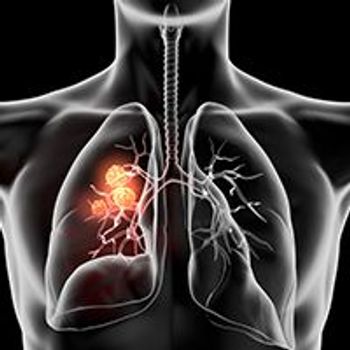
Aumolertinib significantly prolonged progression-free survival vs gefitinib in treatment-naïve patients with locally advanced or metastatic non–small cell lung cancer harboring EGFR mutations, according to findings from the phase 3 ANEAS trial published in the Journal of Clinical Oncology.
The FDA has granted an orphan drug designation to SynKIR-110, a first-in-class KIR-CAR T-cell immunotherapy candidate, for the treatment of patients with mesothelin-expressing mesothelioma.

Gavocabtagene autoleucel demonstrated positive topline results from the phase 1 portion of a phase 1/2 trial in patients with mesothelin-expressing solid tumors.
Myung-Ju Ahn, MD, summarizes the role of neoadjuvant immunotherapy in early-stage NSCLC treatment.
Melissa Johnson, MD, and Solange Peters, MD, review the available treatment options for stage I – III non-small cell lung cancer (NSCLC) and how the ESMO guidelines of patient management differ from the NCCN guidelines.
The FDA has approved bevacizumab-adcd, a bevacizumab biosimilar, for the treatment of six types of cancer.
Sunvozertinib provided beneficial antitumor activity when used as a second- or later-line treatment in patients with non–small cell lung cancer harboring EGFR exon 20 insertion mutations who received prior platinum-based chemotherapy.
Advertisement
Advertisement
Trending on OncLive
1
FDA Approves Tucatinib Plus Trastuzumab/Pertuzumab as First-Line Maintenance in Advanced HER2+ Breast Cancer
2
GI Cancer Monthly Rewind: Key News and Expert Insights You May Have Missed in September 2026
3
FDA Grants Breakthrough Device Designation to Natera’s Multi-Cancer Early Detection Assay
4
Five Under 5: Top Oncology Videos for the Week of 10/5/2026
5