






Lung Cancer
Latest News
Advertisement
Latest Videos





































































Advertisement
More News

Concurrent adagrasib and pembrolizumab produced preliminary activity when administered as first-line treatment in patients with non–small cell lung cancer harboring a KRAS G12C mutation, irrespective of PD-L1 status, according to data from the KRYSTAL-1 phase 1b and the KRYSTAL-7 phase 2 cohorts.

Treatment with dostarlimab (Jemperli) plus chemotherapy reduced the risk of disease progression or death by 30% compared with pembrolizumab (Keytruda) plus chemotherapy as a frontline treatment for patients with metastatic non-squamous non–small cell lung cancer.

Manish Patel, MD, DO, discusses choosing a chemoimmunotherapy regimen for patients with advanced, metastatic non–small cell lung cancer.

The combination of sintilimab and anlotinib elicited improved responses and progression-free survival compared with chemotherapy in previously untreated patients with metastatic non–small cell lung cancer.

Pharmaceutical manufacturer EQRx announced December 2, 2022, that the European Medicines Agency has accepted a marketing authorization application for the use of aumolertinib in EGFR-mutated non–small cell lung cancer and locally advanced or metastatic EGFR T790M mutation–positive NSCLC.
Stephen V. Liu, MD, highlights the advantages of antibody-drug conjugates in lung cancer treatment, the current landscape of antibody-drug conjugate development, and several questions and considerations for continued investigation.

Evan J. Lipson, MD, expands on key takeaways from the NEOpredict-Lung trial, the additional benefit that PICIT may offer to patients who progress on other immunotherapies, and the effect that both NEOpredict-Lung and RELATIVITY-047 have on the role of immunotherapy in the lung and melanoma treatment paradigms.

Stephen V. Liu, MD, discusses efforts to develop atezolizumab-based combination therapies for patients with small cell lung cancer.

The combination of the p38 MAPK inhibitor ARRY-614 plus nivolumab with or without ipilimumab was well tolerated and elicited disease control in high-risk, PD-(L)1–refractory patients with advanced solid tumors.

The FDA has issued a complete response letter to the new drug application seeking the approval of poziotinib for the treatment of patients with previously treated locally advanced or metastatic non–small cell lung cancer with HER2 exon 20 insertion mutations.

Benjamin P. Levy, MD; Bhuvana Ramkumar, MD; and Neil Morganstein, MD, discuss the challenges with tissue testing facing care teams, as well as multilevel hurdles in procurement, analysis of results, and insurance.

Balazs Halmos, MD, discusses the role of immunotherapy in the frontline setting of NSCLC and the emerging pipeline of antibody-drug conjugates that could affect the treatment paradigm in lung cancer.

Roy S. Herbst, MD, PhD, helped usher in the age of targeted therapy and immunotherapy in lung cancer, turning an almost hopeless disease into a condition that can be treated and even cured.

Closing their discussion, the panel shares where they think the NSCLC treatment landscape will be in the future, and what to look forward to.

In combination with standard-of-care carboplatin and pemetrexed, the investigational agent LP-300 will be evaluated in never smokers with non–small cell lung cancer in the phase 2 HARMONIC study.
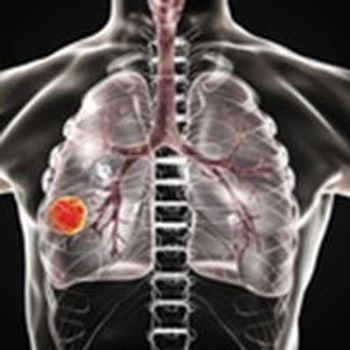
The median time between pathologic diagnosis to next-generation sequencing was reduced in a quality improvement project for patients with newly diagnosed metastatic non–small cell lung cancer.

The FDA has granted an orphan drug designation to vebreltinib for the treatment of patients with non–small cell lung cancer harboring MET genomic tumor aberrations.

The United Kingdom’s National Institute for Health and Care Excellence has issued final guidance recommending the use of mobocertinib for patients with advanced non–small cell lung cancer harboring EGFR exon 20 insertion mutations who have already received platinum-based chemotherapy.
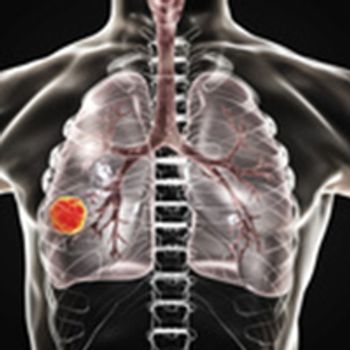
The Center for Drug Evaluation of the China National Medical Products Administration has granted a breakthrough therapy designation to ivonescimab plus docetaxel for patients with locally advanced or metastatic non–small cell lung cancer who failed to respond to a prior PD-(L)1 inhibitor plus platinum-based doublet chemotherapy.
The panel explains their approaches to treating patients with mutated NSCLC with immunotherapy.

Dr Johnson reviews data from the ARC-7 trial investigating an anti-PD-L1 plus anti-TGIT combination treatment for advanced NSCLC.
Balazs Halmos, MD, discusses the importance of testing for HER2 mutations and exon 20 insertions, which are emerging new targets in non–small cell lung cancer, and how fam-trastuzumab deruxtecan-nxki meets needs for patients with HER2-mutant disease.

Mark G. Kris, MD, discusses the role of immunotherapy in patients with non–small cell lung cancer without driver mutations.
In treating patients with locally advanced non–small cell lung cancer, one must consider multiple factors when deciding whether to treat them with immunotherapy or a targeted approach, even though the optimal treatment sequence has yet to be definitively established.

Osimertinib remains the preferred first-line therapy for patients with EGFR-mutated non–small cell lung cancer. However, for those with classic EGFR mutations, the day is fast approaching when physicians will add chemotherapy to first-line treatment with the EGFR TKI based on ctDNA results.
Advertisement
Advertisement
Trending on OncLive
1
FDA Approves Tucatinib Plus Trastuzumab/Pertuzumab as First-Line Maintenance in Advanced HER2+ Breast Cancer
2
GI Cancer Monthly Rewind: Key News and Expert Insights You May Have Missed in September 2026
3
Five Under 5: Top Oncology Videos for the Week of 10/5/2026
4
FDA Grants Breakthrough Device Designation to Natera’s Multi-Cancer Early Detection Assay
5