



Lung Cancer
Latest News
Advertisement
Latest Videos































































Advertisement
More News

Treatment with neoadjuvant nivolumab led to encouraging 5-year recurrence-free survival and overall survival rates compared with historical outcomes in patients with non–small cell lung cancer who underwent surgical resection.
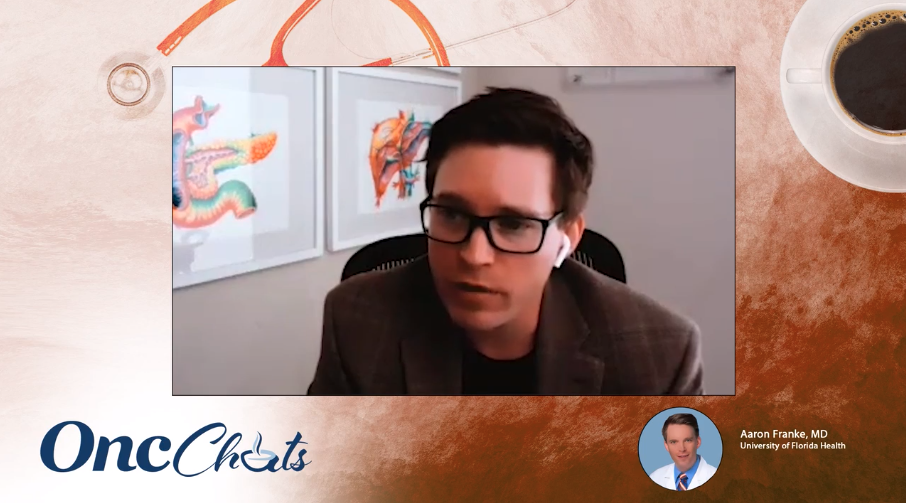
In this second episode of OncChats: Traveling Through the Lung Cancer Treatment Paradigm, Aaron Franke, MD, discusses the need for additional circulating biomarkers beyond PD-L1 in non–small cell lung cancer.
Experts discuss the role of neoadjuvant therapy and other emerging therapies in the treatment of early-stage NSCLC.
Jaspal Singh, MD, MHS, shares insights on treatment strategies for patients with stage II-IIIA NSCLC.
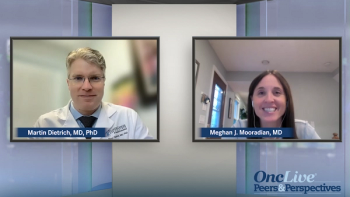
Expert oncologists look to the future of the NSCLC treatment landscape and discuss unmet needs and promising therapies.
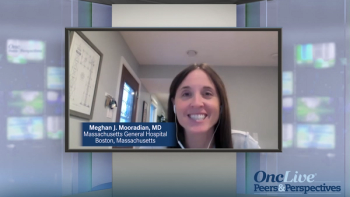
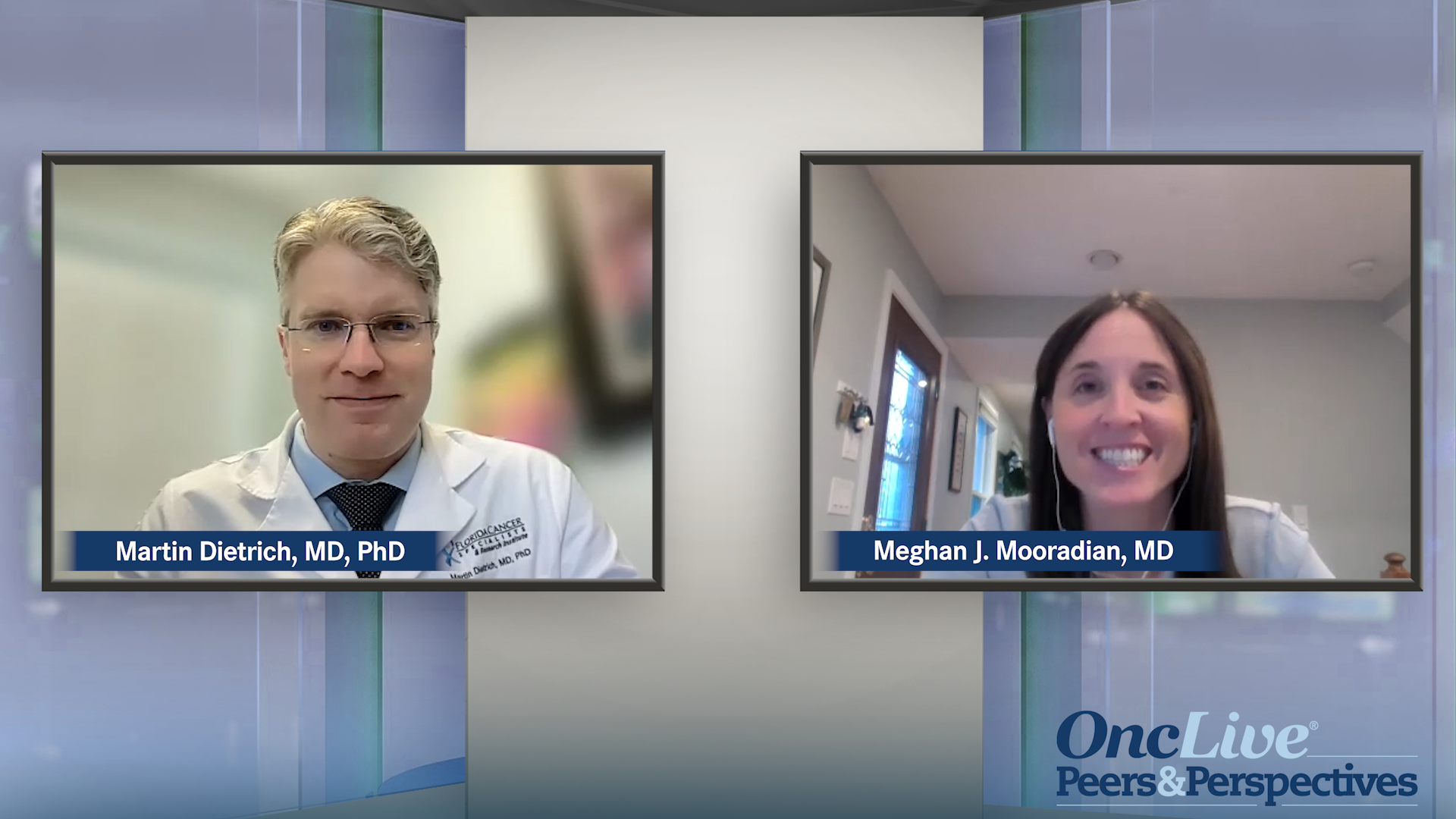
Meghan J. Mooradian, MD, shares her approach to communicating with patients with NSCLC regarding treatment decisions based on molecular biomarkers.
Although emerging strategies are expanding options for treating patients with early-stage non–small cell lung cancer, stage IIIB disease continues to pose challenges. A multimodality approach may help overcome current barriers to care.
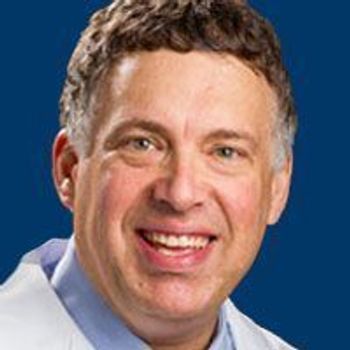
Roy S. Herbst, MD, PhD, discussed the data that supported the FDA approval of adjuvant pembrolizumab in patients with non–small cell lung cancer, highlighted the implications of the approval for the paradigm, and outlined further research opportunities.
A focused discussion on clinical trial data presented at SITC 2022 elucidating the biologic activity of tumor-infiltrating lymphocyte therapies.
Amod Sarnaik, MD, and Krishna Komanduri, MD, share their clinical experience with, and practical advice on, tumor-infiltrating lymphocyte therapy for their patients with solid tumors.

In this first episode of OncChats: Traveling Through the Lung Cancer Treatment Paradigm, Aaron Franke, MD, discusses the exploration of cellular therapies in non–small cell lung cancer.

To continue making progress in lung cancer treatment, investigators must keep pushing the science in new directions even as immunotherapy becomes more available in earlier lines.

Stephen V. Liu, MD, discusses the future of MET-targeted agents in non–small cell lung cancer based on the FDA breakthrough designation for telisotuzumab vedotin.
David H. Harpole Jr, MD, presents a case of a former smoker diagnosed with NSCLC, and David Spigel, MD, offers his initial impressions.
An expert panel shares perspectives on how to choose the appropriate patients with non-small cell lung cancer for lung resection.
If the FDA’s Oncologic Drugs Advisory Committee meeting held on February 10, 2022, was any indication, the days of applying foreign single country or region data to support regulatory approval are gone; instead, regulatory decisions are headed toward the need for regional consistency through multiregional clinical trials, which could help the United States overcome the persistent underrepresentation of racial and ethnic minorities in drug development.

Henry S. Park, MD, MPH, discusses key considerations when selecting an optimal treatment approach for patients with stage II and III non–small cell lung cancer.

As more agents are evaluated either in addition to or following PD-1/PD-L1 inhibitors, more information may be learned about how best to leverage alternate biomarkers, according to Marina C. Garassino, MD.
FDA approvals in recent years have started to carve out a role for immunotherapy in the frontline treatment of patients with small cell lung cancer.
Takeaways from the CheckMate 9LA, CheckMate 227, and POSEIDON trials focused on immunotherapy in non–small cell lung cancer.
Meghan J. Mooradian, MD, discusses how she makes NSCLC treatment decisions based on concurrent mutations.

Timothy Burns, MD, PhD, discusses the evolution of EGFR-targeted non–small cell lung cancer treatments, the importance of delineating small cell lung cancer subtypes, and the advantages of continued antibody-drug conjugate development across all areas of lung cancer.
Roy S. Herbst, MD, PhD, discusses the significance of the FDA approval of adjuvant pembrolizumab in patients with non–small cell lung cancer.
Shared insight on the benefits and drawbacks of using tumor-infiltrating lymphocyte therapy for treatment of solid tumors, as compared to chimeric antigen receptor (CAR) T-cell therapy.
Expert perspectives on the mechanism of action behind tumor-infiltrating lymphocyte (TIL) therapy and how it might address existing unmet needs in the treatment of solid tumors, including melanoma and non–small cell lung cancer.
Advertisement
Advertisement
Trending on OncLive
1
FDA Approves Tucatinib Plus Trastuzumab/Pertuzumab as First-Line Maintenance in Advanced HER2+ Breast Cancer
2
FDA Grants Breakthrough Device Designation to Natera’s Multi-Cancer Early Detection Assay
3
Five Under 5: Top Oncology Videos for the Week of 10/5/2026
4
GI Cancer Monthly Rewind: Key News and Expert Insights You May Have Missed in September 2026
5