







Multiple Myeloma
Latest News
Advertisement
Latest Videos

CME Content

































Advertisement
More News

Pooja Phull, MD, discusses the rationale for assessing CAR T-cell therapy in the real-world vs trial setting in relapsed/refractory multiple myeloma.
The CHMP has recommend the approval of subcutaneous daratumumab plus VRd for newly diagnosed multiple myeloma.
The CHMP has issued a positive opinion for linvoseltamab in relapsed/refractory multiple myeloma.
Multiple myeloma experts offer their perspectives on the evolution of the treatment landscape over the past 10 years and look towards the future of care.
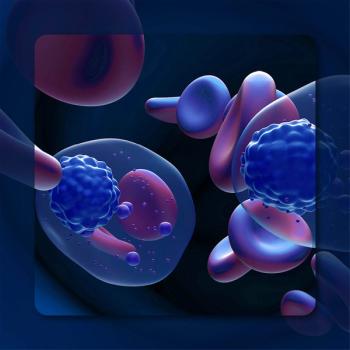
Step-up dosing with etentamig produced responses and low rates of CRS in relapsed/refractory multiple myeloma.

Isatuximab plus VRd has been approved in Japan for transplant-ineligible, newly diagnosed multiple myeloma.

The top 5 videos of the week cover insights in prostate cancer, multiple myeloma, RCC, urothelial carcinoma, and LBCL.

Ide-cel proved feasible and effective in boosting response in patients with myeloma with suboptimal response to standard frontline therapy.
The top 5 videos of the week cover insights in plexiform neurofibromas, melanoma, myeloma, leukemia, and LBCL.
Cilta-cel led to rapid and deep MRD negativity in patients with lenalidomide-refractory multiple myeloma.
P-BCMA-ALLO1 displayed early efficacy and safety data in relapsed/refractory multiple myeloma.
OPN-6602, a small molecule EP300/CBP inhibitor, received orphan drug designation for multiple myeloma.

A resubmitted biologics license application for linvoseltamab in relapsed/refractory multiple myeloma is under review by the FDA.
The top 5 videos of the week cover insights in lung cancer, multiple myeloma, breast cancer, and follicular lymphoma.
Pooja Phull, MD, highlights differences between real-world vs clinical trial data for cilta-cel vs ide-cel in relapsed/refractory multiple myeloma.
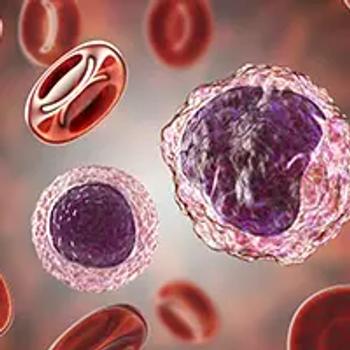
Experts break down emerging data for the use of quadruplet regimens in newly diagnosed multiple myeloma.

Panelists discuss the latest efficacy data from the CARTITUDE-4 study evaluating ciltacabtagene autoleucel (cilta-cel) in relapsed/refractory multiple myeloma (R/R MM), the significance of minimal residual disease (MRD) negativity, and how real-world and patient-reported outcomes influence the decision to use chimeric antigen receptor (CAR) T-cell therapy for early-stage R/R MM. They also compare standard-of-care idecabtagene vicleucel (ide-cel) and cilta-cel in this patient population.
Panelists discuss their optimal strategies for bridging therapy when preparing patients to receive chimeric antigen receptor (CAR) T in the treatment of relapsed/refractory multiple myeloma (R/R MM).
Michael R. Bishop, MD, discusses the potential significance of anitocabtagene autoleucel for the relapsed/refractory multiple myeloma treatment paradigm.

C. Ola Landgren, MD, PhD, discusses the rapidly changing treatment paradigm within multiple myeloma.
The top 5 videos of the week cover insights in gastrointestinal cancers, gynecologic malignancies, and blood cancers.
China’s NMPA approved isatuximab plus VRd for newly diagnosed, transplant-ineligible multiple myeloma.

Pooja Phull, MD, discusses real-world responses and survival outcomes with cilta-cel vs ide-cel in patients with relapsed/refractory multiple myeloma.

Marcella Ali Kaddoura, MD, discusses challenges in integrating whole genome sequencing into routine clinical practice for myeloma.
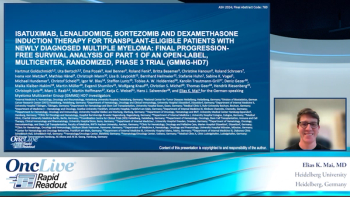
Dr. Elias K. Mai presents final progression-free survival results from the Phase 3 GMMG-HD7 trial, demonstrating that adding isatuximab to lenalidomide, bortezomib, and dexamethasone (Isa-RVd) significantly improves minimal residual disease negativity and reduces the risk of progression or death in transplant-eligible patients with newly diagnosed multiple myeloma.
Advertisement
Advertisement
Trending on OncLive
1
Single-Center, Retrospective Data Show Low Rate of Lifileucel Infusion Following Referral in Advanced Melanoma
2
Long-Term Cilta-Cel Data Show Low Rates of PFS Events in Standard-Risk R/R Myeloma
3
Real-World Data Support Clinical Benefit With Lifileucel in Previously Treated Advanced Melanoma
4
Dr Riedell on the Long-Term Efficacy of Tisa-Cel in R/R Follicular Lymphoma
5