





Multiple Myeloma
Latest News
Advertisement
Latest Videos






CME Content










































Advertisement
More News
Treatment with BVd elicited PROs comparable with those who were treated with DVd in relapsed/refractory multiple myeloma.

Belantamab mafodotin plus bortezomib and dexamethasone improved median progression-free survival vs daratumumab plus bortezomib and dexamethasone in relapsed/refractory multiple myeloma.
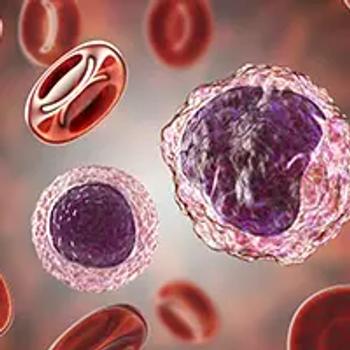
Belantamab mafodotin plus BPd improved PFS vs PVd in relapsed/refractory multiple myeloma.

OncLive® will be LIVE with OncLive® News Network: On Location at the 2024 ASCO Annual Meeting. Each day, we will broadcast a series of interviews with top thought leaders, to learn their thoughts and reactions to data presented across oncology during the conference
In case you missed any, below is a recap of every OncLive On Air episode that aired in May 2024.

C. Ola Landgren, MD, PhD, discusses the utility of minimal residual disease as an end point in clinical trials for the treatment of multiple myeloma.

Muhamed Baljevic, MD, FACP, discusses the phase 3 PERSEUS trial in patients with previously untreated multiple myeloma.

Muhamed Baljevic, MD, FACP, discusses the investigation of frontline quadruplet therapies in transplant-ineligible multiple myeloma.

The FDA granted priority review to the sBLA for isatuximab plus bortezomib/lenalidomide/dexamethasone for newly diagnosed, transplant-ineligible myeloma.
Muhamed Baljevic, MD, FACP, discusses the evolution of quadruplet combination therapies in frontline multiple myeloma.

James Ignatz-Hoover, MD, PhD, discusses the evolving use of CAR T-cell therapies and bispecific antibodies in multiple myeloma.
Muhamed Baljevic, MD, discusses the consideration of patient comorbidities and preferences during treatment selection in newly diagnosed myeloma.

Experts from across oncology specialties discuss the abstracts and presentations they are most looking forward to seeing at the 2024 ASCO Annual Meeting.

Sundar Jagannath, MBBS, discusses the FDA’s ODAC Meeting on safety considerations with ide-cel in multiple myeloma.

S. Vincent Rajkumar, MD, discusses highly anticipated abstracts in multiple myeloma that will be presented at the 2024 ASCO Annual Meeting.
Muhamed Baljevic, MD, discusses key trial updates and advancements with quadruplet therapy in newly diagnosed multiple myeloma.

Sundar Jagannath, MBBS, discusses takeaways from the FDA’s ODAC consensus on safety considerations with cilta-cel in relapsed/refractory multiple myeloma.
Sundar Jagannath, MBBS, discusses the safety of linvoseltamab in relapsed/refractory multiple myeloma.
In case you missed it, below is your guide to the important regulatory approvals made by the FDA in April 2024.

James Ignatz-Hoover, MD, PhD discusses sequencing CAR T cell therapies and bispecific agents in treating pretreated patients with multiple myeloma.
In case you missed any, below is a recap of every episode of OncLive On Air that aired in April 2024.

Following the consensus that the risk-benefit assessments for the proposed indications for cilta-cel and ide-cel were favorable during the March 15, 2024, FDA ODAC meeting, both BCMA-targeted CAR T-cell therapies received approvals moving them up in the treatment paradigm for relapsed or refractory multiple myeloma.

Sundar Jagannath, MBBS, discusses CAR T-cell therapy considerations prior to initiation in the management of multiple myeloma.

James Ignatz-Hoover, MD, PhD, discusses the current arsenal of FDA-approved bispecific antibodies in multiple myeloma.

Joseph G. Jurcic, MD, discusses the evolution of combination therapies in the management of myelofibrosis.
Advertisement
Advertisement
Trending on OncLive
1
Five Under 5: Top Oncology Videos for the Week of 8/31/26
2
FDA Approves Camizestrant Plus a CDK4/6 Inhibitor for Emergent ESR1-Mutated HR+, HER2– Advanced Breast Cancer
3
B7-H4–Targeted ADCs Signal a New Frontier for Platinum-Resistant Ovarian and Endometrial Cancer
4
Ivonescimab Meets OS End Point vs Pembrolizumab in First-Line PD-L1+ NSCLC
5