




Multiple Myeloma
Latest News
Advertisement
Latest Videos






CME Content










































Advertisement
More News
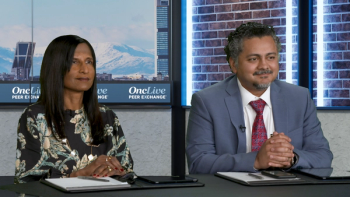
Amrita Krishnan, MD, and Saad Z. Usmani, MD, MBA, FACP, offer their perspectives on the role of stem cell transplant and MRD testing in patients with newly diagnosed multiple myeloma.

Clinical insights on the definition of high-risk multiple myeloma and the treatment of patients with high risk disease, including how the results from the IsKia trial might impact practice.
Experts in multiple myeloma discuss highlights from the ASH 2023 meeting around transplant-eligible NDMM with particular focus on the PERSEUS and GRIFFIN trials and the clinical implications of the results of these studies.

Sikander Ailawadhi, MD, shares considerations for the potential sequencing of bispecific antibodies and other BCMA-directed therapies in multiple myeloma.

Ariel Grajales-Cruz, MD, discusses real-world safety and efficacy outcomes with teclistamab in select patients with relapsed/refractory multiple myeloma.
Rachid Baz, MD, discusses the use of idecabtagene vicleucel vs standard regimens in triple-class–exposed, relapsed/refractory multiple myeloma.

Hans C. Lee, MD, discusses updated data from the phase 2 LINKER-MM1 study evaluating linvoseltamab in patients with relapsed/refractory multiple myeloma.
Sikander Ailawadhi, MD, spotlights the characteristics of multiple myeloma that drive the decision to use teclistamab-cqyv, elranatamab-bcmm, or talquetamab-tgvs.
Seema G. Naik, MD, discusses the evolving role of bispecific antibodies in hematologic malignancies.
Sikander Ailawadhi, MD, discusses characteristics of myelofibrosis that influence decisions between JAK inhibitors, highlights differences between bispecific antibodies to consider when managing diffuse large B-cell lymphoma, and more.
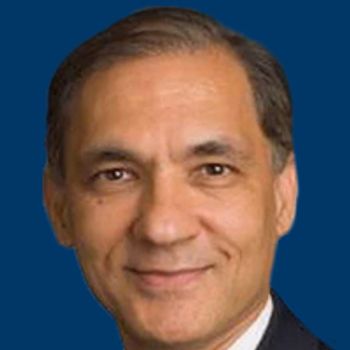
A fascination with laboratory research paired with hard work and dedication led to Nikhil C. Munshi, MD, becoming a pioneer in multiple myeloma treatment.
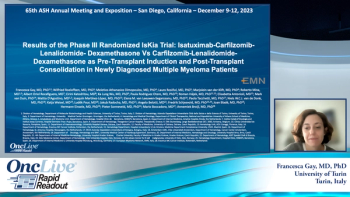
Francesca Gay, MD, PhD, presents results from the phase III randomized IsKia trial investigating isatuximab-carfilzomib-lenalidomide-dexamethasone as pre-transplant induction and post-transplant consolidation in patients with newly diagnosed multiple myeloma.

Paul G. Richardson, MD, shares clinical findings and several case studies showcasing the encouraging activity and safety of mezigdomide in patients with relapsed/refractory multiple myeloma.

Ajai Chari, MD, discusses the efficacy of treating patients with less frequent or lower intensity dosing of talquetamab in patients with relapsed/refractory multiple myeloma, as evaluated in the phase 1/2 MonumenTAL-1 study.
A panel of experts discuss the evolving landscape of newly diagnosed multiple myeloma.

Idecabtagene vicleucel has received marketing and manufacturing approval in Japan for its supplemental new drug application in patients with relapsed/refractory multiple myeloma who have received at least 2 prior lines of therapy.

The addition of isatuximab-irfc to carfilzomib, lenalidomide, and dexamethasone was well tolerated and elicited a 100% objective response rate in standard- and high-risk, transplant-eligible patients with newly diagnosed multiple myeloma.

Jeffrey Matous, MD, discusses outcomes from the phase 1b MonumenTAL-2 trial with the combination of talquetamab and pomalidomide in patients with relapsed/refractory multiple myeloma.

Induction therapy with subcutaneous daratumumab followed by autologous stem cell transplant, daratumumab, bortezomib, lenalidomide, and dexamethasone consolidation and daratumumab/lenalidomide maintenance prolonged progression-free survival in patients with newly diagnosed, transplant-eligible multiple myeloma.

Utilization of a financial navigation program is feasible for reducing cost burden and improving quality of life in patients with multiple myeloma who are more likely to experience financial toxicity and have difficulty accessing appropriate resources and support services.

Anitocabtagene autoleucel showcased early efficacy with acceptable toxicity in patients with relapsed and/or refractory multiple myeloma—even in those with high-risk features.

Dose modifications of talquetamab improved on-target adverse effects while maintaining responses for patients with relapsed/refractory multiple myeloma.
OncLive® will be LIVE with OncLive® News Network: On Location at the 2023 ASH Annual Meeting. Each day, we will broadcast a series of interviews with top thought leaders, to learn their thoughts and reactions to data presented across oncology during the conference.

The combination of Isa-KRd significantly increased the rates of minimal residual disease negativity at cutoffs post-consolidation vs KRd in patients with newly diagnosed multiple myeloma.
Susan Bal, MD, discusses updated safety and efficacy data from a phase 1 study evaluating the GPRC5D-targeted autologous CAR T-cell therapy BMS-986393 in relapsed/refractory multiple myeloma, including in patients with prior BCMA-directed therapy.
Advertisement
Advertisement
Trending on OncLive
1
Five Under 5: Top Oncology Videos for the Week of 8/31/26
2
FDA Approves Camizestrant Plus a CDK4/6 Inhibitor for Emergent ESR1-Mutated HR+, HER2– Advanced Breast Cancer
3
B7-H4–Targeted ADCs Signal a New Frontier for Platinum-Resistant Ovarian and Endometrial Cancer
4
Ivonescimab Meets OS End Point vs Pembrolizumab in First-Line PD-L1+ NSCLC
5