




Multiple Myeloma
Latest News
Advertisement
Latest Videos




CME Content









































Advertisement
More News

Faith E. Davies, MD, discusses strategies for rectifying global gaps and addressing unmet needs in multiple myeloma care.

Joshua Richter, MD, discusses how bispecific antibodies fit into the current treatment armamentarium for patients with multiple myeloma, highlighting his presentation from the 41st Annual CFS®.
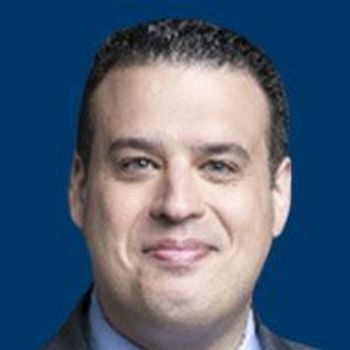
Joshua Richter, MD, provides an overview of the current state of bispecific antibodies in multiple myeloma, discusses ongoing investigations of these agents, and expands on their unique toxicities and the need for proactive management.

The FDA’s Oncologic Drugs Advisory Committee will meet to review data from the supplemental biologics license application seeking the approval of idecabtagene vicleucel for use in earlier lines of treatment for patients with triple-class exposed relapsed/refractory multiple myeloma.
Marc J. Braunstein, MD, PhD, discusses the evolution of stem cell transplant eligibility criteria in patients with multiple myeloma and highlights unanswered questions about the role of autologous stem cell transplantation following quadruplet induction regimens in this population.

Jesus Berdeja, MD, discusses the current role of BCMA-targeted therapies in multiple myeloma, and imparts advice to colleagues regarding the sequencing of bispecific antibodies and CAR T-cell therapies.
Jesus Berdeja, MD, discussed considerations when choosing between bispecific antibodies and CAR T-cell therapy for patients with multiple myeloma, clinical trials that may move CAR T-cell therapy into earlier lines, and research with agents directed at targets other than BCMA.
The European Medicines Agency’s Committee for Medicinal Products for Human Use has recommended the approval of elranatamab-bcmm for the treatment of adult patients with relapsed/refractory multiple myeloma who were previously treated with 3 or more lines of therapy, including an immunomodulatory agent, a proteasome inhibitor, and an anti-CD38 monoclonal antibody, and who experienced disease progression on their last therapy.

Madhav V. Dhodapkar, MBBS, discusses the advantages and disadvantages of bispecific antibodies and CAR T-cell therapy in patients with relapsed/refractory multiple myeloma, as well as the potential role for the bispecific antibody linvoseltamab in this treatment paradigm.

Jesus Berdeja, MD, director, discusses ongoing and planned research initiatives in patients with multiple myeloma, specifically highlighting initiatives taking place at Tennessee Oncology.

Jesus Berdeja, MD, director, discusses the evolving guidelines regarding the use of CAR T-cell therapy in patients with multiple myeloma.
Yi Lin, MD, PhD, discusses findings from the primary analysis of the phase 1/2 CARTITUDE-1 trial of the BCMA-targeting CAR T-cell therapy ciltacabtagene autoleucel in patients with relapsed/refractory multiple myeloma.
Jesus Berdeja, MD, discusses factors to consider when choosing between CAR T-cell therapy and bispecific antibodies in patients with multiple myeloma.
Jens Hillengass, MD, PhD, discusses the rationale for investigating exercise and its effect on functional performance in multiple myeloma, and highlights the methods utilized in this study.

Jens Hillengass, MD, PhD, professor, discusses the influence of physical activity on functional performance for patients with multiple myeloma, according to results from a 2-arm, nonrandomized pilot exercise study.

Jeffrey V. Matous, MD, discusses factors to be considered when determining the optimal sequencing of bispecific antibodies in multiple myeloma.

The combination of venetoclax and dexamethasone failed to significantly improve progression-free survival over pomalidomide plus dexamethasone in patients with t(11;14)-positive, relapsed or refractory multiple myeloma who have previously received at least 2 therapies.
Jesus Berdeja, MD, discusses the BCMA-directed CAR T-cell therapies and bispecific antibodies available for patients with multiple myeloma.

Ajay Kumar Nooka, MD, MPH, FACP, highlights the significance of the FDA approval of elranatamab for select patients with relapsed/refractory multiple myeloma and sheds light on the agent’s role in the expanding field of T cell–redirecting therapies approved for the treatment of this patient population.
Saad Z. Usmani, MD, MBA, FACP, discusses the complexity of approaching frontline treatment decisions in patients with high-risk multiple myeloma.
Madhav V. Dhodapkar, MBBS, discusses efficacy and safety findings from the dose-expansion portion of the phase 2 LINKER-MM1 trial of linvoseltamab in patients with relapsed/refractory multiple myeloma.

Faith E. Davies, MD, discusses challenges experienced by hematologist-oncologists and specialist nurses when treating patients with multiple myeloma.
Sagar Lonial, MD, FACP, discusses the final overall survival analysis of the phase 3 IKEMA trial of isatuximab when combined with carfilzomib and dexamethasone in patients with relapsed multiple myeloma, highlighting the progression-free survival and OS outcomes.
Richardson Reviews Findings and Future Directions With Mezigdomide Plus Dexamethasone in R/R Myeloma
Dr Richardson discusses the background of mezigdomide, key efficacy and safety findings with the agent plus dexamethasone in patients with relapsed/refractory multiple myeloma, and the implications of this combination for heavily pretreated patients in this population.

Jiye Liu, PhD, discusses epigenetic regulation of CD38/CD48 in multiple myeloma.
Advertisement
Advertisement
Trending on OncLive
1
Five Under 5: Top Oncology Videos for the Week of 8/31/26
2
FDA Approves Camizestrant Plus a CDK4/6 Inhibitor for Emergent ESR1-Mutated HR+, HER2– Advanced Breast Cancer
3
B7-H4–Targeted ADCs Signal a New Frontier for Platinum-Resistant Ovarian and Endometrial Cancer
4
Ivonescimab Meets OS End Point vs Pembrolizumab in First-Line PD-L1+ NSCLC
5