
Fred Schumacher, PhD, MPH, associate professor, Case Western Reserve University, discusses a study that led to the identification of genetic risk factors of prostate cancer.

Your AI-Trained Oncology Knowledge Connection!
Fred Schumacher, PhD, MPH, associate professor, Case Western Reserve University, discusses a study that led to the identification of genetic risk factors of prostate cancer.
Wendy Setiawan, PhD, assistant professor of Preventive Medicine, Department of Preventive Medicine, Keck School of Medicine of University of Southern California, discusses a study that examined differences in pancreatic cancer incidence across five racial/ethnic populations in a multiethnic cohort.
Van K. Morris, MD, assistant professor of GI Oncology, The University of Texas MD Anderson Cancer Center, discusses a study examining nivolumab (Opdivo) as a potential treatment for patients with anal cancer.
Thomas W. Dubensky Jr, PhD, chief scientific officer, Aduro Biotech, discusses a study of ADU-S100 and how it activates the human STING receptor, which is found to have presence in multiple tumor types.
Antoni Ribas, MD, PhD, professor of Hematology and Oncology and director of the Tumor Immunology Program Area at UCLA Jonsson Comprehensive Cancer Center, discusses triplet therapies for patients with melanoma and the sequencing challenges associated with the approvals of additional agents in the field.
Mark A. Rubin, MD, professor of Pathology and Laboratory Medicine, vice chairman for Experimental Pathology, director, Translational Research Laboratory Services, Weill Cornell Medicine and New-York Presbyterian, discusses the advantages of whole-exome sequencing and how it compares with targeted sequencing.
George D. Demetri, MD, senior vice president for Experimental Therapeutics at the Dana-Farber Cancer Institute, professor of Medicine at Harvard Medical School, and co-director of the Ludwig Center at Harvard, discusses the evolving and advancing field of sarcoma.
Karen Kelly, MD, associate director for Clinical Research, Jennifer Rene Harmon Tegley and Elizabeth Erica Harmon Endowed Chair in Cancer Clinical Research, professor of Medicine, UC Davis Comprehensive Cancer Center, discusses the results of the phase Ib JAVELIN Solid Tumor Trial.
Sangeetha Palakurthi, PhD, head of the Cancer Biology and Pharmacology Group at the Belfer Center for Applied Cancer Science, Dana-Farber Cancer Institute, discusses a study that utilized non–small cell lung cancer (NSCLC) patient-derived xenografts from patients on osimertinib (AZD9291) clinical trials to further refine therapeutic strategies.
More than one-third of patients with previously untreated renal cell carcinoma responded to the combination of high-dose interleukin-2 and an investigational histone deacetylase inhibitor entinostat.
Robert Ferris, MD, PhD, vice chair for Clinical Operations, associate director for Translational Research, and coleader of the Cancer Immunology Program at the University of Pittsburgh Cancer Institute, discusses the CheckMate-141 trial, which found that treatment with single-agent nivolumab (Opdivo) reduced the risk of death by 30% and doubled 1-year overall survival (OS) rates compared investigator's choice of therapy for patients with recurrent or metastatic head and neck squamous cell carcinoma (SCCHN).
Samir N. Khleif, MD, director, GRU Cancer Center, discusses next steps researchers and physicians need to take with immunotherapy in the field of oncology.
The addition of three biological markers to conventional breast cancer risk models significantly improved the ability to distinguish women at high and low risk.
Anti–PD-1 therapy in the first-line induced responses in more than half of patients with advanced Merkel cell carcinoma, with encouraging durability to the responses.
Barry M. Berger, MD, FACP, chief medical officer, Exact Sciences, discusses a study demonstrating the benefit of utilization of the Cologuard screening test for colorectal cancer (CRC).
Angela M. DeMichele, MD, professor of Medicine and Epidemiology, University of Pennsylvania, discusses results of the HER2-positive breast cancer cohort of the phase II ISPY-2 trial, which investigated the neoadjuvant combinations of ado-trastuzumab emtansine (T-DM1) and pertuzumab (Perjeta) versus paclitaxel (Abraxane) and trastuzumab (Herceptin).
Treatment with single-agent nivolumab reduced the risk of death by 30% and double 1-year overall survival rates compared investigator's choice of therapy for patients with recurrent or metastatic head and neck squamous cell carcinoma.
Three currently available assays for PD-L1 expression exhibited a high degree of correlation in a comparative study involving archived lung cancer tissue.
The combination of ado-trastuzumab emtansine and pertuzumab was superior to the combination of paclitaxel and trastuzumab as neoadjuvant treatment for women with HER2-positive breast cancer.
The combination of the PARP inhibitor olaparib and the investigational AKT inhibitor AZD5363 resulted in durable responses in patients with solid tumors, with and without BRCA mutations.
Chest radiotherapy to treat a childhood cancer is a well-established risk factor for developing breast cancer in adulthood
Palbociclib may have antiproliferative effects when used as a neoadjuvant therapy for women with early stage breast cancer.
A 70-gene signature (MammaPrint) demonstrated a high level of accuracy at identifying a large subset of women with clinically high-risk early stage breast cancer for whom adjuvant chemotherapy was unlikely to produce benefit.
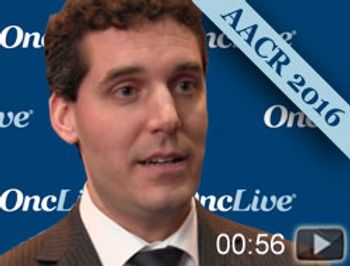
Michael Postow, MD, medical oncologist, Memorial Sloan Kettering Cancer Center, discusses the overall survival (OS) results of the CheckMate-069 study, which investigated the combination of nivolumab (Opdivo) and ipilimumab (Yervoy) for the treatment of patients with melanoma.
The combination of ipilimumab (Yervoy) and nivolumab (Opdivo) showed a 42% improvement in overall survival compared with ipilimumab monotherapy for patients with advanced melanoma in a 2-year assessment of the phase II CheckMate-069 trial.
Yong-Chen William Lu, PhD, a fellow in the Surgery Branch of the National Cancer Institute, discusses a CD4 T-cell immunotherapy targeting MAGE-A3 that is showing early clinical responses in patients with metastatic cancer.
Rose K. Lai, MD, clinical associate professor of Neurology, University of Southern California, discusses results of the Glioma International Case Control study.
Treatment with the novel multikinase inhibitor entrectinib achieved objective responses in 79% of patients with solid tumors associated with NTRK, ROS-1, or ALK rearrangements.
A form of immunotherapy that harnesses the power of CD4 T-cells was shown to be safe and effective in patients with various types of metastatic cancers.
F. Stephen Hodi, MD, director of the Melanoma Center at Dana-Farber Cancer Institute, discusses the results of the longest follow-up survival study of patients with advanced melanoma who were treated with single-agent nivolumab (Opdivo).