

Nivolumab alone and in combination with ipilimumab induced responses in patients with heavily pretreated gastrointestinal stromal tumor.
Nivolumab alone and in combination with ipilimumab induced responses in patients with heavily pretreated gastrointestinal stromal tumor.
Adding ramucirumab to standard first-line chemotherapy significantly improved investigator-assessed progression-free survival compared with chemotherapy plus placebo in treatment-naive patients with HER2-negative gastric cancer.

Maria Svensson, MD, Lund University, discusses the associations of PD-1 and PD-L1 expression with mismatch repair (MMR) status and prognosis in chemoradiotherapy-naïve esophageal and gastric adenocarcinoma during the 2018 Gastrointestinal Cancers Symposium.

Arun S. Singh, MD, associate professor, UCLA David Geffen School of Medicine, discusses a phase II study of nivolumab (Opdivo) in patients with metastatic unresectable gastrointestinal stromal tumors (GIST) during the 2018 Gastrointestinal Cancers Symposium.
The combination of the VEGFR-2 inhibitor ramucirumab plus the anti-PD-L1 agent durvalumab demonstrated antitumor activity in patients with previously treated advanced gastric or gastroesophageal junction adenocarcinoma.

The novel investigational HER2-targeting antibody-drug conjugate trastuzumab deruxtecan showed promising antitumor activity in heavily pretreated patients with HER2-expressing gastric cancer.

Treatment with cabozantinib improved median overall survival by 2.2 months compared with placebo for patients with previously treated advanced hepatocellular carcinoma.
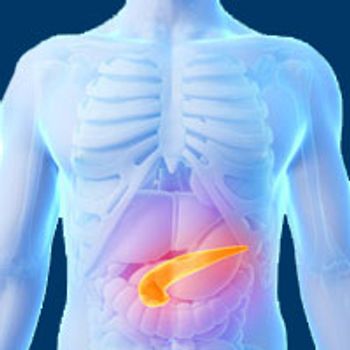
Results of the randomized phase II GERCOR trial concluded that patients with metastatic pancreatic cancer saw numerically better survival rates with a gemcitabine-free regimen when compared with a conventional gemcitabine regimen.

Real-world data presented at the 2017 Gastrointestinal Cancers Symposium demonstrated that there were significantly higher costs associated with FOLFIRINOX as first-line therapy compared with the combination of nab-paclitaxel and gemcitabine in patients with metastatic pancreatic cancer.
The combination of nanoparticle albumin-bound-paclitaxel and gemcitabine led to no new or unexpected adverse events in a small study of patients with locally advanced pancreatic cancer.
Patients with metastatic pancreatic ductal adenocarcinoma lived longer and had slowing of disease progression when nanoliposomal irinotecan was added to 5-fluorouracil and leucovorin, irrespective of treatment history, a posthoc analysis of a randomized trial showed.
Patients with microsatellite-high metastatic colorectal cancer responded to an immunotherapy-containing regimen, according to results of a preliminary clinical evaluation presented at the 2017 Gastrointestinal Cancers Symposium.
Few phase II trials in advanced pancreatic cancer conformed to recommended design characteristics for pilot trials, a contributing factor to lack of success in the disease, Australian investigators reported.
As many as one-third of patients with treatment-resistant colorectal cancer attained objective responses with the stemness inhibitor napabucasin plus FOLFIRI chemotherapy with or without bevacizumab, according to evaluable results of a study presented at the 2017 Gastrointestinal Cancers Symposium.
Patients with advanced hepatocellular carcinoma had objective responses and prolonged survival when treated with single-agent nivolumab, data from a dose escalation/expansion trial showed.
Mark S. Talamonti, MD, clinical professor, NorthShore University HealthSystem, discusses some of the recent surgical advancements in pancreatic cancer.

Christophe Mariette, MD, PhD, surgical oncologist, professor of Surgery, University Hospital of Lille, discusses the results of a study investigating postoperative mortality after patients undergo surgery for esophageal and gastric cancer.
Adding vemurafenib to the routinely employed combination of irinotecan and cetuximab prolonged progression-free survival in patients with BRAF-mutant metastatic colorectal cancer.
Arturo Loaiza-Bonilla, MD, medical oncologist, specialized in gastrointestinal malignancies, assistant professor of Clinical Medicine at the University of Pennsylvania, discusses findings of patients with right- versus left-sided tumors of colorectal cancer (CRC).
The promising antitumor activity of nivolumab in patients with microsatellite instability-high metastatic colorectal cancer was sustained in an update of the phase II CheckMate-142 trial.
Masanori Terashima, MD, PhD, FACS, chairman of the Japanese Clinical Oncology Group, discusses bursectomy for patients with subserosal and serosal gastric cancer.

Patients with advanced colorectal cancer had a modest gain in progression-free survival with the addition of irinotecan to standard chemotherapy plus an angiogenesis inhibitor as induction therapy, a randomized trial showed.
Geoffrey Y. Ku, MD, medical oncologist at Memorial Sloan Kettering Cancer Center, discusses combinations of treatments for patients with gastric and esophageal cancers.

Kei Muro, MD, Aichi Cancer Center Hospital, discusses the results of the PaFF-K study in metastatic colorectal cancer.
Arturo Loaiza-Bonilla, MD, medical oncologist, the University of Pennsylvania, discusses a study investigating differences in mutation rates between right- and left-sided colorectal cancer.

In a single-arm phase II study, cabozantinib demonstrated clinical activity in patients with advanced carcinoid and pancreatic neuroendocrine tumors.

Ghassan K. Abou-Alfa, MD, medical oncologist, Memorial Sloan Kettering Cancer Center, discusses ongoing studies investigating immunotherapy in hepatocellular carcinoma.

Patients in all age groups derived a survival benefit from treatment of advanced gastric or gastroesophageal juncture cancer with the monoclonal antibody ramucirumab, an analysis of 2 randomized trials showed.

Patients with advanced hepatocellular carcinoma had a worse survival following progression if they developed new extrahepatic lesions as opposed to other types of progression, supporting the concept of post-progression survival and the influence of different patterns of progression, according to an analysis of the phase III RESORCE trial.
Ian Chau, MD, consultant medical oncologist, Royal Marsden Hospital, discusses interim safety and clinical activity results in patients with advanced gastric or gastroesophageal junction adenocarcinoma from a multi-cohort phase I study of ramucirumab plus pembrolizumab.