
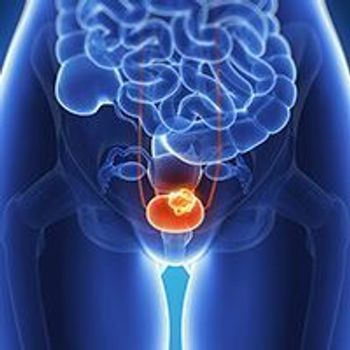
February 11, 2021 - Eganelisib, a novel PI3K-y inhibitor, demonstrated higher responses rates with nivolumab in patients with metastatic urothelial carcinoma.
February 11, 2021 - Eganelisib, a novel PI3K-y inhibitor, demonstrated higher responses rates with nivolumab in patients with metastatic urothelial carcinoma.

Tian Zhang, MD, discusses the goal of the ongoing PDIGREE trial examining nivolumab and ipilimumab plus cabozantinib in patients with metastatic untreated renal cell cancer.

February 11, 2021 - Adding apalutamide to abiraterone acetate and prednisone reduced the risk of radiographic progression or death by 30% in patients with chemotherapy-naïve metastatic castration-resistant prostate cancer receiving androgen deprivation therapy.

February 11, 2021 - Avelumab as frontline maintenance therapy plus best supportive care showed a favorable benefit-risk balance in Japanese patients with advanced urothelial cancer that did not progress on first-line chemotherapy.

February 11, 2021 - The novel tubulin inhibitor VERU-111 demonstrated early antitumor activity and a well-tolerated safety profile in patients with metastatic castration-resistant prostate cancer who failed a prior androgen receptor–targeting agent.

February 11, 2021 - First-line treatment with immune checkpoint inhibitor–based regimens could be linked with an improvement in overall survival versus select targeted therapies in patients with metastatic non–clear cell renal cell carcinoma.

February 11, 2021 - Sapanisertib failed to show significant activity and a favorable toxicity profile in patients with refractory metastatic renal cell carcinoma regardless of mTOR or PTEN status.

February 11, 2021 - A higher starting dose of lenvatinib — 18 mg per day — improved health-related quality of life and led to longer time to deterioration compared with a lower starting dose of lenvatinib — 14 mg per day — in patients with renal cell carcinoma.

February 11, 2021 - Lenvatinib in combination with everolimus has proven to be safe and effective when used in the treatment of patients with clear cell renal cell carcinoma who had previously received an immune checkpoint inhibitor.

Atish D. Choudhury, MD, PhD, discusses the rationale behind combining pembrolizumab with radium-223 in patients with metastatic castration-resistant prostate cancer as part of a phase 2 clinical trial.
Key opinion leaders in the field share what they considered to be the greatest takeaways from the 2020 Genitourinary Cancers Symposium and provide insight on where treatment is headed in their respective areas of expertise.

Neeraj Agarwal, MD, discusses the COSMIC-021 trial and shares the next steps for this research.

Sumanta K. Pal, MD, discusses the cohort 6 findings of the COSMIC-021 trial and other key data that were presented during the 2020 Genitourinary Cancers Symposium.
The combination of cabozantinib and atezolizumab demonstrated clinically meaningful activity in patients with metastatic castration-resistant prostate cancer, including those with high-risk clinical features.
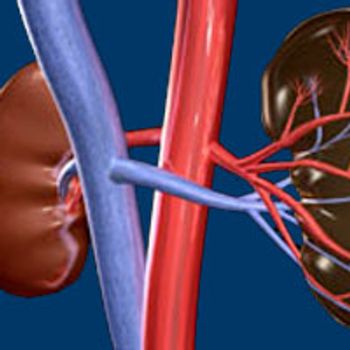
Stereotactic body radiotherapy combined with nivolumab was associated with “high” disease control and overall survival rates in a phase II study of pretreated patients with metastatic renal cell carcinoma; however, the combination did not meet the primary endpoint of overall response rate.
Combining nivolumab (Opdivo) with sitravatinib induced a confirmed objective response rate of 39% and a 92% clinical benefit rate in patients with advanced clear cell renal cell carcinoma.
The oral hypoxia-inducible factor-2α inhibitor MK-6482 induced a partial response rate of 24% and a disease control rate of 80% in patients with advanced clear cell renal cell carcinoma.

The neoadjuvant regimen of nivolumab combined with gemcitabine and cisplatin achieved a pathologic nonmuscle-invasive rate of 66% and a pathologic complete response rate of 49% in patients with muscle-invasive bladder cancer.

A neoadjuvant regimen of durvalumab plus olaparib induced a pathologic complete response rate of 50% in patients with muscle-invasive bladder carcinoma.

Emmanuel S. Antonarakis, MBBCh, professor of oncology, Johns Hopkins Medicine, discusses a phase II trial evaluating the combination of sipuleucel-T (Provenge) plus radium-223 dichloride (Xofigo) versus sipuleucel-T alone in patients with asymptomatic bone-metastatic castrate-resistant prostate cancer (mCRPC).
Toni K. Choueiri, MD, director, Lank Center for Genitourinary Oncology, director, Kidney Cancer Center, senior physician, Dana-Farber Cancer Institute, and Jerome and Nancy Kohlberg Chair and professor of medicine, Harvard Medical School, discusses phase I/II results of a trial evaluating the oral HIF-2 α inhibitor MK-6482 in patients with advanced clear cell renal cell carcinoma.

Combination therapy with radium-223 and sipuleucel-T yielded conflicting results in patients with metastatic castration-resistant prostate cancer.
Adding apalutamide to androgen deprivation therapy reduced the risk of second progression or death by 34% compared with ADT alone in patients with metastatic castration-sensitive prostate cancer.

Sumanta K. Pal, MD, associate clinical professor, Department of Medical Oncology and Therapeutics Research, co-director, Kidney Cancer Program, medical oncologist, City of Hope, discusses the phase Ib results of cohort 6 from the COSMIC-021 trial in patients with metastatic castration-resistant prostate cancer.

Shilpa Gupta, MD, medical oncologist, Department of Hematology and Medical Oncology, Cleveland Clinic, discusses the results of the phase II BLASST-1 trial, which is evaluating nivolumab, gemcitabine, and cisplatin in patients with muscle-invasive bladder cancer who are undergoing cystectomy.

Enfortumab vedotin-ejfv combined with pembrolizumab led to an objective response rate of 73% in previously untreated patients with locally advanced or metastatic urothelial cancer who were ineligible for cisplatin-based chemotherapy.
Cabozantinib demonstrated impressive progression free survival when administered post-immunotherapy in patients with metastatic renal cell carcinoma.

Arlene O. Siefker-Radtke, MD, discusses the promising preliminary data with bempegaldesleukin plus nivolumab in patients with metastatic urothelial carcinoma and the next steps for this combination.

Single-agent pembrolizumab (Keytruda) showed encouraging antitumor activity as first-line treatment in patients with non-clear cell renal cell carcinoma, especially in those with papillary or unclassified histology.

Evan Y. Yu, MD, highlights 2 key studies with PARP inhibitors in metastatic castration-resistant prostate cancer and discussed challenges that need to be addressed in this space in order to further progress.