

A selective class I oral histone deactylase inhibitor may increase the antitumor effect of high- dose interleukin-2 in renal cell carcinoma.
A selective class I oral histone deactylase inhibitor may increase the antitumor effect of high- dose interleukin-2 in renal cell carcinoma.

Nivolumab’s second-line survival benefit in renal cell carcinoma was consistent across subgroups categorized by patient risk status, prior treatment, and degree of metastases, according to an update of the phase III CheckMate-025 trial.
Daniel A. Hamstra, MD, PhD, assistant professor of Radiation Oncology, University of Michigan Health System, discusses clinical trials comparing the length of radiation treatments for patients with prostate cancer.

Hypofractionated radiotherapy demonstrated similar toxicity and was noninferior to standard radiation therapy for preventing PSA increases or disease recurrences for men with intermediate-risk prostate cancer.

Second-line treatment with atezolizumab (MPDL3280A) led to durable responses in patients with locally advanced or metastatic urothelial carcinoma.

Adding celecoxib and zoledronic acid to standard treatment extended survival in men with metastatic prostate cancer commencing first-line hormone therapy, according to updated data from the STAMPEDE trial.

The addition of the CTLA-4 inhibitor ipilimumab to cisplatin and gemcitabine did not significantly improve overall survival for patients with metastatic urothelial cancer.

The investigational anti-PD-L1 antibody avelumab demonstrated antitumor activity with an acceptable safety profile in a phase Ib trial of patients with metastatic urothelial cancer refractory to standard therapy.

Elizabeth Plimack, MD, MS, Associate Professor, Director of Genitourinary Clinical Research at Fox Chase Cancer Center, discusses immunotherapy in bladder cancer.
Adam S. Kibel, MD, disease center leader, urology chief, urologic surgery, Brigham and Women's Hospital, professor of Surgery, Harvard Medical School, Dana-Farber Cancer Institute, discusses take-home messages for community oncologists out of the 2016 Genitourinary Cancers Symposium.
Toni K. Choueiri, MD, clinical director, Lank Center for Genitourinary Oncology, director, Kidney Cancer Center, senior physician, Dana-Farber Cancer Institute, associate professor of Medicine, Harvard Medical School, discusses the significance of the CheckMate-025 for renal cell carcinoma.

A post hoc analysis of the COU-AA-302 clinical trial suggests that docetaxel has antitumor activity as first subsequent therapy following disease progression with abiraterone acetate in men with chemotherapy-naïve, metastatic castration-resistant prostate cancer.
Arlene O. Siefker-Radtke, MD, associate professor, Department of Genitourinary Medical Oncology, Division of Cancer Medicine, The University of Texas MD Anderson Cancer Center, clinical co-leader, Bladder SPORE Executive Committee, discusses treatment advancements in small cell urothelial cancer.

Aspirin’s benefits may now extend to reducing the risk of deadly prostate cancer, according to the results of an observational study which found that previously undiagnosed men who took regular aspirin had a 24% lower risk of developing a lethal form of the disease.

The non-invasive liquid biopsy, if validated, could lead to the development of a personalized selection tool in men with advanced prostate cancer.

Cabozantinib significantly improved progression-free survival versus everolimus in patients with renal cell carcinoma regardless of the degree of metastases, type or number of prior treatments, or patient risk status.
Mark Scholz, MD, medical director, Prostate Oncology Specialists, discusses the final analysis of the COU-AA-302 study, which compared abiraterone acetate to prednisone alone in patients with metastatic castration-resistant prostate cancer (mCRPC).
Naomi B. Haas, MD, associate professor, Abramson Cancer Center of the University of Pennsylvania, discusses the phase III ASSURE trial which looks at sorafenib or sunitinib for locally advanced renal cell carcinoma (RCC).

Mohummad Minhaj Siddiqui, MD, assistant professor of surgery, University of Maryland School of Medicine, director of urologic robotic surgery, University of Maryland Marlene and Stewart Greenebaum Cancer Center, discusses a study which demonstrated men with testicular cancer are more likely to develop prostate cancer.

A fourth of patients with sarcomatoid or poor-risk metastatic renal-cell carcinoma responded to treatment with the combination of sunitinib and gemcitabine.

An investigational antibody that targets programmed death-ligand 1 (PD-L1) in combination with bevacizumab had strong antitumor activity and induced responses in 4 of 10 patients with metastatic renal cell carcinoma (mRCC) in an open-label phase Ib study.

Ramucirumab added to docetaxel significantly improved PFS compared with docetaxel monotherapy as second-line treatment in a phase II study of patients with metastatic transitional cell carcinoma.

In patients evaluable for treatment response, the ORR with the combination was 50%, with 11% having a CR.
Charles J. Ryan, MD, Professor of Clinical Medicine, Urology, Helen Diller Family Comprehensive Cancer Center at the University of California, San Francisco (UCSF), discusses the final analysis of COU-AA-302.
Emmanuel S. Antonarakis, MBBCh, assistant professor, Johns Hopkins Medicine, discusses a study looking at androgen receptor splice variant 7 (AR-V7) in metastatic castration-resistant prostate cancer (mCRPC).
E. David Crawford, MD, professor, urology, radiation oncology, University of Colorado, discusses the performance of the cell cycle progression (CCP) assay for prostate cancer.
Andrew Loblaw, MD, FRCPC, MSc, clinician scientist, radiation oncologist, Sunnybrook Health Sciences Centre, discusses a study that looked at using active surveillance to monitor men with intermediate-risk prostate cancer.

The beneficial effect of abiraterone acetate on overall survival in men with progressive metastatic CRPC in the COU-AA-302 study becomes even more pronounced after adjustment for crossover from placebo to active treatment.

Androgen deprivation therapy with or without chemotherapy led to similar survival in men with advanced, metastatic hormone-sensitive prostate cancer, an updated analysis of a randomized trial showed.
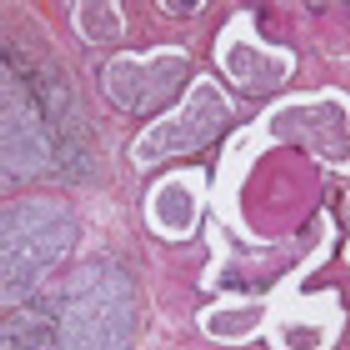
A phase I study conducted at the NIH, combining a fixed dose of PROSTVAC with escalating doses of the checkpoint inhibitor ipilimumab, produced encouraging survival results in mCRPC.