
The addition of regorafenib to avelumab demonstrated modest anti-tumor responses and survival benefit in patients with heavily pretreated biliary tract cancer.

Your AI-Trained Oncology Knowledge Connection!
The addition of regorafenib to avelumab demonstrated modest anti-tumor responses and survival benefit in patients with heavily pretreated biliary tract cancer.

The second-generation 4-1BB bi-specific CAR T-cell therapy C-CAR039 improved response rates and showed favorable safety in patients with relapsed/refractory B-cell non-Hodgkin lymphoma.

The addition of panitumumab to 5-fluorouracil and leucovorin significantly improved progression-free survival as a maintenance treatment over 5-FU/leucovorin alone in patients with RAS wild-type metastatic colorectal cancer.

Final results of the DESTINY-CRC01 trial were consistent with primary analysis, establishing the benefit of fam-trastuzumab deruxtecan-nxki in patients with HER2-overexpressing metastatic colorectal cancer.

John Raymond Zalcberg, discusses the efficacy of intra-patient dose escalation with ripretinib in patients with advanced gastrointestinal stromal tumors, as demonstrated in an analysis of the phase 3 INVICTUS trial.

Nazir Tannir, MD, FACP, discusses the efficacy of the combination of telaglenastat and cabozantinib in patients with metastatic renal cell carcinoma, as demonstrated in the phase 2 CANTATA trial.

Tisagenlecleucel led to a high response rate that proved durable, along with a favorable safety profile, in patients with relapsed/refractory follicular lymphoma following treatment with at least 2 prior regimens, according to interim findings from the phase 2 ELARA trial.
Sikander Ailawadhi, MD, discusses the activity of lisaftoclax in patients with hematologic malignancies.

Nicholas J. Short, MD, discusses the efficacy of the combination of ponatinib and blinatumomab in Philadelphia chromosome–positive acute lymphoblastic leukemia.

Pembrolizumab in combination with gemcitabine and concurrent hypofractionated radiotherapy appears to be a promising and efficacious, bladder-sparing regimen for patients with muscle-invasive bladder cancer.
Ghassan K. Abou-Alfa, MD, discusses the efficacy of ivosidenib in IDH1-mutant cholangiocarcinoma based on the results of the phase 3 ClarIDHy study.

Jennifer Litton, MD, highlights responses to talazoparib seen in patients with BRCA1/2-positive, early triple-negative breast cancer.

Ibrutinib plus venetoclax produced a complete response and complete response with incomplete bone marrow recovery rate of 56% in patients with chronic lymphocytic leukemia and small lymphocytic lymphoma.

Cetuximab added to mFOLFOXIRI induced superior depth of response than mFOLFOXIRI plus bevacizumab in treatment-naïve patients with RAS wild-type metastatic colorectal cancer.
The novel BCL-2 inhibitor lisaftoclax elicited encouraging responses with acceptable tolerability in patients with chronic lymphocytic leukemia and small lymphocytic lymphoma and other hematologic cancers.

The chemotherapy regimen of FOLFOXIRI plus bevacizumab was found to be preferred in terms of antitumor activity compared with FOLFOXIRI plus cetuximab in patients with RAS wild-type, BRAF V600E–mutant metastatic colorectal cancer.

The combination of pertuzumab and trastuzumab elicited a 37% disease control in patients with ERBB2/ERBB3-expressed, mutated, or -amplified uterine cancer.
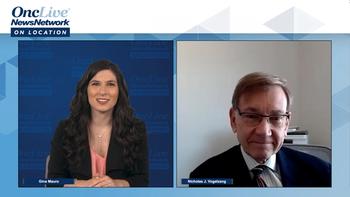
OncLive sits down with Nicholas J. Vogelzang, MD, and Erin K. Crane, MD, MPH to discuss the biggest abstracts in genitourinary cancers and gynecologic cancers, respectively, at the 2021 ASCO Annual Meeting.
The antibody-drug conjugate sacituzumab govitecan retained benefit in progression-free survival, overall survival, and objective response rate over physician’s choice of therapy, regardless of the chemotherapy agent used.
The frontline combination of pembrolizumab plus axitinib continued to show a survival benefit over single-agent sunitinib in patients with renal cell carcinoma.
Frontline treatment with the combination of lenvatinib plus pembrolizumab in patients with metastatic renal cell carcinoma led to similar health-related quality of life outcomes and disease-related symptom scores vs sunitinib.

Treatment with intra-tumoral SD-101 in combination with pembrolizumab and paclitaxel resulted in a non-statistically significant increase in estimated pathological complete response rates in patients with high-risk, HER2-negative stage II/III breast cancer across 3 HER2-negative biomarker signature groups.
Although prolonged treatment with bevacizumab for up to 30 months is feasible with consistent safety data for patients with primary epithelial ovarian, fallopian tube, or peritoneal cancer, the regimen did not improve survival over the standard 15 month treatment regimen.

Mirvetuximab soravtansine in combination with bevacizumab yielded durable responses in patients with recurrent, platinum agnostic ovarian cancer, a population in need of more effective, non-platinum treatments.

Larotrectinib has demonstrated efficacious responses and disease control in patients with TRK fusion–positive central nervous system tumors.

OncLive sits down with Erika P. Hamilton, MD, and Milind Javle, MD, on the pivotal studies in breast cancer and gastrointestinal cancers, respectively, at the 2021 ASCO Annual Meeting.
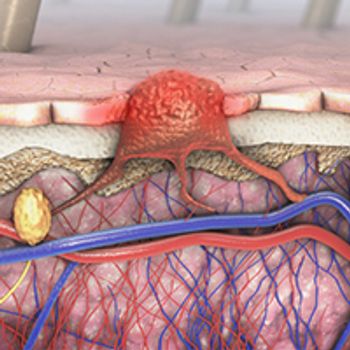
Lenvatinib and pembrolizumab continued to yield meaningful and durable responses in patients with advanced melanoma who had progressed on previous PD-L1 inhibitor treatment.

Lifileucel has demonstrated promising long-term responses in patients with heavily pretreated advanced or metastatic melanoma who have progressed following PD-1 and PD-L1 inhibition.

Nivolumab monotherapy, or in combination with ipilimumab, continued to demonstrate durable improvements in overall survival compared with ipilimumab alone in patients with previously untreated advanced melanoma.