
The addition of atezolizumab to nab-paclitaxel reduced the risk of progression or death by 38% compared with nab-paclitaxel alone in patients with PD-L1–positive metastatic triple-negative breast cancer.
The addition of atezolizumab to nab-paclitaxel reduced the risk of progression or death by 38% compared with nab-paclitaxel alone in patients with PD-L1–positive metastatic triple-negative breast cancer.
Jonathan E. Rosenberg, MD, medical oncologist, chief, Genitourinary Medical Oncology Service, Memorial Sloan Kettering Cancer Center, discusses dosing for the combination of nivolumab (Opdivo) and ipilimumab (Yervoy) in patients with metastatic urothelial carcinoma at the 2018 ESMO Congress.
Adding radium-223 dichloride to abiraterone acetate and prednisone did not improve survival in patients with metastatic castration-resistant prostate cancer.
Ravi Vij, MD, MBA, professor of medicine, Division of Oncology, Section of Bone Marrow Transplant, Washington University School of Medicine, Siteman Cancer Center, discusses the optimal induction therapy in the treatment of patients with multiple myeloma.
Stephen Oh, MD, PhD, assistant professor of medicine, Division of Hematology, Washington University School of Medicine, Siteman Cancer Center, discusses the development of JAK inhibitors in myelofibrosis.
MET amplification and EGFR C797S mutations are the most commonly observed alterations associated with resistance to first-line osimertinib in patients with EGFR-mutant non–small cell lung cancer.
Brad Kahl, MD, professor in the Department of Medicine, Washington University School of Medicine, Siteman Cancer Center, discusses the use of ibrutinib (Imbruvica) in the treatment of patients with chronic lymphocytic leukemia (CLL).
Anthony B. El-Khoueiry, MD, discusses the promising hepatocellular carcinoma treatment paradigm.
Afsaneh Barzi, MD, discusses updates in the treatment of patients with pancreatic cancer, as well as the importance of genetic testing.
Heinz-Josef Lenz, MD, discusses the intersection between the molecular makeup of colorectal cancer and the development of novel therapies in the treatment paradigm.
Anthony El-Khoueiry, MD, associate professor of clinical medicine, Keck School of Medicine, USC Norris Comprehensive Cancer Center, discusses recent combination data in hepatocellular carcinoma.

Syma Iqbal, MD, associate professor of clinical medicine, Keck School of Medicine, University of Southern California, discusses treatment options for patients with neuroendocrine tumors (NETs).
Heinz-Josef Lenz, MD, associate director for Adult Oncology and co-leader of the Gastrointestinal Cancers Program, USC Norris Comprehensive Cancer Center, discusses the FDA breakthrough designation status of encorafenib (Braftovi), binimetinib (Mektovi), and cetuximab (Erbitux) for the treatment of patients with BRAF V600E-mutant metastatic colorectal cancer (CRC).
Heinz-Josef Lenz, MD, associate director for Adult Oncology and co-leader of the Gastrointestinal Cancers Program, USC Norris Comprehensive Cancer Center, discusses the changing landscape of metastatic colorectal cancer (mCRC).
Massimo Cristofanilli, MD, discusses a session at the 20th Annual Lynn Sage Breast Cancer Symposium on the roles of a multidisciplinary team.
George Sledge, Jr., MD, discusses the benefit to the cost of genomic sequencing decreasing overtime.
As the cost of sequencing continues to fall, genomic testing will likely become widespread in all types of metastatic cancer, including breast cancer.
William J. Gradishar, MD, discusses how far the breast cancer field has advanced over the last 20 years and the data he is anticipating to read out in the future.
Multiple gene signature assays have been developed that supply prognostic information for decisions on adjuvant chemotherapy and whether therapy should be of extended duration.
Determining the optimal adjuvant therapy in young women with breast cancer remains challenging, but some clarity is beginning to emerge.
Kathryn Ruddy, MD, discusses how genetic testing could impact treatment of patients with breast cancer.
Andrea V. Barrio, MD, discusses the challenges with phyllodes tumors of the breast and how to manage this disease moving forward.
Elizabeth Mittendorf, MD, PhD, discusses the rationale for updating the AJCC staging system in patients with breast cancer. This system was originally developed in the 1970s but is still used today.
All triple-negative breast cancers are not created equal, and clinicians should consider their inherent heterogeneity during diagnosis and treatment planning.
Monica Morrow, MD, addresses how she treats patients with breast cancer who have locoregional recurrence and how therapeutic approaches have evolved over recent years.
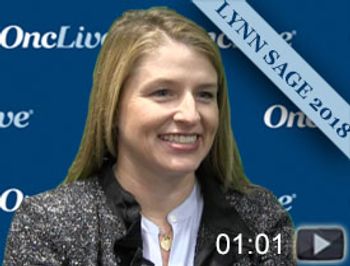
Sara McLaughlin, MD, professor of Surgery, Mayo Clinic, discusses the frequency that lymphedema appears in patients with breast cancer and addresses the complications in identifying this after her presentation at the Lynn Sage Breast Cancer Symposium.
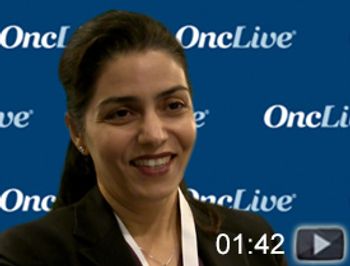
Afsaneh Barzi, MD, assistant professor of clinical medicine, USC Norris Comprehensive Cancer Center, discusses surgical advances in the treatment of patients with pancreatic cancer.
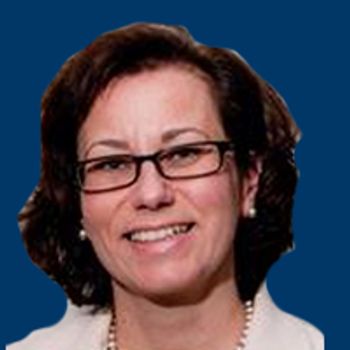
Just as immunotherapies are transforming clinical practice for oncologists, these new therapies are also changing the practice of pathology and offering new ways for oncologists and pathologists to collaborate and improve patient care.
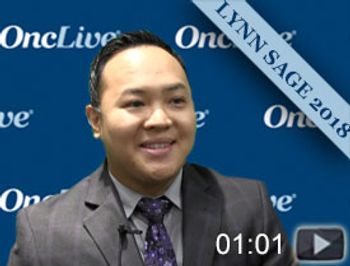
Luis Z. Blanco Jr., MD, assistant professor of Pathology, Northwestern University, discusses the role a pathologist plays in the treatment of a patient with breast cancer during a presentation at the Lynn Sage Breast Cancer Symposium.
Scalp cooling to limit alopecia in patients with cancer who are receiving chemotherapy is edging closer to becoming a widespread patient offering following recent FDA clearances.