
Mark D. Pegram, MD, associate director, clinical research, director, Breast Cancer Program, Stanford Cancer Institute, goes over some of the challenges surrounding neoadjuvant treatment for HER2-positive breast cancer patients.

Your AI-Trained Oncology Knowledge Connection!
Mark D. Pegram, MD, associate director, clinical research, director, Breast Cancer Program, Stanford Cancer Institute, goes over some of the challenges surrounding neoadjuvant treatment for HER2-positive breast cancer patients.

Hyman B. Muss, MD, professor of oncology, University of North Carolina, director, Geriatric Oncology, Lineberger Comprehensive Cancer Center, discusses optimizing adjuvant treatment in older patients with breast cancer.

Joan Lunden presented the keynote address at the Miami Breast Cancer Conference where she spoke powerfully and from the heart in a talk perfectly aligned with the meeting's focus on the patient perspective.

Heterogeneity, which can result in treatment resistance, is commonly underestimated and misunderstood, representing an important area of future research.

In a discussion at the Miami Breast Cancer Conference, Clifford A. Hudis, MD, suggested that an increased risk for developing breast cancer might be a consequence of inflammation that often accompanies obesity.
George W. Sledge, Jr., MD, professor of medicine, Stanford University School of Medicine, explains how tumor heterogeneity impacts patient care and research.

Ramucirumab added to docetaxel significantly improved PFS compared with docetaxel monotherapy as second-line treatment in a phase II study of patients with metastatic transitional cell carcinoma.
Lisa A. Carey, MD, professor of medicine, Breast Cancer Research, University of North Carolina, medical director, UNC Breast Center, chief of Hematology/Oncology, physician-in-chief, UNC North Carolina Cancer Hospital, discusses treatment options and challenges in triple-negative breast cancer.

In patients evaluable for treatment response, the ORR with the combination was 50%, with 11% having a CR.
Charles J. Ryan, MD, Professor of Clinical Medicine, Urology, Helen Diller Family Comprehensive Cancer Center at the University of California, San Francisco (UCSF), discusses the final analysis of COU-AA-302.

Moving early to diagnose and treat lymphedema after breast cancer treatment can reverse this side effect or prevent it from becoming more severe.
Emmanuel S. Antonarakis, MBBCh, assistant professor, Johns Hopkins Medicine, discusses a study looking at androgen receptor splice variant 7 (AR-V7) in metastatic castration-resistant prostate cancer (mCRPC).

Tumor genome profiling identifies driver mutations in breast tumors, however, it is still too early to use this information in clinical decision making.
E. David Crawford, MD, professor, urology, radiation oncology, University of Colorado, discusses the performance of the cell cycle progression (CCP) assay for prostate cancer.

While not appropriate for all patients with ER-positive breast cancer, neoadjuvant endocrine therapy could play an important role in select groups of women with comorbidities or those with ER-rich/luminal A disease.
Andrew Loblaw, MD, FRCPC, MSc, clinician scientist, radiation oncologist, Sunnybrook Health Sciences Centre, discusses a study that looked at using active surveillance to monitor men with intermediate-risk prostate cancer.

The beneficial effect of abiraterone acetate on overall survival in men with progressive metastatic CRPC in the COU-AA-302 study becomes even more pronounced after adjustment for crossover from placebo to active treatment.

The FDA's recent approval of the first PARP inhibitor suggests that this new class of targeted therapy has great potential to help not only patients with ovarian cancer for whom the agent is indicated but also individuals with breast cancer.
Androgen deprivation therapy with or without chemotherapy led to similar survival in men with advanced, metastatic hormone-sensitive prostate cancer, an updated analysis of a randomized trial showed.
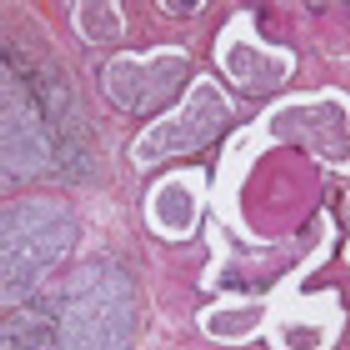
A phase I study conducted at the NIH, combining a fixed dose of PROSTVAC with escalating doses of the checkpoint inhibitor ipilimumab, produced encouraging survival results in mCRPC.
Debu Tripathy, MD, professor of medicine, chair, department of breast medical oncology, The University of Texas MD Anderson Cancer Center, discusses the possibility of one day being able to cure metastatic breast cancer.
Deanna J. Attai, MD, breast surgeon, assistant clinical professor of surgery, David Geffen School of Medicine, University of California, Los Angeles, explains how social media can help physicians.
Laurence Albiges, MD, visiting scientist, Dana-Farber Cancer Institute, discusses a study that looked at the impact of body mass index (BMI) on outcomes of patients with metastatic renal cell carcinoma (mRCC).

The landscape of breast cancer care is shifting rapidly, but that doesn't worry the organizers of the 32nd Annual Miami Breast Cancer Conference.
With the evolution of treatment under way, OncLive interviewed three world-renowned experts in the field: Joanne L. Blum, MD, PhD, Adam M. Brufsky, MD, PhD, and Harold J. Burstein, MD, PhD.
Rana R. McKay, MD, discusses a study looking at statins and survival outcomes in patients with metastatic renal cell carcinoma.
Eduardo Sotomayor, MD, the Susan and John Sykes Endowed Chair in Hematologic Malignancies at Moffitt Cancer Center, discusses the future of personalized medicine in lymphoma.
The proportion of men diagnosed with intermediate- or high-risk cancer, based on blood PSA level, increased by nearly 6% from 2011 to 2013.

The risk of dying from prostate cancer increased fourfold when active surveillance was used to monitor men with intermediate-risk disease compared with low-risk prostate cancer patients.
Neither sorafenib nor sunitinib improved outcomes when administered after surgery to patients with locally advanced renal cell carcinoma (RCC), according to results from the phase III ASSURE trial, which were presented at a presscast held ahead of the 2015 Genitourinary Cancers Symposium.