

The use of GLP-1 agonists was not associated with higher cancer rates and led to a decrease in obesity-related cancers in adults with diabetes.
The use of GLP-1 agonists was not associated with higher cancer rates and led to a decrease in obesity-related cancers in adults with diabetes.
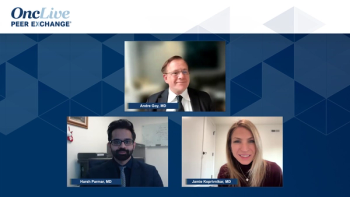
Panelists discuss how insights from ASH 2024 highlight emerging trends in treating hematologic malignancies, including advances in targeted therapies, immunotherapies, and personalized medicine to improve patient outcomes.
Ahead of the 2025 ASCO Annual Meeting, experts in genitourinary cancers share the most anticipated research being presented during the meeting.
Panelists discuss how the Augmented Hyper-CVAD (AHCVAD) regimen, when applied to adults younger than 50 years with acute lymphoblastic leukemia, demonstrates promising clinical outcomes that challenge conventional age-stratified treatment approaches by achieving high minimal residual disease (MRD) negativity rates and favorable 3-year overall survival, regardless of whether patients undergo allogeneic stem cell transplantation.
Ahead of the 2025 ASCO Annual Meeting, experts in gastrointestinal cancers provide their top anticipated studies they will be watching for at the meeting.

Experts highlight key abstracts and presentations to keep an eye on in gynecologic oncology at the 2025 ASCO Annual Meeting.

An exploratory ctDNA analysis from postMONARCH highlighted the benefit of abemaciclib plus fulvestrant across HR-positive breast cancer subgroups.

Final analysis of SGNTUC-019 showed a 41.9% ORR, an 80.6% DCR, and a 18.2-month DOR with tucatinib/trastuzumab in pretreated, HER2-mutated metastatic breast cancer.

T-DM1 plus palbociclib showed significant PFS in patients with HER2-positive metastatic breast cancer.

EL1SSAR data reinforce the importance of PD-L1 assessment to select patients with TNBC with the best outcomes on atezolizumab.

Baseline ctDNA concentration was shown to be the most significant predictor of distant recurrence-free survival in patients with early breast cancer.

Zanidatamab/chemotherapy showed early antitumor activity with a manageable safety profile in patients with HER2-expressing metastatic breast cancer.

Durvalumab plus tremelimumab and trastuzumab produced responses in trastuzumab-resistant, HER2-positive advanced breast cancer.

Frontline endocrine therapy plus entrectinib failed to decrease RCB to 0/1 in patients with invasive lobular breast carcinoma.

Iza-bren was safe and displayed early clinical activity in patients with heavily pretreated breast cancer across both HER2-low and HER2-negative subgroups.

An analysis from PADA-1 showed the emergence of ESR1 mutations was uneven over time in hormone receptor–positive, HER2-negative metastatic breast cancer.

Breast cancer experts rank key abstracts of interest from the upcoming ASCO Annual Meeting on OncLive’s social media.

Neoadjuvant data from the ADAPTcycle trial confirmed the limited benefit of chemotherapy over endocrine therapy in high-risk HR-positive breast cancer.
Emiltatug Ledadotin generated initial responses and was tolerable in heavily pretreated patients with advanced/metastatic TNBC.

Puxitatug samrotecan demonstrated manageable safety and early efficacy in HR-positive/HER2-negative advanced breast cancer.
Adjuvant pertuzumab with trastuzumab and chemotherapy extended OS vs placebo with trastuzumab and chemotherapy in HER2-positive early breast cancer.
Treatment with T-DXd improved outcomes vs chemotherapy in pretreated patients with HR-positive, HER2-low/-ultralow metastatic breast cancer.
Panelists discuss how the 5-year follow-up data from the ZUMA-2 trial reveal sustained clinical benefit and durable responses for patients with relapsed/refractory mantle cell lymphoma (R/R MCL) treated with brexucabtagene autoleucel, potentially reshaping treatment paradigms by demonstrating long-term efficacy of CAR T-cell therapy in a historically challenging hematologic malignancy.
Panelists discuss how the combination of lisocabtagene maraleucel (liso-cel) and ibrutinib in patients with relapsed or refractory (R/R) chronic lymphocytic leukemia (CLL) or small lymphocytic lymphoma (SLL), as presented in the phase 1/2 TRANSCEND CLL 004 study, may redefine treatment strategies by highlighting the potential benefits of combining chimeric antigen receptor (CAR) T-cell therapy with targeted agents and reshaping perspectives on sequential vs combination approaches in high-risk CLL.
Ahead of the 2025 ASCO Annual Meeting, lung cancer experts highlight the abstracts and related trials they’re looking forward to seeing at the meeting.

Subgroup analyses from EMBER-3 continued to demonstrated benefits with imlunestrant plus abemaciclib in ER-positive advanced breast cancer.

To prepare for the 2025 ASCO Annual Meeting, breast cancer experts share the abstracts and discussions they’re most excited to see at the meeting.

Poll results highlighted key lung cancer abstracts of interest from the upcoming ASCO Annual Meeting on OncLive’s social media.
Panelists discuss how insights from the Liso-cel combined with ibrutinib (ibr) for relapsed/refractory chronic lymphocytic leukemia (R/R CLL) and small lymphocytic lymphoma (SLL) are highlighted through the primary results of the open-label, phase 1/2 Transcend CLL 004 study.
Panelists discuss how the updated results from Arm 8 of the Epcore NHL-2 trial on Fixed-Duration Epcoritamab + R-Mini-CHOP in patients with previously untreated diffuse large B-cell lymphoma (DLBCL) ineligible for full-dose R-CHOP may influence treatment selection by offering a potentially effective alternative for this patient population