

Orca-T led to lower rates of EBV and CMV reactivation vs CD34 engraftment in patients with select hematologic malignancies.
Orca-T led to lower rates of EBV and CMV reactivation vs CD34 engraftment in patients with select hematologic malignancies.

Higher CR rates were achieved with the tandem CAR T-cell infusion plus ASCT vs the infusion alone in patients with relapsed/refractory B-cell lymphoma.

Juan Carlos Hernández-Boluda, MD, PhD, discusses an EBMT machine learning–based model for identifying and stratifying transplant risk in myelofibrosis.

Improved PFS was associated with at least a 25% reduction in tumor burden before treatment with cilta-cel in patients with relapsed/refractory multiple myeloma.
Esther Natalie Oliva, MD, discusses the rationale for the phase 3 QuANTUM-Wild trial in newly diagnosed FLT3-ITD–negative AML.

Steven Devine, MD; Everett Meyer, MD, PhD; and Sophie Paczesny, MD, PhD, discuss their most highly anticipated presentations from the 2025 EBMT Meeting.

Nirogacestat sustained long-term efficacy with acceptable safety in patients with desmoid tumors treated in the phase 3 DeFi trial.

Pediatric patients with TRK fusion–positive sarcomas may be able to safely discontinue larotrectinib and resume treatment if needed without sacrificing response.

Amivantamab plus lazertinib provides long-term survival benefit over osimertinib in EGFR-mutated advanced non–small cell lung cancer.

Tess O’Meara, MD, MHS, and Kelsey H. Natsuhara, MD, discuss their presentations from the OncLive National Fellows Forum at SABCS.

A randomized trial found no significant differences in recurrence or survival with smaller radiation margins vs standard RTOG protocols in patients with HGG.

A real-world study showed OS outcomes with eribulin similar to those with trabectedin in doxorubicin-pretreated patients with advanced liposarcoma.

The risk of developing ICANS with CAR T-cell therapy was higher in patients with NHL who experienced a recent fall and could not balance on their left leg.
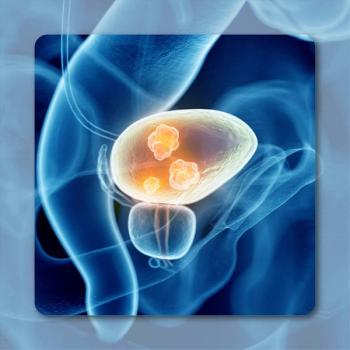
Real-world data showed that atezolizumab provided a benefit and was safe in patients with platinum-ineligible mUC and high comorbidities/functional status.

Tanya Gupta, MD, highlights the utility of adjuvant CDK4/6 and PARP inhibitors in patients with HR-positive, HER2-negative breast cancer.
Ocular adverse effects stemming from mirvetuximab soravtansine did not significantly affect HRQOL in FRα-positive platinum-resistant ovarian cancer.
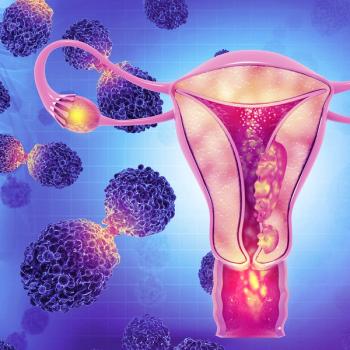
Treatment with abemaciclib plus hormonal therapy showed promise in LGSOC/EEC but not in HGSOC, and larger studies are needed to validate these findings.

Elizabeth Lee, MD, discusses the efficacy of rinatabart sesutecan in patients with FRα-expressing high-grade serous or endometrioid platinum-resistant ovarian cancer.

Taliya Lantsman, MD, discusses real-world safety and efficacy data with dostarlimab plus chemotherapy in patients with advanced endometrial cancer.

The median DOR with Rina-S was not reached and the treatment was well tolerated in patients with FRα-unselected platinum-resistant ovarian cancer.
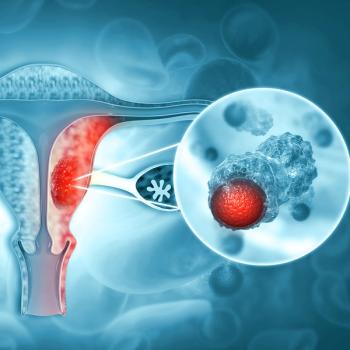
Maintenance selinexor improved progression-free survival in TP53 wild-type advanced endometrial cancer.

Pamiparib plus surufatinib showed signals of activity with a largely hematologic adverse effect profile in patients with PARP-pretreated, platinum-resistant ovarian cancer.

The combination of avutometinib and defactinib produced durable responses in recurrent low-grade serous ovarian cancer.
Dostarlimab plus chemotherapy improved 24-month DOR rates vs placebo plus chemotherapy in patients with primary advanced or recurrent endometrial cancer.
Findings from a real-world study confirm the efficacy and safety of dostarlimab plus chemotherapy in advanced endometrial cancer.

The combination of pembrolizumab and lenvatinib showed promising activity including durable responses in patients with platinum-resistant HGSOC.

Shannon Westin, MD, MPH, FACOG, discusses the efficacy of durvalumab plus chemotherapy and olaparib in pMMR recurrent endometrial cancer.
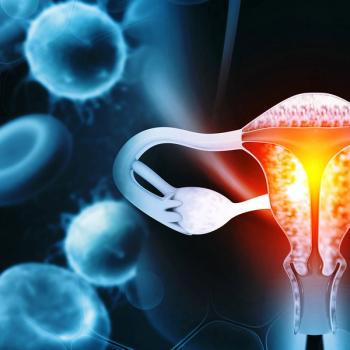
Patients with endometrial cancer had slightly higher CR rates with metformin plus a levonorgestrel-releasing IUD vs historical data with the IUD alone.

Jordyn Silverstein, MD, discusses the efficacy of abemaciclib plus hormonal therapy in recurrent ovarian cancer or endometroid endometrial cancer.
Frontline maintenance with niraparib and bevacizumab showed efficacy and safety profiles that are in line with similar regimens in advanced ovarian cancer.