
Primary tumor response to nivolumab plus ipilimumab observed results of a Japanese study indicates a changing role for the timing of cytoreductive nephrectomy for patients with advanced renal cell carcinoma.fr

Your AI-Trained Oncology Knowledge Connection!
Primary tumor response to nivolumab plus ipilimumab observed results of a Japanese study indicates a changing role for the timing of cytoreductive nephrectomy for patients with advanced renal cell carcinoma.fr
Bacille Calmette-Guérin (BCG) plus N-803 yielded promising responses and an encouraging safety profile in patients with BCG-unresponsive, non-muscle invasive bladder cancer carcinoma in situ.
Patients with nonmetastatic castration-resistant prostate cancer demonstrated high adherence rates and favorable prostate-specific antigen response to apalutamide according to real-world evidence presented at the 2021 American Urological Association Annual Meeting.
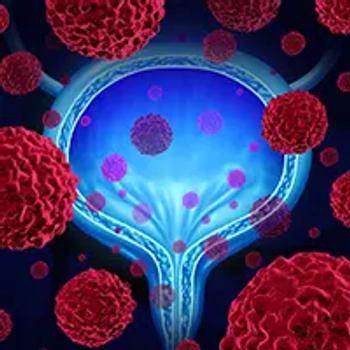
Antibody titers and fold changes may prove to be a prognostic marker for the efficacy of nadofaragene firadenovec for the treatment of patients with bacillus Calmette-Guérun unresponsive non-muscle invasive bladder cancer.

Atezolizumab plus carboplatin and pemetrexed yielded a favorable safety and efficacy profile in patients with advanced non-squamous non-small cell lung cancer with untreated brain metastases.
Elranatamab elicited encouraging responses with a manageable toxicity profile when used alone or in combination with lenalidomide in patients with relapsed/refractory multiple myeloma, with efficacy observed even in those who received prior BCMA-directed therapy or who were triple-class refractory, according to data from the phase 1 MagnetisMM-1 trial.
Treatment with fixed-duration rituximab plus the chemotherapy bendamustine was associated with more favorable outcomes than the triplet of dexamethasone, rituximab, and cyclophosphamide, as well as bortezomib, dexamethasone, and rituximab in patients with treatment-naïve Waldenström macroglobulinemia.
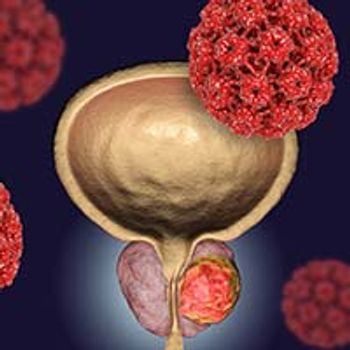
Obese men with metastatic castration-resistant prostate cancer have better disease-specific and overall survival than overweight or normal weight patients.
A single dose of ciltacabtagene autoleucel continued to elicit early, deep, and durable responses and showcase a manageable safety profile in heavily pretreated patients with multiple myeloma.
The CAR T-cell therapy ciltacabtagene autoleucel has emerged as a potentially durable treatment strategy for patients with relapsed/refractory multiple myeloma who have progressed on 1 to 3 prior lines of treatment and are refractory to lenalidomide.

Idecabtagene vicleucel continued to elicit frequent, deep, and durable responses among patients with heavily pretreated relapsed/refractory multiple myeloma irrespective of whether patients received 3 or at least 4 prior therapies.
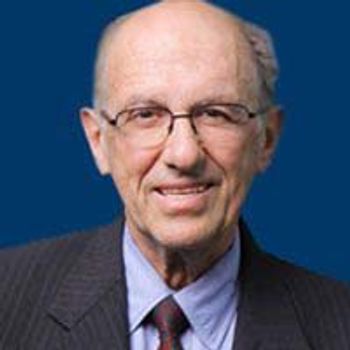
Franco Muggia, MD, a fixture at NYU Langone’s Perlmutter Cancer Center and a leader in the study and treatment of patients with gynecologic cancers, died on September 8, 2021. He was 85 years old.

Talquetamab, an off-the-shelf T-cell redirecting, GP3C5D-targeting agent, has continued to show promising clinical activity in patients with relapsed/refractory multiple myeloma, especially when given at the recommended phase 2 dose of 405 µg/kg weekly in subcutaneous formulation.
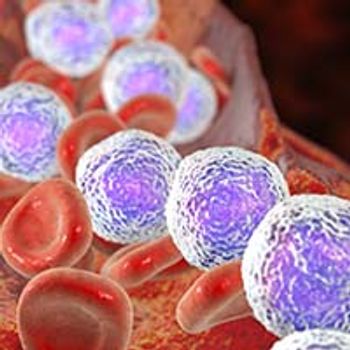
Historical prognostic markers for chemoimmunotherapy have largely lost their clinically relevance in the context of targeted therapies for patients with chronic lymphocytic leukemia; however, IGHV and TP53 mutational status remain important predictive markers of response, now for novel treatments.

The combination of lurbinectedin and doxorubicin produced comparable efficacy to that of standard-of-care vincristine, cyclophosphamide, and doxorubicin or topotecan in patients with relapsed small cell lung cancer, missing the primary end point of the phase 3 ATLANTIS trial.

Sitting at the forefront of clinical development, pirtobrutinib and lisocabtagene maraleucel have generated significant enthusiasm in chronic lymphocytic leukemia.
Patients with chronic lymphocytic leukemia are at an increased risk for infection whether they are in the premalignant state of monoclonal B lymphocytosis, during active surveillance for those are treatment naïve, or are on active treatment.

Estimated 4-year mortality rates were greater than 10% in patients with polycythemia vera and vascular complications led to approximately one-third of these deaths, according to a retrospective analysis of the prospective REVEAL trial (NCT02252159) presented during the Society of Hematologic Oncology (SOHO) 2021 Annual Meeting.

Adjuvant atezolizumab improved disease-free survival over best supportive care in patients with PD-L1–positive, stage II to IIIA non–small cell lung cancer, with benefit observed across most subgroups analyzed, according to data from an exploratory analysis of the phase 3 IMpower010 trial.
Pirtobrutinib, showcased promising efficacy signals across dose levels in previously treated patients with chronic lymphocytic leukemia and small lymphocytic lymphoma.
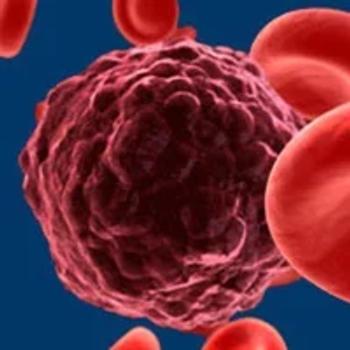
The effectiveness of this treatment in patients with multiple myeloma may be an option for a patient population who represent an unmet need.
Various phase 2 and 3 studies are currently underway utilizing both new and existing treatments in an effort to improve outcomes for patients with myelofibrosis.
Flexibilities in time and place were effective strategies to mitigate COVID–19-related patient concerns and to increase participation in international lung cancer clinical trials.
The safety and efficacy of the quadruplet regimen of fixed-dose isatuximab-irfcc in combination with bortezomib, lenalidomide, and dexamethasone were confirmed for patients with newly diagnosed multiple myeloma with no immediate intent for transplant.
Future treatment approaches for patients with polycythemia vera (PV) should center around adapting therapy using the available criteria, and eventually finding new targets.
For patients with myeloma have undergone an autologous stem cell transplant and are currently on maintenance therapy with lenalidomide, minimal residual disease may be a powerful predictor of outcomes.
Older patients with newly diagnosed multiple myeloma who are ineligible for chemotherapy or transplant may derive a greater benefit when treated with daratumumab plus lenalidomide and dexamethasone compared with lenalidomide and dexamethasone.
The addition of venetoclax to fludarabine, cytarabine, idarubicin and G-CSF resulted in high complete response rates and enables a high consolidative allogeneic transplantation rate in patients with newly diagnosed acute myeloid leukemia.
David J. Feller-Kopman, MD, discusses the imperative role of the pulmonologist in the screening and management of lung cancer.