

ADP-A2M4CD8, a novel T-cell therapy, is being investigated in a range of tumor types that express MAGEA4, an antigen expressed in solid tumors that investigators say represents a promising target for cellular immunotherapy.

Your AI-Trained Oncology Knowledge Connection!
ADP-A2M4CD8, a novel T-cell therapy, is being investigated in a range of tumor types that express MAGEA4, an antigen expressed in solid tumors that investigators say represents a promising target for cellular immunotherapy.

Gary J. Schiller, MD, discusses data from the 2020 ASH Annual Meeting and Exposition and the role of transplant in chronic myeloid leukemia.

February 22, 2021 - The FDA has granted a fast track designation to the DNA-mediated interleukin-12 immunotherapy GEN-1 for use in the treatment of patients with advanced ovarian cancer.

Timothy M. Schmidt, MD, discusses the safety and efficacy of teclistamab in patients with multiple myeloma.

February 22, 2021 - The FDA has granted priority review to a supplemental new drug application for ruxolitinib for use in adult and pediatric patients aged 12 years and older with steroid-refractory chronic graft-versus-host disease.
February 22, 2021 - The FDA has approved cemiplimab-rwlc monotherapy for use in the frontline treatment of patients with advanced non–small cell lung cancer with a PD-L1 expression level of 50% or higher.

Sara A. Hurvitz, MD, discusses the potential integration of oral taxanes into the treatment paradigm of patients with metastatic breast cancer.

Claud N. Grigg, MD, highlights different frontline combination regimens that are improving outcomes for patients with metastatic renal cell carcinoma.

A recent wave of drug approvals for treating prostate cancer in earlier disease states, coupled with genomic advances, may help pave the way for a shift toward handling the malignancy as a chronic condition.

AstraZeneca has voluntarily withdrawn durvalumab from the US market for the treatment of adult patients with locally advanced or metastatic bladder cancer.

Davey B. Daniel, MD, discusses key immunotherapy trials in advanced non–small cell lung cancer and explains how the results can be extrapolated to clinical practice.

Although chemotherapy remains the cornerstone of treatment in pancreatic ductal adenocarcinoma, the field has begun to carve out more personalized approaches evidenced by the POLO trial.

When one is dealing with the topic of cancer, its treatment and consequences, language that clinicians and members of the cancer research community use may have an even greater impact.

February 19, 2021 - The National Comprehensive Cancer Network has issued guidelines for the management of children with a rare type of kidney cancer referred to as Wilms Tumor, or nephroblastoma.

February 19, 2021 - Multitarget stool DNA test Cologuard could present a potential noninvasive screening method for colorectal cancer, as it has demonstrated high specificity among average-risk patients aged 45 to 49 years.
Patients with metastatic renal cell carcinoma have a new frontline treatment alternative following FDA approval of the combination of nivolumab plus cabozantinib combination.

Christos Vaklavas, MD, discusses the progress that has been made in metastatic HR-positive, HER2-negative breast cancer and potential pathways forward for therapeutic sequencing.

A reduced frequency of maintenance vincristine and dexamethasone led to a 5-year overall survival rate of 98.6% and improved quality of life in pediatric patients with newly diagnosed, standard-risk B-cell acute lymphoblastic leukemia.

Reema A. Patel, MD, discusses the potential for nanoliposomal irinotecan in pancreatic cancer and other emerging approaches under exploration.

Kanwarpal S. Kahlon, MD, discusses the nuances of approaching treatment in ITP, updated guidelines to inform treatment selection, and recent data presented during the 2020 ASH Annual Meeting and Exposition that have the potential to advance the field.

Parameswaran Hari, MD, MRCP, discusses single-agent and combination strategies that have recently been introduced to the relapsed/refractory multiple myeloma setting and the nuances to utilizing them in clinical practice.

February 18, 2021 - One hundred and thirty organizations, cancer centers, and other institutions sent a letter to President Joe Biden and his administration, as well as other leading public health officials at state health departments to underscore the need to provide patients with cancer and survivors of cancer with priority access to a coronavirus disease 2019 vaccine.

Kabir Mody, MD discusses new directions with yttrium-90 glass microspheres in hepatocellular carcinoma as demonstrated in the retrospective LEGACY study.

February 18, 2021 - Single-agent cemiplimab has been found to result in a significant improvement in overall survival and progression-free survival versus chemotherapy in patients with advanced non–small cell lung cancer who had a PD-L1 expression of at least 50%.

Michael A. Davies, MD, PhD, discusses how he currently approaches treatment for patients advanced BRAF-mutant melanoma as well as exciting areas of current research to address ongoing questions in the community.

Yi Lin, MD, PhD, discusses promising data with CAR T-cell therapy in multiple myeloma.

February 18, 2021 - Two supplemental biologics license applications have been submitted to the FDA for enfortumab vedotin-ejfv to convert the agent’s accelerated approval into a regular one and to expand the current label to include patients with locally advanced or metastatic urothelial cancer who had received prior treatment with a PD-1/PD-L1 inhibitor and are not eligible for cisplatin.
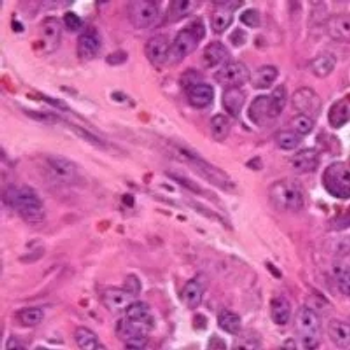
February 18, 2021 — The use of next-generation sequencing demonstrated that 34% of patients with sarcoma had potentially actionable mutations.

The identification of oncogenic driver mutations in non–small cell lung cancer to inform targeted therapy selection is the bedrock of clinical practice in this disease, with current estimates suggesting that more than half of patients harbor an actionable mutation.
Rafael Fonseca, MD, discusses several clinical trials that support the use of quadruplet regimens in myeloma, the utilization of MRD in clinical decision-making, and future directions for research.