

Roswell Park Comprehensive Cancer Center researchers will share key data at the 2026 ASCO Annual Meeting.
Roswell Park Comprehensive Cancer Center researchers will share key data at the 2026 ASCO Annual Meeting.

Rising rates of early-onset cancers have prompted shifts in management strategies and new research avenues.

Expanded PFS sensitivity, subgroup, and safety data showed consistent, durable outcomes with both zanidatamab-based regimens in the first line.

The FDA has approved pivekimab sunirine-pvzy (Decnupaz) for the treatment of adult patients with blastic plasmacytoid dendritic cell neoplasm.
OncLive spoke with experts in the field of GU oncology to gain their insights on the most notable presentations from the 2026 AUA Annual Meeting.

The FDA priority review of neladalkib for TKI-pretreated ALK-positive NSCLC is supported by data from the phase 1/2 ALKOVE-1 trial.

Researchers found machine learning models using patient-reported outcomes and clinical data could help forecast unplanned health care use after treatment.
The FDA extended the review period for camizestrant plus a CDK4/6 inhibitor in hormone receptor–positive breast cancer with an emergent ESR1 mutation.

RD118 produced an ORR of 94.4% and a median PFS of 18.2 months in heavily pretreated patients with relapsed/refractory multiple myeloma.
A DSMB has recommended the continuation of the BRIA-ABC trial evaluating Bria-IMT in patients with metastatic breast cancer, with no safety concerns.
Studies in pancreatic and prostate cancer selected for ASCO’s Plenary Program.
Neil D. Gross, MD, FACS, discusses how anti–PD-1 therapy is changing treatment approaches in advanced CSCC.

The European Medicines Agency’s CHMP has issued a positive opinion for encorafenib plus cetuximab and mFOLFOX6 in first-line BRAF V600E–mutant mCRC.
The CHMP granted a positive opinion to perioperative pembrolizumab/enfortumab vedotin as well as pembrolizumab and berahyaluronidase alfa in MIBC.

Bispecific antibodies and the latest proton therapy techniques are taking center stage in the treatment of patients with head and neck cancers.
The FDA has published new sets of product-specific guidelines for investigating generic cancer treatments to guide proper evaluation of bioequivalence.
The University of Texas MD Anderson Cancer Center announced that Albert Koong, MD, PhD, has been appointed chief scientific officer.

Marwan G. Fakih, MD, outlines situations when ctDNA and tissue NGS agree, when they diverge, and scenarios that should prompt repeat liquid biopsy testing.
CHMP recommended trastuzumab deruxtecan for HER2-positive (IHC 3+) metastatic solid tumors, marking the first tumor-agnostic ADC opinion in the EU.

The top 5 OncLive TV videos of the week cover insights in breast cancer, ovarian cancer, prostate cancer, acute myeloid leukemia, and mantle cell lymphoma.
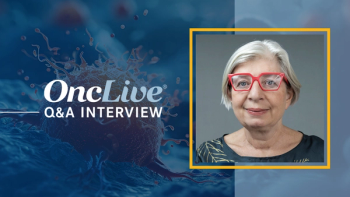
Yelena Novik, MD, notes the use of CDK4/6 inhibitors in ER-positive breast cancer and the role of oral SERDs in the management of select metastatic cases.
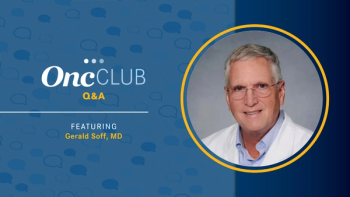
Gerald Soff, MD, discusses how romiplostim could improve long-term outcomes in patients with GI cancer and thrombocytopenia by preserving relative dose intensity.

CHMP recommends camizestrant plus CDK4/6 inhibitor for ESR1-mutated HR+/HER2– advanced breast cancer, based on SERENA-6 phase 3 trial data.

The FDA approved Dato-DXd for PD-1/PD-L1–ineligible triple-negative breast cancer, granted priority review to sevabertinib in HER2-mutant NSCLC, and more.
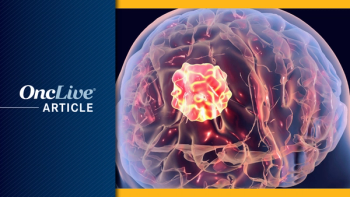
Mayo Clinic researchers are advancing brain tumor care through molecular profiling, improved diagnostics for younger patients, new drug delivery methods, and emerging immunotherapies.
Poll results reflected some of the most anticipated presentations and fields of interest in hematologic oncology at the 2026 ASCO Annual Meeting.
Poll results reflect some of the most anticipated presentations and fields of interest in gynecologic oncology at the 2026 ASCO Annual Meeting.
The FDA has approved datopotamab deruxtecan for patients with unresectable or metastatic TNBC who are not candidates for PD-1/PD-L1 inhibitor therapy.
Did you catch all of this week's top oncology news? Test your knowledge with OncLive's Weekly News Quiz.
Ahead of the 2026 ASCO Annual Meeting, results from the phase 3 FIGHT-302 study have been announced.