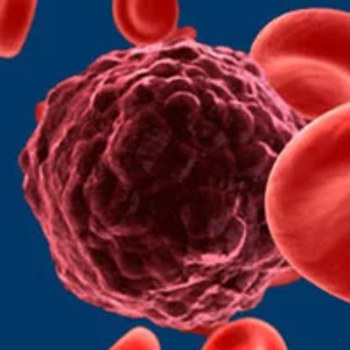
The phase 2 ACE-Breast03 trial has been launched to evaluate the efficacy and safety of ARX788, an investigational antibody-drug conjugate, in patients with metastatic HER2-positive breast cancer who have progressed on prior HER2-directed therapies.

Your AI-Trained Oncology Knowledge Connection!


The phase 2 ACE-Breast03 trial has been launched to evaluate the efficacy and safety of ARX788, an investigational antibody-drug conjugate, in patients with metastatic HER2-positive breast cancer who have progressed on prior HER2-directed therapies.

Brad S. Kahl, MD, discusses personalizing frontline treatment in mantle cell lymphoma, clinical trials further examining BTK inhibitors, and research opportunities with CAR T-cell therapy.

Inguinofemoral radiotherapy could potentially spare patients with vulvar cancer and sentinel node micrometastases from the morbidity of a lymphadenectomy.

The FDA has granted an orphan drug designation to LAVA-051, a CD1d-targeted Gammabody, for the treatment of patients with chronic lymphocytic leukemia.

Hepatocellular cancer, the most common primary liver malignancy, is the fourth-leading cause of cancer-related deaths globally.

Margaret Gilshannon, MHA, has been appointed Deputy Director for Finance & Administration at Yale Cancer Center.

The combination of sintilimab, a bevacizumab biosimilar injection, and chemotherapy resulted in a significant improvement in progression-free survival in patients with EGFR-mutated, nonsquamous, non–small cell lung cancer that as progressed following treatment with an EGFR TKI, meeting the primary end point of the phase 3 ORIENT-31 trial.

Ahmet Sezer, MD, discusses how the approval of cemiplimab could potentially make a huge impact for patients with advanced non–small cell lung cancer.

Francisco Javier Esteva, MD, PhD, discussed the current approach to treating patients with early-stage HER2-positive breast cancer, unmet needs in the space, and future directions with neratinib and T-DM1.

In her 2020 American Society of Clinical Oncology presidential address, “Equity: Every patient. Every day. Everywhere,” Lori J. Pierce, MD, challenges medical oncology to imagine a future when equity is considered a humanistic standard of oncology practice.

As the autumn and winter conference season approaches, Curtis Lachowiez, MD, reflects on the impact 2020 left on the field of oncology.

Marco Ruiz, MD, discusses the new HIV/Cancer Clinic and its goals, challenges faced with patients who have cancer and HIV infection, and clinical trial opportunities that strive to move the needle forward.

The European Medicines Agency’s Committee for Medicinal Products for Human Use has adopted a positive opinion regarding approval of the combination of pembrolizumab and lenvatinib for 2 indications: select patients with renal cell carcinoma and select patients with endometrial carcinoma.

Alexander I. Spira, MD, PhD, FACP, discusses impactful data from the 2021 ESMO Congress in lung cancer.

A single, high priming dose of tremelimumab plus durvalumab resulted in a statistically significant and clinically meaningful improvement in overall survival vs sorafenib when used in the frontline treatment of patients with unresectable hepatocellular carcinoma who had not previously received systemic therapy and were not eligible for localized treatment.

The FDA has approved atezolizumab for use as an adjuvant treatment following resection and platinum-based chemotherapy in patients with stage II to IIIA non–small cell lung cancer whose tumors have PD-L1 expression on ≥ 1% of tumor cells, as determined by an FDA-approved test.

Michael Diaz, MD will assume the role of President & Managing Physician at Florida Cancer Specialists & Research Institute.

Patients with newly diagnosed mantle cell lymphoma who were 65 years of age or older had worse progression-free survival and overall survival at 1 and 2 years compared with patients under the age of 65 years.

The FDA has approved the Ki-67 IHC MIB-1 pharmDx test to assist in determining which patients with early breast cancer who are at high risk of disease recurrence might benefit from adjuvant treatment with abemaciclib plus endocrine therapy.

Because the combination of pembrolizumab, lenvatinib, and platinum-based chemotherapy showed early evidence of antitumor activity with a manageable safety profile in previously untreated patients with metastatic nonsquamous non–small cell lung cancer examined in part 1 of the phase 3 LEAP-006 trial, the second part of the research has officially begun enrollment.

Toni Choueiri, MD, discusses key highlights from the 2021 Kidney Cancer Research Summit and exciting research efforts underway in renal cell carcinoma.

Communication and education of a patient with lung cancer and their family is only part of a nurse practitioner’s responsibility. Moreover, they often represent the primary point of contact for a patient when it comes to their diagnostic workup, treatment follow-up, and symptom management.

The European Medicines Agency has approved a shorter, 90-minute infusion time for obinutuzumab to be given in combination with chemotherapy in patients with previously treated or untreated advanced follicular lymphoma.

Expanded in-house testing capabilities enable faster and more accurate diagnosis, prognosis and treatment planning for a wide variety of cancers.

The initiation of the phase 3 ENHANCE trial looks to build on the generally early response to azacitidine with the addition of magrolimab, a first-in-class monoclonal antibody, for patients with intermediate-, high-, and very high–risk myelodysplastic syndrome.

Patient Reported Outcomes Measurement Information System scoring indicated that preoperative and postoperative radiation therapy was associated with worse anxiety and physical function in patients with soft tissue sarcoma who had resulting wound complications compared with those who did not.

Alexey Danilov, MD, PhD, discussed the data on entospletinib/obinutuzumab in patients with R/R CLL and suggests further research directions with this drug combination.

Harry Paul Erba, MD, PhD, spotlights practice-changing data that emerged in recent years in hematologic malignancies and speaks to remaining questions, particularly with CAR T-cell therapy, in each paradigm.

The allogeneic CD19-targeted CAR T-cell therapy CTX110 was found to elicit encouraging responses with favorable tolerability in patients with relapsed or refractory B-cell malignancies, according to data from the phase 1 CARBON trial.

Corepoint Integration Engine chosen to Streamline Connectivity Across Care Teams, Affiliate Networks, and Cancer Community, Extending Access to World-class Care for Patients Everywhere.