

Avelumab failed to demonstrate an improvement in overall survival at 1 year as frontline treatment in patients with cisplatin-ineligible, PD-L1–positive advanced urothelial cancer, though it did elicit a notable objective response rate.
Avelumab failed to demonstrate an improvement in overall survival at 1 year as frontline treatment in patients with cisplatin-ineligible, PD-L1–positive advanced urothelial cancer, though it did elicit a notable objective response rate.

The frontline maintenance combination of avelumab plus best supportive care continued to show an improvement in overall survival compared with BSC alone in patients with metastatic urothelial cancer who receive first-line chemotherapy.

The combination of lenvatinib and pembrolizumab elicited comparable antitumor activity compared with placebo plus pembrolizumab as frontline therapy in patients with advanced urothelial carcinoma who were ineligible for platinum-based chemotherapy, according to data from LEAP-011.

Darolutamide produced a well-tolerated safety profile in patients with metastatic castration-resistant prostate cancer, according to pooled data from long-term analyses of 3 trials.

Heinz-Josef Lenz, MD, discusses the safety and efficacy of nivolumab plus standard of care in patients with metastatic colorectal cancer, shares additional insight from the CheckMate-9X8 trial, and alludes to next steps with further exploring the regimen in specific subsets who appear to derive benefit from this approach.
The utilization of 18F-rhPSMA-7.3 imaging displayed a clinically meaningful correct detection rate.
The androgen receptor inhibitor darolutamide demonstrated continued efficacy and safety in patients with non-metastatic castration-resistant prostate cancer (nmCRPC) who have comorbidities or concomitant medications

Thomas A. Abrams, MD, discusses the ongoing phase 1b COSMIC-021 trial examining cabozantinib/atezolizumab, the efficacy and safety demonstrated with the regimen in those with colorectal cancer, and the next steps for research
Continuous enzalutamide plus docetaxel and prednisone elicited progression-free survival improvement vs placebo with docetaxel and prednisone in patients with metastatic castration-resistant prostate cancer who had previously progressed on enzalutamide alone
The addition of darolutamide to androgen deprivation therapy and docetaxel generated better overall survival vs placebo with ADT and docetaxel in patients with metastatic castration-sensitive prostate cancer.

The combination of niraparib and abiraterone acetate and prednisone led to a significant improvement in radiographic progression-free survival vs placebo plus abiraterone in patients with metastatic castration-resistant prostate cancer and homologous recombination repair gene alterations.

Olaparib in combination with abiraterone acetate led to a 34% reduction in the risk of radiographic disease progression or death compared with placebo and abiraterone as a first-line treatment for patients with metastatic castration-resistant prostate cancer, according to results of the phase 3 PROpel trial.

Treatment with apalutamide, an androgen receptor inhibitor, was associated with a deep PSA response leading to beneficial outcomes in patient-related end points.
A greater portion of patients with metastatic castration-sensitive prostate cancer achieved an early and deep prostate-specific antigen reduction from baseline of 90% or more when treated with apalutamide compared with enzalutamide.

The US Senate has confirmed Robert M. Califf, MD, a prominent cardiologist and expert in clinical trials, as the latest FDA commissioner today in a 50-46 vote.

The FDA has granted a fast track designation to IO-202, a first-in-class anti-LILRB4 myeloid checkpoint inhibitor, as a potential therapeutic option for patients with relapsed or refractory acute myeloid leukemia.
The FDA has accepted and granted priority review to a supplemental biologics license application seeking the approval of the CAR T-cell therapy lisocabtagene maraleucel for the treatment of adult patients with relapsed/refractory large B-cell lymphoma in whom frontline therapy has failed.

New research led by Yale Cancer Center revealed White patients had significantly more telemedicine visits compared with Black patients for hematologic cancer care during the COVID-19 pandemic.
Androgen recepter positivity serves as an independent predictor of beneficial outcomes in breast cancer.

Debasish Tripathy, MD, provides perspective on some of the key data sets that were presented and published in 2021 in HER2-positive breast cancer.

Marina Kremyanskaya, MD, PhD, discusses the safety and efficacy of pelabresib in patients with myelofibrosis, additional data from the MANIFEST trial, and other efforts investigating the agent in this disease.
The administration of daily aspirin did not improve invasive disease-free survival in patients with high-risk, HER2-negative breast cancer.

Zeynep Eroglu, MD, discusses the potential of ctDNA as a noninvasive biomarker in melanoma, outlines different assays under development, and details potential opportunities to leverage ctDNA in treatment decision making.
The FDA has placed a clinical hold on a phase 1 trial evaluating the safety and efficacy of the autologous CAR T-cell product LB1901 as a potential therapeutic option in adult patients with relapsed or refractory T-cell lymphoma.
Cristina Gasparetto, MD, shares pearls regarding treatment in frontline, early relapsed, and late relapsed multiple myeloma.

Rutgers Cancer Institute of New Jersey has named Sanjay Goel, MD, MS as director of its Phase I/Investigational Therapeutics Program.

the development of PD-1/PD-L1 immune checkpoint inhibitor therapy underwent a course correction in 2021, with the withdrawal of a range of indications due to study results that failed to reach thresholds for confirming clinical benefit.
Aaron T. Gerds, MD, MS, discusses the use of TKIs, targeted agents, JAK inhibitors, and cellular therapy in hematologic malignancies.
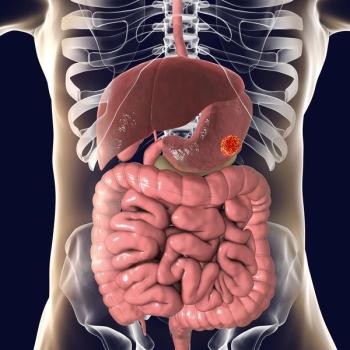
The FDA has granted an orphan drug designation to the off-the-shelf natural killer cell therapy CYNK-101 as a potential treatment for patients with advanced HER2-positive gastric or gastroesophageal junction adenocarcinoma.
The FDA has accepted a new drug application for the use of adagrasib in the treatment of patients with non–small cell lung cancer whose tumors harbor a KRAS G12C mutation and who have previously received at least 1 prior systemic therapy.