

Skill, passion and teamwork. Essential elements for patient centered partnerships.
Skill, passion and teamwork. Essential elements for patient centered partnerships.

Julia A. Beaver, MD discusses the need for greater collaboration among industry sponsors on diagnostics, regulatory submissions, and multinational clinical trials involving PD-1/PD-L1 immune checkpoint inhibitors.

Individuals with Li-Fraumeni Syndrome, a rare hereditary condition, are at increased risk for a wide spectrum of malignancies, including breast cancer and sarcomas. Investigators are working to determine whether metformin, a drug indicated for diabetes and infertility caused by polycystic ovarian syndrome, can prevent cancers in LFS carriers.

The FDA has granted an orphan drug designation to the investigational anti-BCMA CAR T-cell therapy CT103A for use as a potential therapeutic option in patients relapsed/refractory multiple myeloma.

Many Americans, particularly those in communities of color or socially and economically challenged populations, are presenting with advanced-stage disease, enduring aggressive treatment, and dying from cancers that should be detected early.

The FDA has given the green light to the FoundationOne CDx for use as a companion diagnostic that can be leveraged to identify patients with microsatellite instability high solid tumors who may be candidates to receive and derive benefit from pembrolizumab.

The European Commission has approved tepotinib for use as a single agent in adult patients with advanced non–small cell lung cancer harboring METex14 skipping alterations who require systemic therapy after prior treatment with immunotherapy and/or platinum-based chemotherapy.

New research led by Yale Cancer Center scientists shows less than a third of older patients with chronic myeloid leukemia had optimal laboratory monitoring and only two-thirds were adherent to TKI therapy during the first year after diagnosis.

Trastuzumab deruxtecan resulted in a statistically significant improvement in progression-free survival and overall survival compared with physician’s choice of chemotherapy in patients with HER2-low unresectable and/or metastatic breast cancer, irrespective of hormone receptor status, meeting the primary and secondary end points of the phase 3 DESTINY-Breast 04 trial.

"If you stay at home too long, with too narrow a focus, you lose sight of what’s happening in the world."

Joyce A. O’Shaughnessy, MD, the 2016 Giant of Cancer Care® for Community Outreach/Education, explains her continued commitment to impacting change in the space and aiding other oncologists.

The utilization of mitotane in the adjuvant setting did not produce significant benefit for patients with adrenocortical carcinoma at low or intermediate risk of recurrence.
Atezolizumab with or without radiotherapy did not demonstrate efficacy in patients with advanced squamous cell carcinoma of the penis.
Adjuvant pembrolizumab continued to demonstrate improved disease-free survival placebo in patients with renal cell carcinoma who are at high risk of recurrence.

The addition of the PD-L1 inhibitor avelumab to the TKI axitinib generated promising efficacy as a neoadjuvant therapy in patients with high-risk, non-metastatic clear-cell renal cell carcinoma.
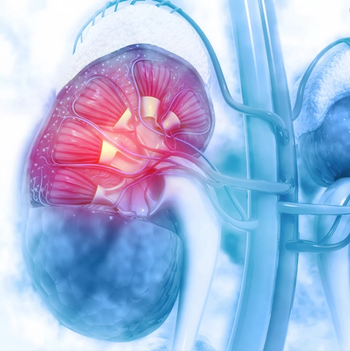
At a nearly 3-year median follow-up, health-related quality-of-life scores were improved or maintained over time among patients with advanced renal cell carcinoma who received with nivolumab plus cabozantinib compared with those who received sunitinib.

The combination of lenvatinib and pembrolizumab produced similar efficacy and safety profiles in an East Asian subgroup of patients with advanced renal cell carcinoma.

Efficacy rates generated by the combination of nivolumab (Opdivo) and ipilimumab (Yervoy) vary based on certain immune-cell related parameters in patients with advanced or metastatic clear cell renal cell carcinoma.

The combination of nivolumab plus cabozantinib elicited a continued survival benefit compared with sunitinib in patients with untreated clear cell metastatic or advanced renal cell carcinoma.

A reduction in cabozantinib dosage because of toxicity demonstrated improved time to treatment failure and overall survival in patients with metastatic renal cell carcinoma.

Follow-up from the TIVO-3 trial showed that patients with pretreated relapsed/refractory renal cell carcinoma who received tivozanib were 5 times more likely to experience long-term progression-free survival compared with sorafenib.
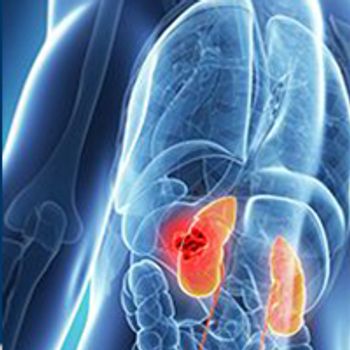
Frontline tivozanib was noninferior to other tyrosine kinase inhibitors for the treatment of patients with metastatic renal cell carcinoma in a real-world setting.

Treatment with lenvatinib plus pembrolizumab was associated with a clinical benefit in advanced renal cell carcinoma, regardless of a patient’s biomarker status.
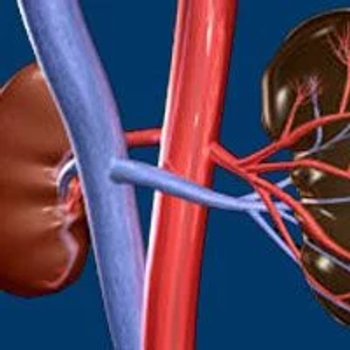
Treatment with cabozantinib (Cabometyx, Cometriq) in the second-line setting generated similar time-to-event end points and response rates in patients with advanced renal cell carcinoma, regardless of frontline immune-oncology combinations.
Enfortumab vedotin produced promising antitumor activity when used as neoadjuvant treatment in patients with muscle invasive bladder cancer who were not eligible for cisplatin.

The addition of olaparib to durvalumab did not result in a significant prolongation in progression-free survival compared with durvalumab alone in patients with previously untreated, platinum-ineligible metastatic urothelial carcinoma.

Second-line sacituzumab govitecan plus pembrolizumab generated promising antitumor activity in patients with checkpoint inhibitor–naïve metastatic urothelial cancer.
Updated data support the common use of cabozantinib in this setting without new safety signals in patients with metastatic renal cell carcinoma.
Fluorodeoxyglucose PET/CT and sodium fluoride PET/CT baseline functional imaging parameters and percent change in lesion number observed on follow-up imaging was linked with overall survival and found to be prognostic in patients with metastatic genitourinary cancers.
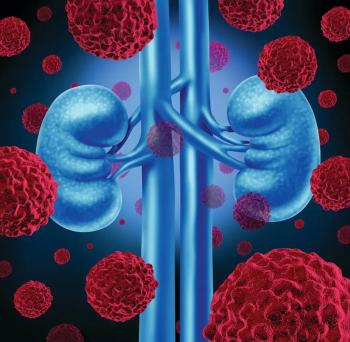
Niraparib in combination with cabozantinib demonstrated a manageable safety profile, with preliminary efficacy observed in heavily pretreated patients with metastatic urothelial carcinoma.