
Stephen M. Ansell, MD, PhD, discusses recent progress made with non–CAR T-based approaches in the non-Hodgkin lymphoma treatment paradigm, opportunities for sequencing available options, and ongoing efforts that are picking up momentum.
Stephen M. Ansell, MD, PhD, discusses recent progress made with non–CAR T-based approaches in the non-Hodgkin lymphoma treatment paradigm, opportunities for sequencing available options, and ongoing efforts that are picking up momentum.

Duvelisib monotherapy demonstrated encouraging efficacy for patients with relapsed/refractory peripheral T-cell lymphoma.

The FDA has approved belzutifan for the treatment of adult patients with von Hippel-Lindau disease who require therapy for associated renal cell carcinoma, central nervous system hemangioblastomas, or pancreatic neuroendocrine tumors that do not require immediate surgery.

The majority of patients with newly diagnosed chronic lymphocytic leukemia have better outcomes with BTK inhibitors compared with standard chemoimmunotherapy, making them the logical choice for frontline therapy.

Zandelisib plus rituximab is being evaluated as a potentially chemotherapy-free treatment strategy vs standard chemoimmunotherapy in patients with indolent non-Hodgkin lymphoma in first relapse in the ongoing, phase 3 COASTAL trial.

The United Kingdom’s National Institute for Health and Care Excellence has issued draft guidance supporting the use of abemaciclib in the treatment of adult patients with metastatic hormone receptor–positive/HER2-negative breast cancer.
Zanubrutinib demonstrated clinical activity and tolerability in previously treated patients with B-cell malignancies who were intolerant to therapy with ibrutinib and/or acalabrutinib, according to results of the phase 2 BGB-3111-215 trial.

The FDA has granted a breakthrough therapy designation to toripalimab for single-agent use in combination with gemcitabine and cisplatin in the frontline treatment of patients with recurrent or metastatic nasopharyngeal carcinoma.
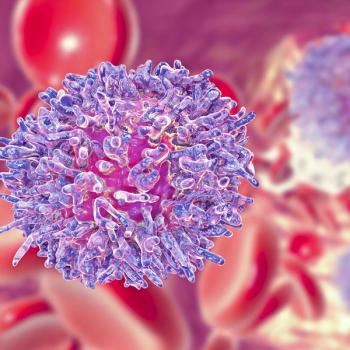
Jean-Jacques Kiladjian, MD, PhD, discusses the effectiveness of momelotinib compared with ruxolitinib in patients with myelofibrosis who have anemia and are naïve to JAK inhibitors.

As more CAR T-cell therapies are approved for the treatment of patients with hematologic malignancies, adopting management strategies for cytokine release syndrome and immune effector cell–associated neurotoxicity syndrome using newly standardized grading criteria is an important component of utilizing these products in practice.
Maintenance niraparib has been shown to result in a significant progression-free survival benefit in patients with BRCA-mutated ovarian cancer following response to platinum-based chemotherapy.

The widening treatment paradigm for various breast cancer subtypes is yielding improved survival with more tailored strategies.

Neoadjuvant stereotactic radiation followed by radical nephrectomy and thrombectomy is a safe and feasible treatment option for patients with renal cell carcinoma and inferior vena cava tumor thrombus.
The FDA has approved pembrolizumab plus lenvatinib for the frontline treatment of adult patients with advanced renal cell carcinoma.

Steven H. Itzkowitz, MD, discusses the importance of screening for CRC in younger adults, the results of the database analysis, and strategies for implementing early messaging in the community setting for this population.
Nagla F. Abdel Karim, MD, discusses the ongoing CheckMate-73L trial in patients with stage III non–small cell lung cancer, the potential impact of the research on the paradigm, and future areas of exploration.

Acalabrutinib, alone or in combination with obinutuzumab, demonstrated superior efficacy and an acceptable safety profile in patients with treatment-naïve chronic lymphocytic leukemia.

The combination of loncastuximab tesirine-lpyl and ibrutinib displayed encouraging antitumor activity with a manageable safety profile in patients with relapsed/refractory diffuse large B-cell lymphoma and mantle cell lymphoma.

Alison J. Moskowitz, MD, discusses recent developments made in the Hodgkin lymphoma paradigm, shared advice for optimal stratification, and spotlighted potential emerging prognostic markers that might further help to guide treatment decisions.

CAR T-cell therapy has proven to be an effective treatment option in non-Hodgkin lymphoma subtypes, such as diffuse large B-cell lymphoma, and mantle cell lymphoma.

Antiandrogen agents, PARP inhibitors, and prostate-specific membrane antigen-directed therapy have broadened the armamentarium in prostate cancer.
The first participants from the United States have been dosed with LUT014, a novel, topical BRAF inhibitor in a phase 2 trial that is evaluating the agent in patients with metastatic colorectal cancer who have developed dose-limiting acneiform lesions following treatment with an EGFR inhibitor.

The subcutaneously administered peptide cancer vaccine maveropepimut-S was found to produce promising activity in heavily pretreated patients with recurrent ovarian cancer.

The Icahn School of Medicine at Mount Sinai has been awarded a grant of more than $4 million by the National Cancer Institute for a large-scale study to evaluate anal cancer screening in high-risk women who have been previously diagnosed with human papillomavirus infection.
The FDA has accepted a new supplemental biologics license application that is seeking the approval of pembrolizumab for use as a monotherapy in patients with advanced endometrial carcinoma that is microsatellite instability–high or mismatch repair deficient, who have progressed after systemic therapy in any setting and are not eligible for curative surgery or radiation.

A fixed duration of ibrutinib plus venetoclax has demonstrated durable efficacy when used in the frontline treatment of patients with chronic lymphocytic leukemia and small lymphocytic lymphoma (SLL).

After a dramatic decrease during the first peak of the COVID-19 pandemic, a substantial increase in cancer screening procedures during more recent time periods has been reported.
The FDA has granted priority review to a new supplemental biologics license application for pembrolizumab as an adjuvant treatment in patients with renal cell carcinoma.

The FDA has finalized guidance on the use of metastasis-free survival as an end point in clinical trials for nonmetastatic castration-resistant prostate cancer.

Su H. Wang, MD, MPH, discusses the rationale for the integration of viral hepatitis screening and care in a hospital system as the first steps for preventing liver cancers like hepatocellular carcinoma.