The FDA has added minimal residual disease data from the phase III MURANO trial to the label for venetoclax for its approved use in combination with rituximab for previously-treated patients with chronic lymphocytic leukemia.
The FDA has added minimal residual disease data from the phase III MURANO trial to the label for venetoclax for its approved use in combination with rituximab for previously-treated patients with chronic lymphocytic leukemia.
Safety and efficacy findings for regorafenib in patients with previously treated metastatic colorectal cancer were consistent with previous phase III results.

Combining the PD-L1 inhibitor avelumab with the VEGF inhibitor axitinib significantly improved progression-free survival compared with sunitinib in treatment-naïve patients with advanced renal cell carcinoma, according to findings from the phase III JAVELIN Renal 101 study.
Richard D. Hall, MD, recaps updates from the 2018 AACR Annual Meeting and the 2018 ASCO Annual Meeting in non–small cell lung cancer.
Matthew Ladra, MD, MPH, discusses the treatment of patients with esthesioneuroblastoma, emphasizing the need for collaboration in this rare malignancy.
Andrew T. Kuykendall, MD, discusses the presentation of myeloproliferative neoplasms, novel agents in development, and the overall outlook of these diseases.

Padmanee Sharma, MD, PhD, shares her insight on the current state of immunotherapy in the treatment of patients with genitourinary cancers.

The Sidney Kimmel Cancer Center – Jefferson Health announces a collaboration with Driver, a first-of-its-kind global technology platform that connects cancer patients to the best treatments, which launched today in the United States and China.
The European Commission has approved frontline pembrolizumab for use in combination with standard chemotherapy for patients with metastatic nonsquamous non–small cell lung cancer without EGFR or ALK mutations.
Jonathan R. Strosberg, MD, discusses the latest NETTER-1 update and the potential impact of Lutathera in patients with gastroenteropancreatic NETs.
Benjamin P. Levy, MD, discusses established and emerging biomarkers that could have predictive value with immunotherapy.
Josephine L. Feliciano, MD, discusses the role of immunotherapy and the potential of targeted agents in small cell lung cancer.
Rachid Baz, MD, discusses the ARROW, ELOQUENT-3, and OPTIMISMM studies and highlights others that are demonstrating equally impressive response rates in patients with relapsed/refractory multiple myeloma.

Bijal D. Shah, MD, discussed the challenge of treating this highly heterogeneous disease, how to choose the optimal treatment regimen, and the ongoing role of BTK inhibitors.
Scott Kopetz, MD, PhD, FACP, discusses the current treatment landscape of colorectal cancer and the importance of molecular subtyping.
Ophira Ginsburg, MD, discusses cervical cancer prevention, screening, and elimination on a global scale.

Peter L. Choyke, MD, FACP, discusses the clinical implications of emerging technologies for prostate cancer imaging.
Andrew L. Pecora, MD, discusses the use of autologous stem cell transplantation in patients aged ≥75 years and the future of care in multiple myeloma.
Carlos Becerra, MD, discusses sequencing strategies, immunotherapy, and practice-changing clinical trials in the field of pancreatic cancer.

Zhaoming Wang, PhD, discusses the first assessment of the joint effects of rare and common genetic variations in survivors of childhood cancers.

The FDA has extended the review period for a supplemental biologics license application for atezolizumab for use in combination with bevacizumab, carboplatin, and paclitaxel for the first-line treatment of patients with metastatic nonsquamous non–small cell lung cancer.
Celeste Bello, MD, discusses the latest advances in the treatment of patients with follicular lymphoma.

Francesca Gay, MD, PhD, discusses the FORTE trial comparing carfilzomib plus lenalidomide and dexamethasone versus carfilzomib plus cyclophosphamide and dexamethasone in newly diagnosed patients with multiple myeloma.
The FDA has granted LOXO-292 a breakthrough therapy designation for the treatment of patients with RET fusion–positive non–small cell lung cancer or RET-mutant medullary thyroid cancer.

Panagiotis A. Konstantinopoulos, MD, PhD, discusses the findings of the TOPACIO/KEYNOTE-162 study and the future for PARP inhibitor combinations and immunotherapy overall in ovarian cancer.

Benjamin L. Maughan, MD, PharmD, discusses the tolerability of combining radium-223 dichloride and enzalutamide, as well as the next steps with this combination.
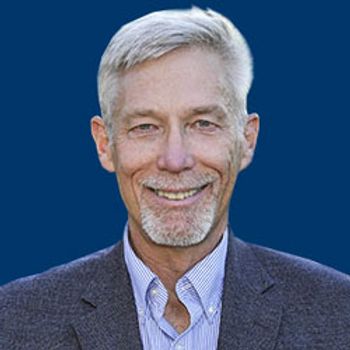
David G. Maloney, MD, PhD, reviews the latest developments with chimeric antigen receptor T-cell therapy in patients with non-Hodgkin lymphoma.
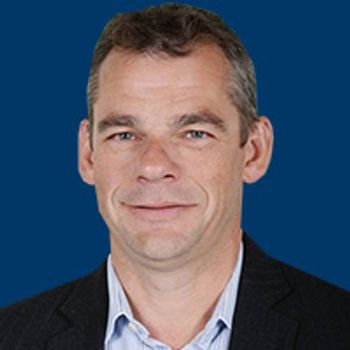
Simon Rule, MD, PhD, discusses the current and potential use of BTK inhibitors for the treatment of patients with mantle cell lymphoma.

R. Wendel Naumann, MD, discusses the use of neoadjuvant chemotherapy and surgery for patients with ovarian cancer.
The FDA has granted a priority review to a supplemental biologics license application for pembrolizumab for the treatment of pediatric and adult patients with recurrent locally advanced or metastatic Merkel cell carcinoma.