

Walter M. Stadler, MD, gives an overview of the current prostate cancer landscape and discussed future directions.
Walter M. Stadler, MD, gives an overview of the current prostate cancer landscape and discussed future directions.

Durvalumab induced a clinically meaningful improvement in overall survival compared with placebo in patients with stage III, unresectable non–small cell lung cancer who have not progressed following chemoradiotherapy.

The addition of atezolizumab to carboplatin/cisplatin in the first-line setting and to pemetrexed as maintenance therapy significantly improved progression free survival in patients with stage IV nonsquamous NSCLC.
Repotrectinib (TPX-0005) demonstrates a clinically meaningful and durable benefit across multiple doses in patients with ROS1 fusion–positive NSCLC.
Poziotinib demonstrated high antitumor activity in patients with metastatic, heavily pretreated EGFR and HER2 exon 20 mutant non–small cell lung cancer.

The FDA has approved duvelisib for the treatment of patients with relapsed/refractory chronic lymphocytic leukemia/small lymphocytic lymphoma or relapsed/refractory follicular lymphoma.

The FDA has lifted a partial clinical hold on tazemetostat trials, reopening enrollment to clinical studies examining the EZH2 inhibitor in patients with various solid tumors and hematologic malignancies.
Kendra Sweet, MD, sheds light on data regarding treatment discontinuation and how they impact patients with chronic myeloid leukemia.

The European Medicines Agency’s Committee for Medicinal Products for Human Use is supporting the approval of venetoclax in combination with rituximab for patients with chronic lymphocytic leukemia who have received at least 1 previous therapy.

The European Medicines Agency's Committee for Medicinal Products for Human Use has recommended approval of their pegfilgrastim biosimilar.

The European Medicines Agency’s Committee for Medicinal Products for Human Use has recommended full approval of brigatinib (Alunbrig) as a treatment for patients with advanced ALK-positive non–small cell lung cancer who are previously treated with crizotinib (Xalkori).

Heather Wakelee, MD, shares insight on emerging treatment strategies in EGFR–positive non–small cell lung cancer.

The Japanese Ministry of Health, Labor, and Welfare has approved abemaciclib (Verzenio) for the treatment of patients with HR-positive, HER2-negative unresectable or recurrent breast cancer in combination with fulvestrant (Faslodex) or an aromatase inhibitor.

Jubilee Brown, MD, Brown explains the value of genetic testing for patients predisposed to and diagnosed with ovarian cancer.

Abhinav Deol, MD, discusses the basics of chimeric antigen receptor T-cell therapy, potential new directions for these products, and the possible impact new products might have on the field.
Rebecca Alexandra Dent, MD, MSc, discusses which patients will derive the most benefit with ipatasertib, whether the agent can fill the unmet need for patients with PIK3CA-mutated TNBC, and what she hopes to learn from the results of the ongoing phase III IPATunity130 trial.
Patrick M. Forde, MBBCh, discusses the advances in early-stage non–small cell lung cancer, emphasizing neoadjuvant and adjuvant immunotherapy trials in stage I, II, and III disease.
The European Commission has approved the combination of encorafenib (Braftovi) and binimetinib (Mektovi) for the treatment of adult patients with BRAF V600–mutant unresectable or metastatic melanoma.
Elisavet Paplomata, MD, discusses the potential of biosimilars to help control costs and increase global access to oncology care.
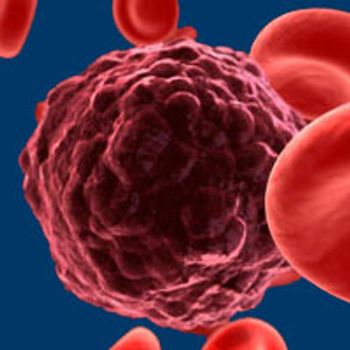
Andrew Kin, MD, shares his insight on the treatment landscape for multiple myeloma and the challenges that remain.
Eric Smith, MD, PhD, discusses the development of novel CAR T-cell therapies for patients with multiple myeloma.

Ronald S. Go, MD, discusses the current treatment strategies of patients with ITP, as well as the process that some physicians use to determine whether a patient is suffering from the disorder.
Erlene Seymour, MD, discusses novel therapies as well as their potential applications in the treatment paradigm of chronic lymphocytic leukemia.

Sara A. Hurvitz, MD, discusses de-escalation strategies in early-stage HER2-positive breast cancer and novel HER2-targeted therapies in development.

Lee S. Rosen, MD, FACP, discusses the benefits of bevacizumab and how biosimilars could change the field.

A new drug application has been submitted to the FDA for erdafitinib for the treatment of patients with locally advanced or metastatic urothelial carcinoma and FGFR genetic alterations whose tumors progressed following chemotherapy.

Abhinav Deol, MD, discusses the presentation and prevalence of idiopathic thrombocytopenic purpura in addition to the current and emerging therapeutic strategies that are used to manage the disease.

Matthew Powell, MD, discusses the promise of immunotherapy in ovarian cancer despite its challenges.

Josephine L. Feliciano, MD, discusses established and emerging therapeutic developments for patients with non–small cell lung cancer with less common driver mutations.
Robert L. Coleman, MD, FACOG, FACS, discusses the evolution of treatment for patients with ovarian cancer, the therapies with the most potential, and the importance of classification schemes in directing treatment in recurrent disease.