
The FDA has granted a priority review to a new drug application for selinexor for the treatment of patients with penta-refractory multiple myeloma.
The FDA has granted a priority review to a new drug application for selinexor for the treatment of patients with penta-refractory multiple myeloma.
Lloyd Damon, MD, discusses novel therapies in acute myeloid leukemia, including FLT3 and IDH1/2 inhibitors.

Thomas G. Martin, MD, discusses the clinical utility of autologous stem cell transplantation and the rapidly evolving treatment paradigm of myeloma.

Ghassan K. Abou-Alfa, MD, discusses the potential of the oncolytic virus Pexa-Vec and other developments in hepatocellular carcinoma.

Bita Fakhri, MD, MPH, shares her insight on the treatment of patients with newly diagnosed multiple myeloma.
Charalambos (Babis) Andreadis, MD, MSCE, discusses the use of CAR T-cell therapy in patients with DLBCL and the associated toxicities with each product, as well as other promising therapies in the paradigm.
James P. Allison, PhD, reflects on his research in immunology, the impact it has had on patients with cancer, and where the field is headed.
Ehab Atallah, MD, discusses the discontinuation of treatment for patients with chronic myeloid leukemia.

The US Oncology Network has announced the results of the 2017 Merit-based Incentive Payment System for its affiliated practices.

Peter O’Donnell, MD, discusses the integration of immunotherapy in the treatment paradigm of advanced bladder cancer and its potential role as combination therapy.
Randy F. Sweis, MD, discusses recent progress and next steps in the prostate cancer paradigm.

Michael Link, MD, a 2018 Giant of Cancer Care® in Pediatric Oncology, discusses the exciting progress being made for various pediatric tumors.
Krishnansu S. Tewari, MD, discusses the exploration of cemiplimab and the promise of immunotherapy in cervical cancer.
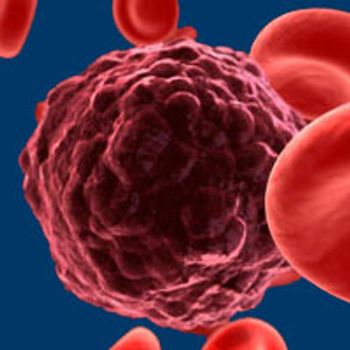
The FDA has approved the next-generation sequencing assay clonoSEQ as a test for minimal residual disease (MRD) in patients with acute lymphoblastic leukemia or multiple myeloma.
Yelena Y. Janjigian, MD, discusses the reality of biosimilars entering the US market and how oncologists should approach discussing these agents with their patients.
The FDA has granted the PARP inhibitor rucaparib a breakthrough therapy designation for single-agent use in adult patients with BRCA1/2-positive metastatic castration-resistant prostate cancer following at least 1 androgen receptor–directed therapy and taxane-based chemotherapy.
Physicians at the John Theurer Cancer Center at Hackensack Meridian Health Hackensack University Medical Center have enrolled the first two patients nationwide in an international phase II clinical trial of Kazia Therapeutics's novel therapy, GDC-0084, for glioblastoma.
Combining brentuximab vedotin with frontline chemotherapy led to a statistically significant improvement in progression-free and overall survival in patients with CD30-expressing peripheral T-cell lymphoma, according to topline results from the phase III ECHELON-2 trial.
Immunotherapy pioneers James P. Allison, PhD, and Tasuku Honjo, MD, PhD, have won the 2018 Nobel Prize in Physiology or Medicine for their research that eventually led to the use of immune checkpoint inhibitors to treat cancer.
Javier A. Pinilla-Ibarz, MD, PhD, discusses updates in the treatment of patients with chronic lymphocytic leukemia.
The FDA has approved a once-weekly dosing option of carfilzomib to use in combination with dexamethasone for patients with relapsed/refractory multiple myeloma.
The FDA has approved the PD-1 inhibitor cemiplimab (Libtayo) for the treatment of patients with metastatic cutaneous squamous cell carcinoma (CSCC) or patients with locally advanced CSCC who are not candidates for curative surgery or curative radiation.
Women with operable HER2-positive breast cancer had similar long-term survival outcomes with either concurrent or sequential chemotherapy in the neoadjuvant setting, according to newly published results from the phase III ACOSOG Z1041 trial.

The FDA has approved dacomitinib (Vizimpro) for the frontline treatment of patients with metastatic non–small cell lung cancer with EGFR exon 19 deletion or exon 21 L858R substitution mutations.

Radhakrishnan Ramchandren, MD, discusses the treatment landscape in Hodgkin and T-cell lymphoma and the results of the North American subgroup analysis of the ECHELON-1 trial.
Geoffrey R. Oxnard, MD, discusses the promise of genome-wide sequencing in cell-free DNA.
Joseph Uberti, MD, PhD, discusses the risk and benefit of a bone marrow transplant for patients with myelodysplastic syndrome.
Jay Yang, MD, explains that drug development is not as simple as identifying a molecular target and matching inhibitor.

Jeffrey S. Weber, MD, PhD, discusses the promise of nivolumab in this setting and a general overview of the melanoma treatment landscape.
Joshua J. Meeks, MD, PhD, discusses the current understanding of genomics in bladder cancer.