
The United Kingdom's National Institute for Health and Care Excellence has issued guidance recommending ixazomib in for patients with relapsed/refractory multiple myeloma.

Your AI-Trained Oncology Knowledge Connection!
The United Kingdom's National Institute for Health and Care Excellence has issued guidance recommending ixazomib in for patients with relapsed/refractory multiple myeloma.
The FDA has approved bosutinib as a first-line treatment for patients with Philadelphia chromosome-positive chronic myeloid leukemia.
The FDA has approved cabozantinib for previously untreated patients with advanced renal cell carcinoma.
Almost half of patients with relapsed/refractory acute myeloid leukemia achieved complete response with the combination of selinexor (KPT-330) and AraC-containing chemotherapy.

Ghassan K. Abou-Alfa, MD, discusses what he sees coming down the pike in epatocellular carcinoma with regard to novel agents, including CAR T-cell therapy, and the burgeoning questions with optimal sequencing of these treatments.

Persistent HPV 16/18 infection correlated with higher locoregional relapse, overall relapse, and was also associated with early relapses in women with locally advanced cervical cancers treated with radical radiochemotherapy.

Leonard Saltz, MD, discusses current go-to therapies and overarching questions for mCRC treatment.

William R. Jarnagin, MD, discusses the necessary role of surgery and novel techniques in patients with colorectal cancer.

The European Union’s CHMP has delivered a positive opinion for Herzuma (CT-P6), a trastuzumab (Herceptin) biosimilar in HER2-positive early breast cancer, metastatic breast cancer, and metastatic gastric cancer.

Tian Zhang, MD, discusses KEYNOTE-564, as well as the progress that immunotherapy has made in the treatment paradigm of patients with RCC.

Joseph A. Califano, MD, discusses how surgery factors into modern multidisciplinary care for patients with head and neck cancer.

Julie Graff, MD, comments on the state of immunotherapy in mCRPC and some ongoing research in the field.

Mothaffar Fahed Rimawi, MD, discusses the significance of precision medicine in HER2-positive breast cancer, as well as the possible role of immunotherapy for this specific population.

The European Medicines Agency’s Committee for Medicinal Products for Human Use has recommended approval of ipilimumab for the treatment of pediatric patients aged 12 years and older with unresectable or metastatic melanoma.

The FDA has granted a priority review to a supplemental new drug application for the use of osimertinib as a first-line treatment for patients with non–small cell lung cancer whose tumors harbor EGFR mutations.

John Heinzerling, MD, discusses the impact of durvalumab and other developments in the treatment of patients with stage III non-small cell lung cancer.

Michael Bouvet, MD, highlights the evolving surgical options in the thyroid cancer field
The United Kingdom's National Institute for Health Care and Excellence has published new guidelines recommending ibrutinib as treatment for patients with relapsed/refractory mantle cell lymphoma.

Ferdinandos Skoulidis, MD, PhD, discusses potential treatment options for KRAS-mutated lung cancer and highlighted developments in biomarker research in other areas in the field.

Selinexor combined with weekly bortezomib and low-dose dexamethasone produced rapid and durable responses in a dose escalation/expansion trial of patients with relapsed/refractory multiple myeloma.

Pembrolizumab did not improve survival as a second-line treatment for PD-L1–positive patients with advanced gastric or gastroesophageal junction adenocarcinoma, according to findings from the phase III KEYNOTE-061 trial.

Assuntina G. Sacco, MD, discusses the importance of multidisciplinary care for patients with head and neck cancer.

Ten-year follow-up results from the StiL NHL1 study showed that frontline bendamustine (Treanda) plus rituximab (Rituxan) improved time-to-next-treatment compared with CHOP-R in patients with indolent lymphomas.

The combination of olaparib (Lynparza) and durvalumab (Imfinzi) demonstrated a disease control rate of 80% for pretreated patients with germline BRCA-mutated, HER2-negative metastatic breast cancer,

Adding ibrutinib to a standard frontline chemoimmunotherapy for chronic lymphocytic leukemia induced negative minimum residual disease status in bone marrow for 83% of patients.
Three-year safety results from the ALSYMPCA trial showed that treatment with radium-223 dichloride (Xofigo) for men with mCRPC and symptomatic bone metastases was associated with minimal nonhematologic AEs.

An analysis of racial disparities in prostate cancer treatment found that treatment underuse is rare, but when it does occur, it is almost exclusively in black men.

Michael Wang, MD, discusses the impact of acalabrutinib on patients with mantle cell lymphoma, ongoing progress in the field, and The University of Texas MD Anderson Cancer Center
The FDA has granted a priority review to a sBLA for use of the combination of nivolumab and ipilimumab as a frontline treatment for intermediate- and poor-risk patients with advanced RCC.
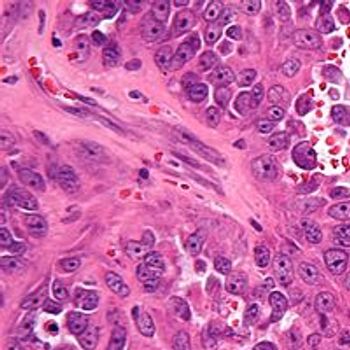
Investigators working in Malawi found an association between the combination of vincristine, bleomycin, and etoposide and improved quality of life, overall survival, and event-free survival in children with Kaposi sarcoma