
The China National Drug Administration has approved pembrolizumab (Keytruda) for the treatment of adult patients with unresectable or metastatic melanoma after 1 prior line of therapy.
The China National Drug Administration has approved pembrolizumab (Keytruda) for the treatment of adult patients with unresectable or metastatic melanoma after 1 prior line of therapy.
Joseph Stilwill, MD, addresses recent advances in melanoma and the focus of research moving forward.
Toni K. Choueiri, MD, discusses some of the most significant data presented thus far in 2018 for the treatment of patients with renal cell carcinoma.

Walker will lead patient care, nursing, ancillary and supportive service operations for the main Duarte campus and clinical network.

Mehmood Hashmi, MD, discusses the newly defined landscape of nonmetastatic castration-resistant prostate cancer, the potential with immunotherapy, and emerging imaging modalities.

The FDA has approved the Magtrace and Sentimag Magnetic Localization System used to guide lymph node biopsies in women undergoing mastectomy for breast cancer.
Brigatinib reduced the risk of disease progression or death versus crizotinib in adult patients with locally advanced or metastatic ALK-positive non–small cell lung cancer who had not received a prior ALK inhibitor.
Pembrolizumab (Keytruda) significantly improved overall survival compared with the standard frontline regimen of cetuximab (Erbitux) plus platinum chemotherapy and 5-FU in patients with recurrent or metastatic HNSCC.
Jessica Bauman, MD, addresses current and emerging therapeutic options for patients with BRAF, ROS1, and RET abnormalities in non–small cell lung cancer.
John A. Kosteva, MD, discusses the adoption of immunotherapy into the treatment paradigm for patients with non–small cell lung cancer.

Danielle Brander, MD, highlights how recent advances are changing the field of chronic lymphocytic leukemia and what it means for patients and their oncologists.

Although impressive single-agent data have been seen with agents such as pembrolizumab (Keytruda) versus chemotherapy in a high–PD-L1 population, the combination of PD-L1 inhibitors and chemotherapy may prove to be beneficial in a broader group of patients.
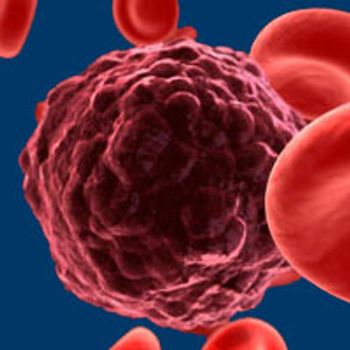
Combining lenalidomide with rituximab significantly improved progression-free survival compared with rituximab alone for the treatment of patients with relapsed/refractory indolent lymphoma.
Andre Goy, MD, discusses some of the most important lymphoma data presented at the 2018 ASCO Annual Meeting and potential future directions for treatment.
The FDA approved filgrastim-aafi (Nivestym), a filgrastim (Neupogen) biosimilar, to prevent and treat side effects associated with cancer treatment, including febrile neutropenia and severe neutropenia.

Results from the phase III iNNOVATE trial established the combination of ibrutinib plus rituximab as the new standard of care in Waldenström macroglobulinemia.
Anthony R. Mato, MD, MSCE, discusses the next steps for umbralisib and the biggest challenges still facing patients with chronic lymphocytic leukemia.
The Association of Community Cancer Centers and Advisory Board's Oncology Roundtable are again conducting a comprehensive survey that will explore how cancer programs across the country are moving forward and adapting in the midst of exciting, increasingly rapid advances in cancer care coupled with unprecedented change underway across the U.S. healthcare system.
The FDA has approved ivosidenib for the treatment of adult patients with relapsed/refractory IDH1-mutant acute myeloid leukemia.

Peter J. Van Veldhuizen, MD, discusses available and emerging therapies for patients with kidney cancer.

Adding atezolizumab to pemetrexed and cisplatin or carboplatin in the frontline setting reduced the risk of disease progression or death versus chemotherapy alone in patients with advanced nonsquamous non–small cell lung cancer, according to findings from the phase III IMpower132 study.
The FDA has granted atezolizumab a breakthrough therapy designation for use in combination with bevacizumab as a first-line treatment for patients with advanced or metastatic hepatocellular carcinoma.

The FDA has granted a priority review designation to a biologics license application for sacituzumab govitecan for the treatment of patients with metastatic triple-negative breast cancer following at least 2 prior therapies for metastatic disease.
A rolling submission of an FDA new drug application (NDA) has been submitted for selinexor for the treatment of patients with penta-refractory multiple myeloma.
The FDA has approved upfront ribociclib for use in combination with an aromatase inhibitor for the treatment of pre/perimenopausal or postmenopausal women with HR-positive/HER2-negative advanced or metastatic breast cancer. The agency also approved the CDK 4/6 inhibitor for use in combination with fulvestrant for the treatment of postmenopausal women with HR-positive/HER2-negative advanced or metastatic breast cancer, in the frontline setting or after disease progression on endocrine therapy.

Robert J. Kreitman, MD, discusses the potential of moxetumomab pasudotox as a treatment for patients with hairy cell leukemia.
An assay for nuclear-localized androgen receptor splice variant 7 protein in circulating tumor cells identified patients with metastatic castration-resistant prostate cancer who had better outcomes from treatment with taxanes, and those who did better with androgen receptor-signaling inhibitors.
Kerry Rogers, MD, discusses the feasibility of a new treatment for tumor lysis syndrome and what research still needs to be done with these agents in chronic lymphocytic leukemia.

Suresh A. Ramalingam, MD, reflects on recent data in small cell lung cancer and what is on the horizon in the landscape.

Yelena Novik, MD, shares her thoughts on the use of biosimilars in oncology and their potential impact on practice.