
Targeted therapies are beginning to carve out a growing number of indications in non–small cell lung cancer, emphasizing the importance of precision medicine.

Your AI-Trained Oncology Knowledge Connection!
Targeted therapies are beginning to carve out a growing number of indications in non–small cell lung cancer, emphasizing the importance of precision medicine.
The FDA has approved enasidenib along with a companion diagnostic as a treatment for patients with relapsed or refractory IDH2-mutated acute myeloid leukemia.
The FDA has granted an accelerated approval to nivolumab for the treatment of adult and pediatric patients with microsatellite instability-high or mismatch repair deficient metastatic colorectal cancer that has progressed following treatment with a fluoropyrimidine, oxaliplatin, and irinotecan.

The FDA granted a priority review in March to a new drug application for maintenance olaparib, and is scheduled to make its final decision on the PARP inhibitor before the end of the year.
The therapeutic paradigm continues to evolve in advanced non-small cell lung cancer, with increased emphasis being placed on rational combinations and biomarkers in the next few years.

Saad Z. Usmani, MD, discusses recent multiple myeloma data, the potential role of CAR T-cell therapy, and what therapeutic advancements the community can expect in the remainder of 2017.
Kite Pharma has submitted a Marketing Authorization Application to the European Medicines Agency for axicabtagene ciloleucel (axi-cel) to treat 3 forms of non-Hodgkin lymphoma.

Scientists from The Wistar Institute demonstrate how a mutation in ovarian clear cell carcinoma can be exploited to design a targeted treatment.
The cost of cancer care continues to be a top concern for patients and their healthcare providers. In response, the Association of Community Cancer Centers (ACCC) has launched The Financial Advocacy Boot Camp, the first free online training program designed for all those who work to assist cancer patients in navigating financial issues related to their cancer treatment.
Alexander Kutikov, MD, has been appointed the new chief of the Division of Urologic Oncology at Fox Chase Cancer Center.

Treatment with CD19 chimeric antigen receptor-modified T-cell therapy induced a high response rate in patients with high-risk, ibrutinib-refractory chronic lymphocytic leukemia.

The FDA has granted durvalumab a breakthrough therapy designation to treat patients with locally-advanced, unresectable non-small cell lung cancer whose disease has not progressed following platinum-based chemoradiation.

Results showed that adding erlotinib to cisplatin and docetaxel was superior to chemotherapy alone for both overall survival and progression-free survival in head and neck squamous cell carcinoma.
Kendra Sweet, MD, discusses the various factors that must be taken into account when prescribing first-line therapies to patients with CML, novel studies, and TKI discontinuation.
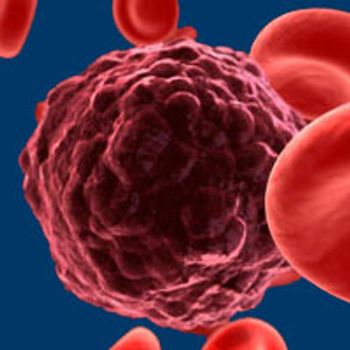
Venetoclax has received an FDA breakthrough therapy designation for use in combination with low dose cytarabine in treatment-naïve elderly patients with acute myeloid leukemia who are ineligible for intensive chemotherapy.
Rachid Baz, MD, discusses the change in risk factors for select treatments, the impact of daratumumab, and current sequencing questions in multiple myeloma.
While several biomarkers have been identified in patients with breast cancer, including ESR1 and PIK3CA mutations, not all of these are driver mutations that can be effectively targeted with treatment.
Julio Chavez, MD, discusses the current state of CLL and emerging regimens moving through the pipeline.

Experts are trying to determine whether combination regimens with additional HER2-directed therapies or alternative therapies could improve responses in HER2-positive breast cancer without added toxicities.
Reed Friend, MD, discusses the revised steps in diagnosing patients with multiple myeloma and prognostic factors, as well as existing challenges and hopes for the field’s future.
The European Commission has approved the use of fulvestrant (Faslodex) to treat estrogen receptor-positive, locally-advanced or metastatic breast cancer in postmenopausal women not previously treated with endocrine therapy.
Frontline osimertinib (Tagrisso) significantly improved progression-free survival versus standard of care in patients with locally-advanced or metastatic EGFR-positive non–small cell lung cancer.

Corey Langer, MD, discusses KEYNOTE-189, the current arena in NSCLC treatment, and the obstacles that remain in effectively treating patients with non-driver mutations.
Frontline durvalumab (Imfinzi) did not improve progression-free survival in patients with stage IV metastatic non–small cell lung cancer compared with standard platinum-based chemotherapy.
Checkpoint inhibitors against PD-1 and PD-L1 have shown promise, both as monotherapies and in combination with chemotherapy for patients with triple-negative breast cancer.
Elizabeth Plimack, MD, recaps recent advances in bladder cancer and discusses the need for diverse approaches to further improve patient outcomes.
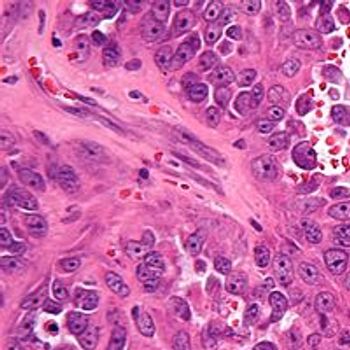
Long-term follow-up showed that trabectedin (Yondelis) was associated with high rates of survival and clinical benefit rate for patients with advanced high grade soft tissue sarcomas.
Andrea Apolo, MD, discusses a pooled analysis of the phase Ib Javelin Solid Tumor study, and a phase I study of cabozantinib, nivolumab, and ipilimumab.
Rami Komrokji, MD, shares his insight on the various types of MPNs, how these diseases can be diagnosed and managed, and the next steps needed to improve patient outcomes.
The Association of Community Cancer Centers (ACCC) and Advisory Board's Oncology Roundtable announced today their collaboration to launch a comprehensive survey that will capture the successes and challenges cancer programs across the country are facing in the current healthcare environment. Pfizer Oncology provides funding and support to ACCC for the "Trending Now in Cancer Care" survey.