

Laura J. van’t Veer, PhD, discusses determining more accurate methods of treatment for patients with early- and late-state breast cancer based on advances in genetic testing, specifically the 70-gene prognostic signature.

Your AI-Trained Oncology Knowledge Connection!
Laura J. van’t Veer, PhD, discusses determining more accurate methods of treatment for patients with early- and late-state breast cancer based on advances in genetic testing, specifically the 70-gene prognostic signature.

David G. Maloney, MD, PhD, discusses the progress made with CAR T cells, as well as the challenges that still exist in the use of this therapy.
The FDA has granted an accelerated approval to acalabrutinib as a treatment for adult patients with mantle cell lymphoma following at least 1 prior therapy.

Novartis has filed a supplemental biologics license application with the FDA to expand the indication for tisagenlecleucel (Kymriah) to include adults with relapsed/refractory DLBCL who are ineligible for ASCT.

Michelle E. Melisko, MD, discusses a variety of pivotal trials with adjuvant hormonal therapy and other developments in the treatment of patients with ER-positive breast cancer.
Elizabeth Plimack, MD, discusses the management of locally advanced urothelial carcinoma and the ongoing trials that are investigating treatments for this patient population.
Elizabeth A. Mittendorf, MD, PhD, discusses the evolving neoadjuvant treatment landscape and other developments in the field of HER2-postive breast cancer.

Merck has announced that it has withdrawn its European application for pembrolizumab in combination with pemetrexed and carboplatin as a first-line treatment for metastatic nonsquamous non-small cell lung cancer.
Kathryn A. Gold, MD, discusses HPV status and prognosis, as well recognizing risk factors of virally-associated head and neck squamous cell carcinoma.
Novartis has announced a planned $3.9-billion acquisition of Advanced Accelerator Applications, a radiopharmaceutical company that develops, produces, and commercializes Molecular Nuclear Medicines.

Gregory Daniels, MD, PhD, discusses the current treatment landscape of thyroid cancer and the development of immunotherapy for patients with this disease.
Howard "Skip" A. Burris, MD, discusses the ongoing research with PARP inhibitors and the advances in immunotherapy for patients with triple-negative breast cancer.
Jane N. Winter, MD, discusses immunotherapy in the treatment of patients with Hodgkin lymphoma.

Jayesh Mehta, MD, discusses combination therapies in multiple myeloma, as well as the continued importance of stem cell transplant.
Glembatumumab vedotin (CDX-011) induced a disease control rate of 61% in patients with metastatic uveal melanoma, despite a low a low objective response rate of 6%.
Jean Hoffman-Censits, MD, discusses ever-changing bladder cancer field, ongoing combination trials that are showing early promise, and the unmet need of patient selection for novel therapies.
Denise A. Yardley, MD, discusses the promise of CDK4/6 inhibitors in estrogen receptor–positive breast cancer, and the potential with immunotherapy agents.
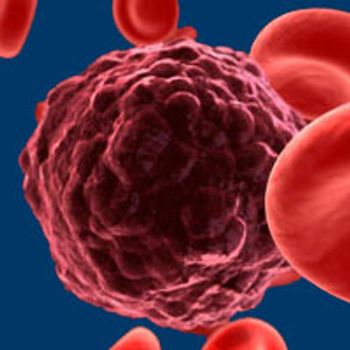
Alice Mims, MD, provides updates on the field of myeloproliferative neoplasms, with a focus on myelofibrosis.

The FDA has accepted a supplemental biologics license application for bevacizumab (Avastin) for the first-line treatment of advanced ovarian cancer.
Mark J. Truty, MD, discusses sequencing treatments and advances in imaging technology in pancreatic cancer.
Victoria M. Villaflor, MD, discusses driver mutations in NSCLC and remaining challenges in treating patients with targetable disease.

The FDA has approved intravenous rolapitant for use in combination with other antiemetic agents to treat delayed chemotherapy-induced nausea and vomiting in adults.
Ezra Cohen, MD, discusses the role of immunotherapy, the potential of entrectinib, and the importance of multidisciplinary teams for the treatment of patients with head and neck cancer.

Ten-year results from the TEAM trial on exemestane alone and sequential treatment with tamoxifen followed by exemestane for postmenopausal women with hormone receptor-positive breast cancer showed they were reasonable treatment options.
Treatment with prolonged native E. coli asparaginase therapy for children with acute lymphoblastic leukemia or non-Hodgkin lymphoma not only failed to improve survival versus the standard regimen, but also resulted in an increase in infections and allergy.
Andre Goy, MD, discusses the excitement surrounding novel therapies on the horizon in MCL.
Rachel A. Freedman, MD, discusses treating patients with HER2-positive breast cancer who develop CNS metastases, and the promise that neratinib holds in this patient population.
Alessandra Ferrajoli, MD, discusses the risks of developing secondary malignancies in patients with chronic lymphocytic leukemia.

The combination of clofarabine, cyclophosphamide, and etoposide reached an overall response rate of 41% in a small study of children and adolescents with relapsed/refractory acute myeloid leukemia.
Erika P. Hamilton, MD, discusses the current treatment landscape for patients with HER2-positive breast cancer.