

Lyudmila A. Bazhenova, MD, discusses considerations for treatment intensification in patients with EGFR-mutated NSCLC.
Lyudmila A. Bazhenova, MD, discusses considerations for treatment intensification in patients with EGFR-mutated NSCLC.

The European Commission has approved isatuximab plus VRd in transplant-eligible newly diagnosed multiple myeloma.

The CHMP has issued a positive opinion for the use of vorasidenib in IDH1/IDH2-mutant grade 2 glioma

Fewer than 1 in 5 U.S. adults aged 45-49 screened for colorectal cancer, despite guidelines
VS-7375 earned FDA fast track designation for KRAS G12D–mutant pancreatic ductal adenocarcinoma.

The combination of sonrotoclax and zanubrutinib produced deep and durable responses in relapsed/refractory mantle cell lymphoma.

The European Commission has approved cabozantinib for the treatment of patients with pancreatic and extrapancreatic neuroendocrine tumors.

Laura Huppert, MD, outlines additional information needed to implement the SERENA-6 approach in hormone receptor–positive breast cancer.

The CEO of Huntsman Cancer Institute is stepping down after holding the role since 2006.

The European Commission and Health Canada have approved belantamab mafodotin-based combinations for relapsed/refractory multiple myeloma.
The FDA has approved a generic version of ibrutinib tablets for B-cell malignancies.
Tabelecleucel earned FDA priority review for EBV-positive post-transplant lymphoproliferative disease following a January 2025 complete response letter.

The FDA has granted breakthrough therapy designation to elironrasib for KRAS G12C–mutated advanced NSCLC previously treated with chemotherapy and immunotherapy.

Shyam A. Patel, MD, PhD, and Jonathan M. Gerber, MD, discuss the use of IHC testing for earlier identification of TP53 mutations in MDS and AML.

R. Lor Randall, MD, FACS, discusses when to intervene prophylactically in patients with advanced cancer and skeletal metastases.

OncLive spoke with experts working to develop cellular therapies in solid tumors to gain insights into their current standing and future in the space.

The novel bispecific antibody TQB2930 plus chemotherapy elicited responses in heavily pretreated HER2-positive breast cancer.

Jue Wang, MD, discusses persistent gaps between clinical advances and real-world care and the evolving role of personalized treatment strategies in mCRPC.

More than 2 dozen Yale experts are collaborating on a therapy for the most defended tumors.

The European Commission has approved inavolisib plus palbociclib/fulvestrant in PIK3CA-mutant ER-positive, HER2-negative advanced breast cancer.

Subcutaneous daratumumab received EU approval for the treatment of patients with smoldering multiple myeloma at high risk of developing multiple myeloma.

Ibrutinib has received an expanded indication from the European Commission for the treatment of patients with newly diagnosed MCL eligible for transplant.

R. Lor Randall, MD, FACS, discusses global disparities in sarcoma care during Sarcoma Awareness Month.

Jyoti S. Mayadev, MD, discusses a ctDNA analysis from the CALLA study of chemoradiation with or without durvalumab in locally advanced cervical cancer.

Natural language processing models could help streamline processes within clinical settings.
Hetty E. Carraway, MD, MBA, highlights the evolving molecular classification of MDS and novel agents in the therapeutic arsenal.

The combination of talazoparib and tazemetostat was safe and led to PSA reductions in certain patients with metastatic castration-resistant prostate cancer.

Doctors join cancer center with expertise in surgical and medical oncology, pathology, dermatology, anesthesia.

The FDA granted fast track designation to DB-1310 for patients with pretreated, advanced non–small cell lung cancer harboring select EGFR mutations.
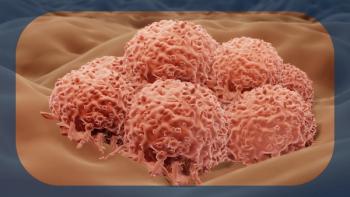
Among patients with advanced melanoma and the target HLA type—representing 80% of the study population—treatment with iSCIB1+ yielded an ORR of 69%.