
In case you missed any, below is a recap of every OncLive On Air episode that aired in May 2024.
In case you missed any, below is a recap of every OncLive On Air episode that aired in May 2024.
Thomas F. Gajewski, MD, PhD, discusses the mechanism through which the gut microbiome modulates myeloid cells to regulate responses to immunotherapy.
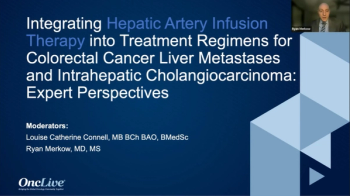
Ryan Merkow, MD, MS, and Louise Catherine Connell, MB BCh BAO, BMedSc, review cases of patients with colorectal cancer and provide insights on clinical practice.
Turning the focus of the conversation to clinical practice, experts on hepatic artery infusion therapy provide clinical insights on program development and evolution.
Drs Connell and Merkow discuss the current treatment landscape in intrahepatic cholangiocarcinoma and review recent clinical data in that space.
Louise Catherine Connell, MB BCh BAO, BMedSc, and Ryan Merkow, MD, MS, review clinical trial data on resected colorectal cancer liver metastases.
A surgical oncologist and gastrointestinal oncologist review data on hepatic artery infusion therapy in unresectable colorectal cancer liver metastases.
Two experts on gastrointestinal cancers give a broad overview of hepatic artery infusions.
Ryan Merkow, MD, MS, and Louise Catherine Connell, MB BCh BAO, BMedSc, discuss the current treatment landscape in colorectal cancer liver metastases, highlighting unmet needs in the treatment space.
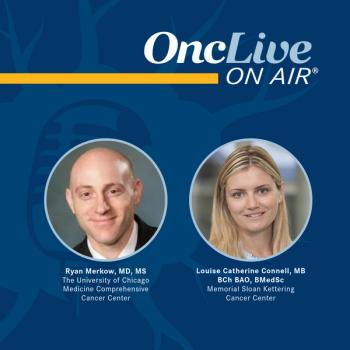
Drs Merkow and Connell discuss the use of HAI therapy for patients with colorectal cancer.
Akriti Jain, MD, discusses the phase 1b VERONA study of venetoclax plus azacitidine in higher-risk myelodysplastic syndromes.
Rita Nanda, MD, discusses the importance of testing for HER2-low status in patients with early-stage breast cancer.
Rita Nanda, MD, discusses the evolution of treatment with CDK4/6 inhibitors in patients with hormone receptor-positive/HER2-negative breast cancer.
Rita Nanda, MD, discusses the evolution of treatment options for patients with HER2-low breast cancer.

Daniel Olson, MD, discusses toxicities associated with lifileucel and IL-2 in patients with unresectable or metastatic melanoma.
Nan Chen, MD, discusses the investigation of CDK4/6 inhibitors in early-stage breast cancer.
Rita Nanda, MD, discusses the future of neoadjuvant treatment for patients with HER2-positive breast cancer.
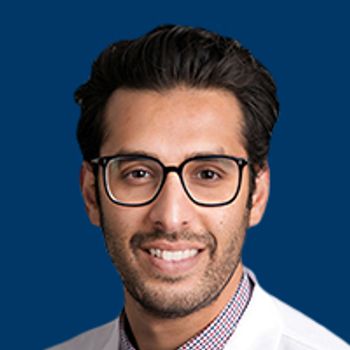
The University of Chicago Medicine treats patients with histotripsy, a technology that uses ultrasound energy to destroy liver tumors.

Sonali M. Smith, MD, discusses the value of mentorship in oncology practice on International Women’s Day.

Mecker G. Möller, MD, discusses the importance of addressing gender biases in oncology.

Press Release
A new center at the University of Chicago Medicine will tackle health inequities in cancer.
Daniel Olson, MD, discusses the FDA approval of lifileucel for patients with advanced melanoma whose disease has been previously treated.
Daniel Olson, MD, discusses the significance of the FDA approval of lifileucel for patients with advanced melanoma.

Drs Donington and Stiles discuss the implications of perioperative immunotherapy trials on early-stage lung cancer management, definitions of resectability, and the incorporation of new multidisciplinary management guidance.
The expert panel closes its discussion with advice for community physicians and discusses the future treatment landscape for advanced non–small cell lung cancer.
The panel discusses the use of antibody-drug conjugates for patients with EGFR-mutant non–small cell lung cancer, with a focus on the HERTHENA-Lung01 and TROPION-Lung05 studies.
A panel of experts on non–small cell lung cancer provide their thoughts MARIPOSA-2, which studied amivantamab and chemotherapy in EGFR-mutant NSCLC in the second line and beyond.
Joshua K. Sabari, MD, reviews data from the MARIPOSA-2 trial and discusses treatment options in the second line and beyond for patients with EGFR-mutant non–small cell lung cancer.
The panel reacts to the MARIPOSA trial, which looked at amivantamab and lazertinib in the front line in patients with EGFR-mutant non–small cell lung cancer.