
The expert panel has a comprehensive discussion about best practices for patient education and the barriers to effective testing.
The expert panel has a comprehensive discussion about best practices for patient education and the barriers to effective testing.
Medical oncologists review the complexities of molecular testing, including tissue exhaustion, and discuss management approaches.
Closing out their discussion on biomarker testing and targeted therapies in non–small cell lung cancer, the panel of expert oncologists share clinical pearls and thoughts on the evolving treatment landscape.
Julie R. Brahmer, MD, details emerging targets in non–small cell lung cancer and the outlook for the future of treatment.
Comprehensive insights on biomarker testing practices for patients with lung or gastrointestinal cancers.
A breast medical oncologist and nurse practitioner review molecular testing practices for patients with breast cancer.
The focus turns to therapeutic strategies for treating MET exon 14 non–small cell lung cancer.
Experts on non–small cell lung cancer share their approaches to treating patients who have RET fusions and review updates on selpercatinib and pralsetinib.
The expert panel discusses the history of antibody-drug conjugates and explores their mechanisms of action.
A panel of cancer-treating specialists introduce the discussion with a broad overview of antibody-drug conjugates (ADCs).
Julie R. Brahmer, MD, and Joshua K. Sabari, MD, review recent data on entrectinib and larotrectinib for the treatment of patients with NSCLC with NTRK fusions.
The expert panel discusses factors that influence treatment decisions when choosing appropriate therapy for patients with ALK-rearranged NSCLC.
Experts on non–small cell lung cancer discuss recent data on brigatinib and lorlatinib for the treatment of patients with ALK rearrangements.
Luis Raez, MD, offers insights on how co-mutations in STK11 or KEAP1 impact the use of immunotherapies in KRAS G12C–mutant non–small cell lung cancer.
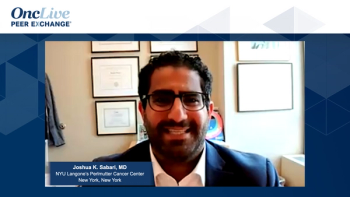
Joshua K. Sabari, MD, discusses adagrasib as a treatment of patients with NSCLC with KRAS G12C mutations, and provides insight on treating patients who have progressed on prior KRAS G12C inhibitors.
Expert panelists review the CodeBreaK trials focused on sotorasib in the treatment of patients with KRAS G12C-mutant non–small cell lung cancer.
Shared insight on the use of first-generation EGFR tyrosine kinase inhibitors and the role of immunotherapy in treating patients with NSCLC with uncommon EGFR mutations.
Julie R. Brahmer, MD, discusses treatment considerations when choosing between afatinib and osimertinib in patients with NSCLC with rare EGFR mutations.
Key opinion leaders on non–small cell lung cancer review treatment options for patients with EGFR mutations.
Experts on non–small cell lung cancer discuss strategies to improve molecular testing and opportunities for community physicians to reach out to expert oncologists for clinical insights.
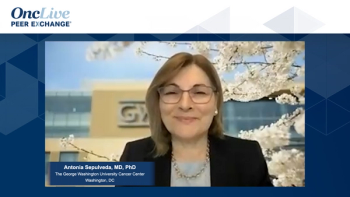
Antonia Sepulveda, MD, PhD, an expert on NSCLC, outlines discrepancies in molecular testing between academic and community settings.
Focused discussion on tissue testing and the effect of turnaround time on NSCLC treatment and molecular testing strategies.
Expert oncologists compare the logistics and sensitivities of liquid and tissue biopsies in the treatment of non–small cell lung cancer.
A panel of experts on the treatment of non–small cell lung cancer (NSCLC) discuss the role of biomarker testing and review testing strategies.
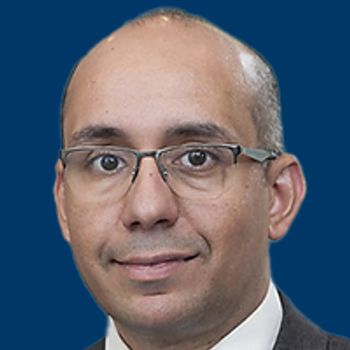
Yasser Mohamed Ali Ged, MBBS, highlights the early efficacy seen in patients with renal cell carcinoma with BAP1 mutations and next steps for the ORCHID trial.

Robert Albert Anders, MD, PhD, discusses the rationale for developing CCR4 antagonists for use in patients with advanced cancers, including lymphoma and non–small cell lung cancer.
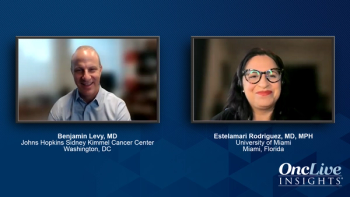
Closing out their discussion on uncommon EGFR mutations in non–small cell lung cancer, Benjamin Levy, MD, and Estelamari Rodriguez, MD, MPH, consider how the treatment paradigm will continue to evolve.
Benjamin Levy, MD, and Estelamari Rodriguez, MD, MPH, reflect on their experience managing real-world patients with uncommon EGFR mutations in non–small cell lung cancer.
Yasser Mohamed Ali Ged, MBBS, discusses the background of launching the phase 2 ORCHID trial evaluating olaparib monotherapy in patients with metastatic renal cell carcinoma harboring BAP1 or other DNA repair gene mutations.
Joseph Christopher Murray, MD, discusses the role of prognostic markers in non–small cell lung cancer and how data from the EMPOWER trials will guide future directions in the space.