Sidney Kimmel Comprehensive Cancer Center at Johns Hopkins | Strategic Alliance Partners
Latest from Sidney Kimmel Comprehensive Cancer Center at Johns Hopkins
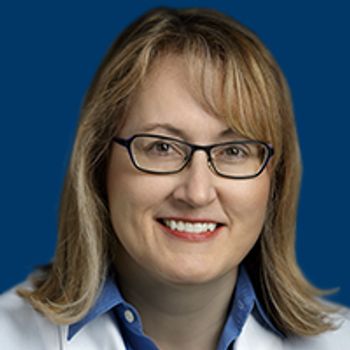
Julie R. Brahmer, MD, discusses advances made with immunotherapy in the lung cancer space, highlights challenges that still need to be addressed, and sheds light on ongoing research designed to determine treatment approaches beyond PD-1/PD-L1 and CTLA-4 inhibition
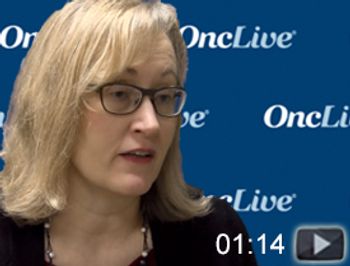
Julie R. Brahmer, MD, co-director of the Upper Aerodigestive Department in the Bloomberg-Kimmel Institute for Cancer Immunotherapy, Johns Hopkins Medicine, discusses the potential for immunotherapy beyond PD-1 and PD-L1 checkpoints in non–small cell lung cancer.

Amol K. Narang, MD, discusses recent advances made in the treatment of pancreatic cancer and explained how radiation oncology can be used to provide further clinical benefit to this patient population.
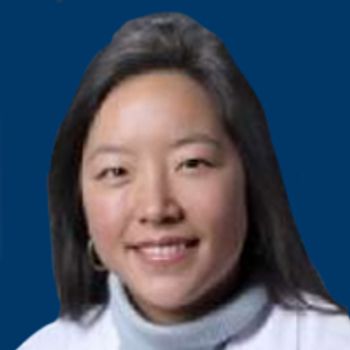
The new standard of care for the frontline treatment of patients with extensive-stage small cell lung cancer should be atezolizumab and chemotherapy, based on results from the IMpower133 trial.
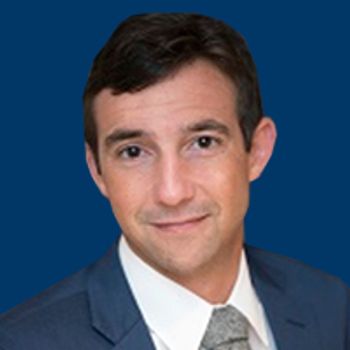
Matthew Ladra, MD, MPH, discusses the treatment of patients with esthesioneuroblastoma, emphasizing the need for collaboration in this rare malignancy.
Farah Succaria, MD, postdoctoral fellow, Johns Hopkins Medicine, discusses targetable immune checkpoints in head and neck squamous cell carcinoma.
Matthew Ladra, MD, director, Pediatric Radiation Oncology, Johns Hopkins Kimmel Cancer Center at Sibley Memorial Hospital, discusses the treatment of esthesioneuroblastoma in children.
Suzanne L. Topalian, MD, director, Melanoma Program, professor of Surgery and Oncology, Johns Hopkins Medicine, discusses the immunosuppressive microenvironment of nasopharyngeal cancer.
Evanthia Roussos Torres, MD, oncology fellow, Johns Hopkins University School of Medicine, discusses the importance of preclinical models in HER2-positive breast cancer.
Farah Succaria, MD, postdoctoral fellow, Johns Hopkins Medicine, discusses the potential for combination immunotherapy in the treatment of patients with head and neck cancer.
Evanthia Roussos Torres, MD, oncology fellow, Johns Hopkins University School of Medicine, discusses the promise of immunotherapy in the treatment of patients with HER2-positive breast cancer.
Amy Duffield, MD, PhD, assistant professor of pathology, Johns Hopkins University School of Medicine, member, Johns Hopkins Kimmel Cancer Center, discusses the implications for immunotherapy in nasopharyngeal carcinoma.
Suzanne L. Topalian, MD, director, Melanoma Program, professor of Surgery and Oncology, Johns Hopkins Medicine, discusses the treatment of patients with nasopharyngeal carcinoma.
Julie R. Brahmer, MD, associate professor of oncology, co-director of the Upper Aerodigestive Department, Bloomberg Kimmel Institute for Cancer Immunotherapy, Johns Hopkins Medicine, discusses second-line pembrolizumab (Keytruda) in non–small cell lung cancer.
Julie R. Brahmer, MD, discusses the 5-year findings of nivolumab in non-small cell lung cancer, their significance, and expected next steps for this research.

Anne Rositch, PhD, discusses important takeaways from her study on hysterectomy-corrected mortality rates in cervical cancer and the significance of cervical cancer screening.
Cynthia L. Sears, MD, professor of Medicine, Johns Hopkins University School of Medicine, member of the Bloomberg-Kimmel Institute for Cancer Immunotherapy, discusses bacteria possibly influencing the development of colon cancer.

Cynthia L. Sears, MD, professor of Medicine, at John Hopkins University School of Medicine, member of the Bloomberg-Kimmel Institute for Cancer Immunotherapy, discusses microbiota in patients with colon cancer.
Suzanne L. Topalian, MD, professor of Surgery, Johns Hopkins Medicine, discusses the role of the PD-L1 biomarker and other biomarkers on the horizon for the use in immunotherapy.
Mark Ball, MD, chief urology resident, Johns Hopkins University School of Medicine, discusses the eventual role that immunotherapy will play in the treatment landscape of renal cell carcinoma (RCC), as well as patient selection to receive immunotherapy as a single agent or in combination.
Jong Chul Park, MD, discusses the potential synergy of radium-223 and sipuleucel-T, which is being investigated in a clinical trial as a potential treatment for patients with metastatic castration-resistant prostate cancer.
Emmanuel Antonarakis, MBBCh, associate professor of Oncology, associate professor of Urology at Johns Hopkins Medicine, discusses the use of galeterone in prostate cancer.
With the rapid pace of change in precision medicine, insurance companies and federal policymakers are going to have to adjust for far more variance in the ways patients are treated, even though insurance plans and federal policy by nature require a measure of standardization.
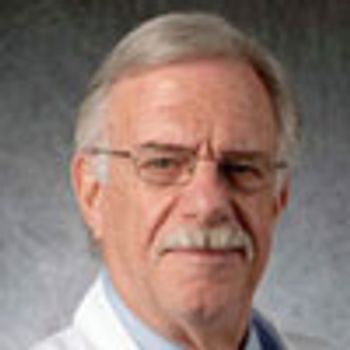
David S. Ettinger, MD, discusses recent advancements in NSCLC, specifically with immunotherapy, and explains challenges that have stemmed from these developments.

Tasquinimod, a drug that showed great promise in phase II trials, failed to improve overall survival in a phase III trial in men with treatment-naïve metastatic castration-resistant prostate cancer.

Ten-story building named for Albert P. "Skip" Viragh Jr. planned for the northeast corner of Fayette Street and North Broadway.

Patients who have HPV 16 DNA in their saliva following treatment of their oropharyngeal cancer are more likely to have their cancer recur, and a prospective cohort study has shown that a simple mouth rinse can be used to detect it.

With increased understanding of the biology of CRPC and the mechanisms of action of AR-targeting drugs, researchers are developing a growing appreciation for the extensive heterogeneity and complexity of both prostate cancer and androgen signaling.

In 1974, Patrick C. Walsh, MD, took charge of the Brady Urological Institute at Johns Hopkins University in Baltimore, Maryland, and spent the next few decades refining the radical prostatectomy into a safe, effective, and tolerable procedure, one that has not only extended countless lives but has also preserved quality of life.

Josh D. Lauring, MD, PhD, of Johns Hopkins Medicine, discusses efforts to develop breast cancer therapies by targeting the PI3K pathway.
