
Focused discussion on uncommon EGFR mutations in non–small cell lung cancer and concurrent treatment options in this setting.
Focused discussion on uncommon EGFR mutations in non–small cell lung cancer and concurrent treatment options in this setting.
Experts Benjamin Levy, MD, and Estelamari Rodriguez, MD, MPH, highlight current understandings of EGFR mutation classifications in the context of non–small cell lung cancer.
As antibody-drug conjugates become an established part of the lung cancer treatment paradigm, identifying which patients will benefit the most from treatment with these highly specific agents remains a challenge for clinicians.
Benjamin Philip Levy, MD, discusses the relationship between upfront next-generation sequencing and survival outcomes in non–small cell lung cancer.
Expert oncologists reflect on the current state of molecular testing in patients with non–small cell lung cancer and how it has impacted treatment pathways.

Vincent K. Lam, MD, discusses findings from a study profiling the tumor immune microenvironment in patients with ALK fusion–positive lung cancer and potential future directions for this research.
Gilteritinib led to a 48% reduction in disease recurrence for patients with FLT3-ITD–mutant acute myeloid leukemia and detectable minimal residual disease pre and post hematopoietic stem cell transplant compared with placebo, highlighting a role for treatment in this subgroup of patients.
Mark J. Levis, MD, PhD, discusses data from the phase 3 BMT CTN 1506/MORPHO trial of gilteritinib as maintenance therapy following allogeneic stem cell transplant in patients With FLT3-ITD–positive acute myeloid leukemia.
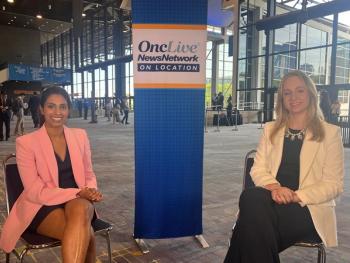
OncLive® will be LIVE with OncLive® News Network: On Location at the 2023 ASCO Annual Meeting. Each day, we will broadcast a series of interviews with top thought leaders, to learn their thoughts and reactions to data presented across oncology during the conference.
Radium-223 was safe and did not preclude patients with metastatic castration-resistant prostate cancer from receiving subsequent life-prolonging therapies, including chemotherapy.
Closing out their panel on immunotherapy in non–small cell lung cancer, expert oncologists share key takeaways on the selection of novel therapy in this setting.
A brief review of the POSEIDON trial, which analyzed durvalumab with or without tremelimumab in combination with chemotherapy in advanced NSCLC.
Key opinion leaders in the field of non–small cell lung cancer management discuss the role of immunotherapy in patients with concomitant KRAS and KEAP1/STK11 mutations.
A comprehensive discussion on combination chemotherapy + immunotherapy regimens available to patients with advanced non–small cell lung cancer.

Shared insight on the value that molecular testing and PD-L1 testing, respectively, have on determining optimal therapy for patients with advanced non–small cell lung cancer.
Switching their focus to advanced non–small cell lung cancer, panelists identify parameters that may influence the use of immune checkpoint inhibitors in this setting.
Tania Jain, MBBS, discusses notable differences in baseline characteristics and donor sequencing, according to a retrospective study of patient outcomes following blood or marrow transplant in 4 common donor types of myelofibrosis.
Expert oncologists reflect on key factors that aid in the selection of therapy for patients diagnosed with resectable non–small cell lung cancer (NSCLC).
Amanda Nickles Fader, MD, discusses the randomized, phase 3 NRG-GY019 trial evaluating letrozole with or without paclitaxel and carboplatin in patients with stage II to IV primary low-grade serous carcinoma of the ovary or peritoneum.
Meghan K. Berkenstock, MD, discusses common ocular toxicities associated with the use of novel antibody-drug conjugates, and the subsequent development of mitigation strategies for these treatment-related adverse effects in gynecologic cancers.
Meghan K. Berkenstock, MD, discusses the management of antibody-drug conjugate-related ocular toxicities in gynecologic cancers.
Julie Renee Brahmer, MD, discusses the use of tremelimumab plus durvalumab and platinum-based chemotherapy for the first-line treatment of patients with non–small cell lung cancer, and how decisions can be made between this regimen and nivolumab plus ipilimumab and chemotherapy.
Jean Wright, MD, discusses the benefit of moderate hypofractionation in patients for adjuvant radiotherapy in patients with early-stage breast cancer.
Michael A. Carducci, MD, discusses the significance of two ongoing clinical trials in prostate cancer: the phase 3 CAPItello-280 trial (NCT05348577) and phase 3 INDICATE study (EA8191; NCT04423211).
The combination of nivolumab and relatlimab demonstrated clinical benefit with a manageable safety profile in patients with advanced melanoma who have progressed on prior PD-L1 or PD-1 inhibitors, regardless of PD-L1 and LAG-3 expression, according to findings from the ongoing phase 1/2a RELATIVITY-020 trial.
Julie Renee Brahmer, MD, discusses clinical trials investigating treatment options for patients with non–small cell lung cancer following progression after first-line immunotherapy.
Tania Jain, MBBS, discusses the unmet needs for patients with myelofibrosis who receive an allogeneic stem cell transplant.
With acquired resistance patterns emerging for nearly every agent, hematologic experts are looking closely at sequencing patterns, but more work needs to be done in aggressive malignancies in which mutations associated with resistance may be present before therapy even begins.
Tania Jain, MBBS, discusses post-transplant cyclophosphamide-based transplantation from haploidentical donors in myelofibrosis.

Expert hematologic oncologists discuss updates from the ASH 2022 Annual Meeting on emerging therapies for lower-risk MDS.