

Emmanuel S. Antonarakis, MBBCh, discusses research examining AR-V7 as a biomarker for chemotherapy efficacy in advanced prostate cancer.
Emmanuel S. Antonarakis, MBBCh, discusses research examining AR-V7 as a biomarker for chemotherapy efficacy in advanced prostate cancer.

In an interview with OncLive, Suzanne L. Topalian, MD, director of the Melanoma Program at the Johns Hopkins Sidney Kimmel Comprehensive Cancer Center, discussed the rapid advance of nivolumab and potential next-steps.
Patrick C. Walsh, MD, university distinguished service professor of urology, Johns Hopkins School of Medicine, discusses radical prostatectomy operations in the traditional open and robotic-assisted form.
Julie R. Brahmer, MD, from Johns Hopkins University School of Medicine, Sidney Kimmel Comprehensive Cancer Center, discusses immunotherapy and how it can advance as a treatment option for patients with lung cancer.
Suzanne Topalian, MD, professor of surgery and oncology, John Hopkins Medicine, and director of the melanoma program, Sidney Kimmel Comprehensive Cancer Center, compares biomarker detection for anti- PD-1 therapies like nivolumab to anti-CTLA-4 therapies like ipilimumab for the treatment of melanoma.
OncLive® and the Sidney Kimmel Comprehensive Cancer Center of Johns Hopkins Medicine have become collaborators to raise awareness of leading innovations in cancer care through OncLive's Strategic Alliance Partnership program, OncLive announced.

Immune checkpoint inhibitors targeted against PD-1 and its ligand PD-L1 have rapidly advanced as treatments for patients with melanoma and non–small cell lung cancer (NSCLC), following their initial debut in 2012.

In a 14-0 vote, the FDA's ODAC unanimously recommended approval of EP2006, a biosimilar version of filgrastim. If the FDA follows the recommendation, the drug would become the first biosimilar approved in the United States.
In what was described as a very difficult decision, ODAC voted 5-2 against the accelerated approval of the HDAC inhibitor panobinostat in combination with bortezomib and dexamethasone as a treatment for patients with multiple myeloma who have received at least one prior therapy.
Emmanuel S. Antonarakis, MBBCh, assistant professor, Johns Hopkins Medicine, discusses AR-V7 and resistance to AR-targeting agents in men with metastatic castration-resistant prostate cancer (mCRPC).

Androgen receptor splice variant-7 (AR-V7) is a truncated form of the AR that does not have the ligand-binding domain. Detection of AR-V7 in circulating tumor cells (CTCs) can be used to predict resistance to AR-targeting agents, such as abiraterone or enzalutamide.

Revelations About Cancer Mutations Predate Technological Advances
Sipuleucel-T (Provenge) is effective when given either before or after androgen deprivation therapy (ADT) in men with biochemically recurrent prostate cancer (BRPC) who face a high risk of developing metastases, a study has found.
The anti-PD-L1 antibody MEDI4736 has early and durable activity in patients with non–small cell lung cancer (NSCLC) of both squamous and nonsquamous histology, with higher objective response rates occurring in PD-L1–positive patients, according to results of an ongoing phase I study.
It may be possible to predict which men with metastatic castration-resistant prostate cancer will not respond to enzalutamide by using a simple blood test to detect the presence of AR-V7 in circulating tumor cells.

To reduce the costs of cancer, community oncologists increase the use of evidence-based treatments, standardize care with pathways, transition away from fee-for-service, and change communication with patients about reasonable end-of-life care.

An interview with Barry D. Nelkin, PhD, from Johns Hopkins, on his research investigating a promising new target in a KRAS-related pathway, cyclin-dependent kinase 5.
Mark J. Levis, MD, PhD, Department of Oncology, Sidney Kimmel Comprehensive Cancer Center, Johns Hopkins University, discusses the ideal way to use quizartinib to treat a patient with an FLT3-ITD mutation in acute myeloid leukemia (AML).

Alterations in specific genes involved in the formation of tissues and organs during embryonic development could be responsible for survival disparities seen between African-American and non-Latino white men with head and neck cancer.

A new study has shown a possible correlation between men with short-ended chromosomes in the immune cells of their blood and an increased risk of developing aggressive prostate cancer, potentially pointing the way toward an accessible biomarker that could help inform treatment and surveillance decisions.

With seven targeted therapies approved for metastatic renal cell carcinoma, researchers and drug developers are now focusing on understanding the best way to sequence these therapies and on identifying predictive biomarkers of response.
Mark J. Levis, MD, PhD, Department of Oncology, Sidney Kimmel Comprehensive Cancer Center, Johns Hopkins University, discusses the difficulty of treating a patient with a FLT3-ITD mutation in acute myeloid leukemia (AML).

Stephen B. Baylin, MD, is conducting research in his laboratory at Johns Hopkins Medicine that aims to bring epigenetic therapy to the forefront of cancer management, in particular in gaining a better understanding of the abnormalities of chromatin and DNA methylation that may account for the development of epigenetic abnormalities during tumor development.

Julie R. Brahmer, MD, from Johns Hopkins University School of Medicine, Sidney Kimmel Comprehensive Cancer Center, discusses the management of adverse events (AEs) from treatment with immunotherapies.
Julie R. Brahmer, MD, from Johns Hopkins University School of Medicine, Sidney Kimmel Comprehensive Cancer Center, explains the role of PD-1 and PD-L1.
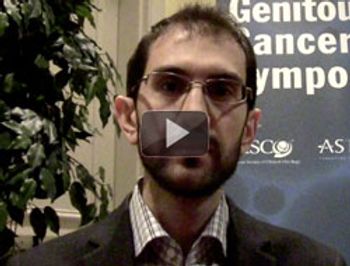
Emmanuel Stylianos Antonarakis, MBBCh, from the Johns Hopkins Sidney Kimmel Comprehensive Cancer Center, discusses a phase II trial evaluating the optimal sequence for sipuleucel-T and ADT in patients with biochemically recurrent prostate cancer.