

Eileen M. O’Reilly, MD, traveled a serendipitous journey from Ireland to the United States, where she has made her mark on transforming gastrointestinal cancer treatment.
Eileen M. O’Reilly, MD, traveled a serendipitous journey from Ireland to the United States, where she has made her mark on transforming gastrointestinal cancer treatment.

Komal Jhaveri, MD, FACP, discusses the rationale for investigating lasofoxifene alongside abemaciclib in ESR1-mutated estrogen receptor–positive, HER2-negative metastatic breast cancer.
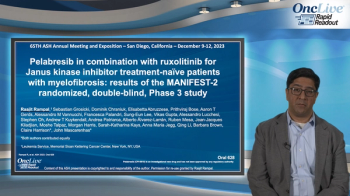
Raajit K. Rampal, MD, PhD, presents data from the MANIFEST-2 study investigating pelabresib in combination with ruxolitinib in Janus kinase inhibitor treatment–naïve patients with myelofibrosis.
Alexander Drilon, MD, highlights how the approval of repotrectinib addresses the need for improved therapies for patients who have progressed on a previous TKI and delves into notable neurologic toxicities seen with the agent.
Experts discuss what role allogeneic transplants play in hematologic malignancies, specifically in AML and ALL.
A panel of experts discuss the evolving landscape of newly diagnosed multiple myeloma.
Pelabresib plus ruxolitinib demonstrated a 35% or greater reduction in spleen volume and trended toward reducing mean absolute total symptom score (TSS) as well as improving TSS reduction by 50% at 24 weeks in patients with JAK inhibitor–naive myelofibrosis.
Roisin E. O'Cearbhaill, MD, discusses key findings from a phase 1/2 dose escalation study of ubamatamab plus cemiplimab in recurrent ovarian cancer.
Eytan M. Stein, MD, discusses the ongoing development and investigation of therapies targeting splicing mutations in hematologic malignancies.
Final outcomes from the phase 1b/2 Study 111/KEYNOTE-146 trial, evaluating treatment with lenvatinib and pembrolizumab in patients with advanced renal cell carcinoma, has sparked interest in the use of this combination.
The expert panel concludes the program with key takeaways and closing thoughts on the evolving antibody-drug conjugate space.
With multiple antibody drug conjugate options now available for patients with HER2-negative metastatic breast cancer, clinicians must consider a variety of factors when selecting and sequencing therapies.
Experts in breast, lung, and gastric malignancies provide insights on multidisciplinary care in oncology and educating community specialists.
Medical oncologists discuss prospects and challenges in the breast and lung cancer treatment landscapes.
Specialists in gastric cancer look to the future treatment landscape and review ongoing research in the disease space.
Clinical insights on best practices for treating patients with TROP2-targeted therapy.
Andrew Laccetti, MD, MS, discusses phase 1 findings from a phase 1/2 trial investigating masofaniten in combination with enzalutamide in patients with metastatic castration-resistant prostate cancer.
Komal Jhaveri, MD, FACP, discusses unmet needs for patients with breast cancer, as well as ways to address these needs through discussion and collaboration.

Shanu Modi, MD, discusses updated survival data from the phase 3 DESTINY-Breast04 trial evaluating fam-trastuzumab deruxtecan-nxki in patients with HER2-low metastatic breast cancer.
Howard I. Scher, MD, discusses the evolution of molecular testing mechanisms in patients with prostate cancer and highlights the importance of making patient-centered decisions based on test results.
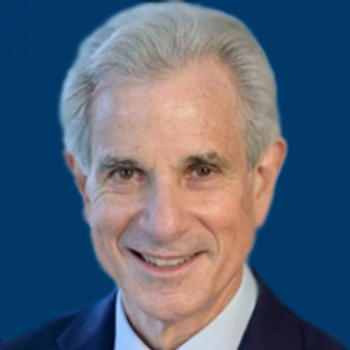
Howard I. Scher, MD, sheds light on various research programs he has led or has been heavily involved with that have helped change the course of prostate cancer treatment over the years.
Komal Jhaveri , MD, FACP, discusses the rationale behind the ongoing clinical development of elacestrant and other endocrine therapies in patients with estrogen receptor–positive metastatic breast cancer.
The combination of enfortumab vedotin-ejfv plus pembrolizumab represents a chemotherapy-free regimen that could alter the standard of care in the frontline treatment of all patients with metastatic urothelial carcinoma.
Research has continued to focus on developing novel therapies and bringing new treatments to the sarcoma treatment paradigm.
The expert panel discusses TROP2 as a target for patients with cancer who are receiving antibody-drug conjugates.
A review of antibody-drug conjugates approved for treatment of patients with breast, lung, or gastrointestinal cancers.
Kathryn C. Arbour, MD, discusses the unique mechanism of action of RMC-6236, the preliminary efficacy and safety findings for this agent in patients with KRAS-mutant NSCLC, and future directions for the RMC-6236-001 trial.
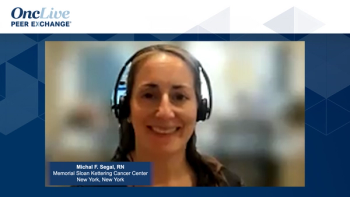
Insights on managing antibody-drug conjugate toxicities for patients with gastric cancer.
A GI medical oncologist discusses the role of trastuzumab deruxtecan in the gastric cancer treatment space.
Zenocutuzumab elicited clinical activity with a tolerable safety profile in patients with advanced non–small cell lung cancer harboring NRG1 fusions, including those with prior afatinib exposure, according to findings from the ongoing, phase 1/2 eNRGy trial.