

Selina M. Luger, MD, FRCPC; Gail J. Roboz, MD; and Wendy Stock, MD, discuss what motivated them to continue working toward improvements in the leukemia field, even when outcomes were dismal and treatment options were scarce.
Selina M. Luger, MD, FRCPC; Gail J. Roboz, MD; and Wendy Stock, MD, discuss what motivated them to continue working toward improvements in the leukemia field, even when outcomes were dismal and treatment options were scarce.
Selina M. Luger, MD, FRCPC; Gail J. Roboz, MD; and Wendy Stock, MD, discuss the challenges that accompanied the lack of progress in leukemia treatment when they began their fellowships and express their excitement about encouraging developments that have since emerged in the arena.
Maintenance rituximab following first-line bendamustine plus rituximab or a combination of rituximab plus cyclophosphamide, doxorubicin, vincristine, and prednisone prolonged first-line treatment benefits and improved survival outcomes vs either induction regimen alone.
Richard R. Furman, MD, discusses current treatment options in chronic lymphocytic leukemia.
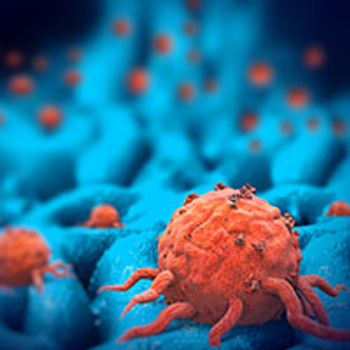
Widespread germline testing in the United States could prevent cancer in hundreds of thousands of people. However, despite known benefits, uptake for genetic testing has been slow: only 1 in 5 individuals use recommended genetic services even when there is a significant family history of colorectal, breast, or ovarian cancer.
Scott T. Tagawa, MD, MS, FACP, discusses the investigation of 225Ac-J591 and 177Lu-PSMA-I&T in metastatic castration-resistant prostate cancer in a phase 1/2 trial.
Olivier Elemento, PhD, discusses utilizing circulating tumor cells to assess treatment resistance in metastatic castration-resistant prostate cancer.
Melissa B. Davis, PhD, discusses the influence of racial constructs and genetic ancestry in triple negative breast cancer.
For Dawn Hershman, MD, MS, research and medicine are art forms that she uses to uplift and inspire every day.
Scott T. Tagawa, MD, MS, FACP, discusses the use of radium-223 in prostate cancer.
Nasser Khaled Altorki, MD, provides insight on the results of the IMpower010 trial as well as post hoc analyses from the trial and what they signal for the remainder of this patient population.
Dr. Tagawa discusses the incidence and identification of FGFR alterations in bladder cancer, the approval and use of erdafitinib in the second-line setting for patients with advanced bladder cancer, and research directions with the FGFR inhibitor in the field.
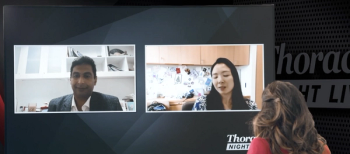
Isabel Preeshagul, DO, MBS; Catherine Ann Shu, MD; and Ashish Saxena, MD, PhD, discuss the latest findings in small cell lung cancer based on studies that were presented during the 2021 ESMO Congress, 2021 World Conference on Lung Cancer, and 2021 ASCO Annual Meeting.

Isabel Preeshagul, DO, MBS; Catherine Ann Shu, MD; and Ashish Saxena, MD, PhD, share insight on the data with novel targeted agents with impressive efficacy in patients with lung cancer, as seen at the 2021 ESMO Congress and the 2021 World Conference on Lung Cancer.
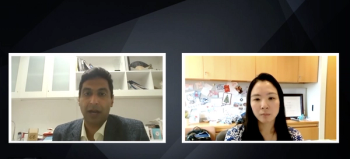
Isabel Preeshagul, DO, MBS; Catherine Ann Shu, MD; and Ashish Saxena, MD, PhD, highlight results with immunotherapy in the neoadjuvant and stage IV setting in lung cancer that were presented at the 2021 World Conference on Lung Cancer and the 2021 ESMO Congress.
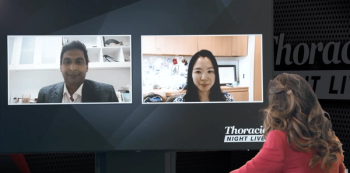
Isabel Preeshagul, DO, MBS; Catherine Ann Shu, MD; and Ashish Saxena, MD, PhD, discuss breakthroughs in adjuvant immunotherapy in lung cancer from data presented at the 2021 ESMO Congress and 2021 World Conference on Lung Cancer.
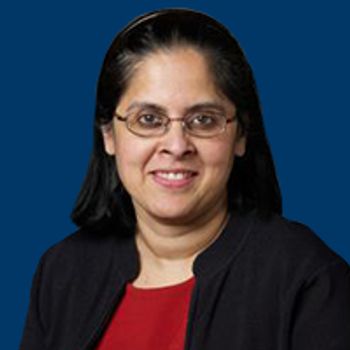
Prostate cancer is a highly hetero-geneous disease, with individual tumor cells having distinct genomic and pheno-typic characteristics, resulting in a great deal of variability in patients’ disease course.
Nasser Khaled Altorki, MD, discusses the results of post-hoc analyses of the phase 3 IMpower010 trial in non–small cell lung cancer.
Scott Tagawa, MD, MS, FACP, discuss the integration of targeted agents in prostate cancer.
Peter Martin, MD, discusses the importance of designing clinical trials for real-world utility in mantle cell lymphoma.
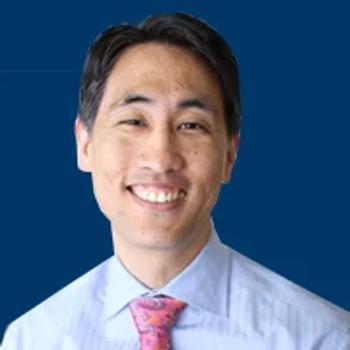
Sacituzumab govitecan-hziy, a Trop-2directed antibody-drug conjugate with an SN-38 payload, has carved out a role in the treatment landscape for patients with locally advanced or metastatic urothelial cancer following accelerated approval by the FDA.
Gail J. Roboz, MD, discusses the importance of utilizing genomic analysis to help guide treatment decisions in patients with acute myeloid leukemia.
Dr. Tagawa discusses the FDA approval of sacituzumab govitecan in urothelial cancer, key efficacy and safety data from the pivotal TROPHY-U-01 trial, and expectations for the confirmatory TROPiCS-04 trial.
Peter Martin, MD, discusses the role of maintenance therapy with rituximab in mantle cell lymphoma.
Scott T. Tagawa, MD, MS, FACP, discusses tumor targeting with radionuclides in prostate cancer.
John P. Leonard, MD, discusses the future of PI3K inhibitors in follicular lymphoma.
John P. Leonard, MD, discusses the potential for combination regimens with PI3K inhibitors in follicular lymphoma.
Peter Martin, MD, discusses the findings of a real-world analysis of clinical outcomes in mantle cell lymphoma.
Peter Martin, MD, discusses discrepancies in real-world patterns of care for patients with MCL and what can be done to overcome them.
Peter Martin, MD, discusses the rationale to evaluate real-world outcomes in mantle cell lymphoma.