Martine Piccart, MD, PhD, director of medicine at the Jules Bordet Institute in Brussels, Belgium, gives an overview of the IMPAKT conference.

Your AI-Trained Oncology Knowledge Connection!
Martine Piccart, MD, PhD, director of medicine at the Jules Bordet Institute in Brussels, Belgium, gives an overview of the IMPAKT conference.
The drug palbociclib (formerly known as PD-0332991) has received has received a "breakthrough therapy designation" from the FDA for the treatment of patients with breast cancer.

Laura Esserman, MD, MBA, Professor, University of California, San Francisco, comments on the findings from the I-SPY 1 trial and the basis for the I-SPY 2 trial in patients with breast cancer.
José Baselga, MD, PhD, explores the dual inhibition of cell-signaling pathways in breast cancer on several fronts, including new therapies for patients with the HER2-positive subtype and novel ways to target mTOR and the PI3K/Akt/mTOR pathway.
Patrick Borgen, MD, chair, Department of Surgery, director, Maimonides Breast Cancer Center, discusses the patents on BRCA1 and BRCA2.
Lisa A. Carey, MD, Professor of Medicine, University of North Carolina at Chapel Hill, discusses the use of everolimus in the metastatic and adjuvant settings of breast cancer.
George W. Sledge, Jr, MD, Chief, Division of Oncology, Professor of Medicine, Stanford University School of Medicine, discusses the lasting issues in the treatment of breast cancer.
Hyman B. Muss, MD, Professor of Medicine, Director of Geriatric Oncology, Division of Hematology and Oncology, Lineberger Comprehensive Cancer Center at the University of North Carolina at Chapel Hill School of Medicine, discusses the need for a team environment when treating an older patient.
Fabrice Andre, MD, PhD, Research Director, Head of INSERM Unit U981, Institut National des Sciences et de la Recherche Médicale, Associate Professor, Department of Medical Oncology, Institut Gustave Roussy, Villejuif, France, discusses upcoming research in metastatic breast cancer.
José Baselga, MD, PhD, Physician-in-Chief, Memorial Sloan-Kettering Cancer Center, discusses treatment with PIK3CA inhibitors in patients with breast cancer.
Emanuel F. Petricoin III, PhD, Co-Director, Center for Applied Proteomics & Molecular Medicine, Professor of Life Sciences, George Mason University, discusses tumor heterogeneity in patients with breast cancer.
Martine Piccart, MD, PhD, director of medicine at the Jules Bordet Institute in Brussels, Belgium, discusses the development of metagene prognostic signatures for patients with breast cancer.
Mark D. Pegram, MD, from the Stanford Cancer Institute, describes research into the antibody-drug conjugate T-DM1, following its FDA approval in February as a treatment for HER2-positive metastatic breast cancer.
J. Michael Dixon, MBChB, MD, Professor of Surgery, Consultant Surgeon, University of Edinburgh, Clinical Director of the Edinburgh Breast Unit, Western General Hospital, Edinburgh, Scotland, discusses the discrepancy in the rate of mastectomies.
George W. Sledge, Jr, MD, Chief, Division of Oncology, Professor of Medicine, Stanford University School of Medicine, discusses measuring mutations in human cancers quantitatively.
Abigail S. Caudle, MD, Assistant Professor, Department of Surgical Oncology, Division of Surgery, The University of Texas MD Anderson Cancer Center, describes the ACOSOG Z1071 study in breast cancer.
Patrick Borgen, MD, from the Maimonides Breast Cancer Center, details the factors that go into a patient's decision to undergo a mastectomy.
Gunter von Minckwitz, MD, PhD, Chairman, German Breast Group, Professor of Gynecology, University of Frankfurt, Germany, discusses pathologic complete response (pCR) and outcomes.
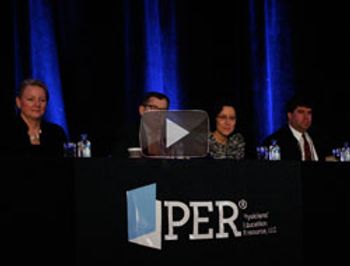
This year marks the 30th Annual Miami Breast Cancer Conference, a milestone for Daniel A. Osman, MD, and his wife Lois, who together launched the gathering in 1983 with fewer than 100 attendees and a focus on the then relatively new domain of lumpectomies in breast cancer treatment.
Hyman B. Muss, MD, Professor of Medicine, Director of Geriatric Oncology, Lineberger Comprehensive Cancer Center at the University of North Carolina at Chapel Hill School of Medicine, on the need for geriatric assessments.

The FDA approved the radioactive diagnostic imaging agent technetium Tc 99m tilmanocept (Lymphoseek Injection) to identify lymph nodes for potential removal in patients with breast cancer or melanoma.
Anees Chagpar, MD, MSc, MA, MPH, Associate Professor of Surgery (Oncology), Director, The Breast Center at Smilow Cancer Hospital at Yale-New Haven, discusses the need for repeat biopsy in patients with breast cancer.
Donna Shalala, PhD, President, University of Miami, discusses the new healthcare reform in the U.S.
Physicians wondering how the Affordable Care Act (ACA) will impact their practices heard a robust defense of the new law from Donna E. Shalala, PhD, on Saturday.
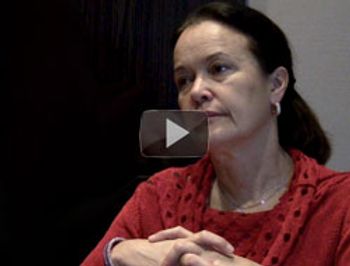
Martine Piccart, MD, PhD, discusses the implications of the HERA trial, which looked at two years compared with one year of trastuzumab after adjuvant chemotherapy in women with HER2-positive breast cancer.
As the genomic era in oncology unfolds, the development of new therapeutics increasingly will involve targeting a range of mutations simultaneously, requiring a "next-generation clinical trials system" to match the advances that technology is delivering.
Two large clinical trials are expected to define the impact that employing genomic tests in treatment decisions has on survival outcomes, according to Martine J. Piccart, MD, PhD.
Oncology leaders are bracing for a host of changes in the healthcare system, not only as a result of the recently upheld insurance reform legislation but also because of continued pressure to control the ever-rising cost of cancer care.
Lisa A. Carey, MD, Professor of Medicine, University of North Carolina at Chapel Hill, discusses the field of psycho-oncology.
Ron Bose, MD, PhD, from the Siteman Cancer Center, discusses the prevalence of HER2 gene mutations in patients diagnosed with breast cancer.