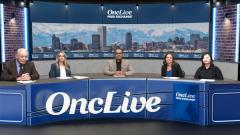
Video content above is prompted by the following:

- What are the key NCCN guidelines for risk-stratifying patients with HR+, HER2- early-stage breast cancer (eBC)?
- How closely does overall real-world practice follow these guidelines?
- Can you please describe your approach to diagnosing and stratifying HR+, HER2- breast cancer at an early stage?
- What clinical scenarios make risk stratification complex?
- How do you define “high risk” in this setting?
- What are your thoughts on the RSClin N+ tool (ASCO 2024)
- What biomarkers do you typically test for in HR+/HER2- eBC? (hormone receptor, progesterone receptor, HER2, others?)
- What testing methodologies are most used (next-generation sequencing, fluorescence in situ hybridization, immunohistochemistry, panels, etc)?
- How do they differ, and what can you learn from each?
- Do you ever check circulating tumor DNA?
- How do various testing results guide your treatment approach?
- Please briefly describe the predominant role of CDK4/6i in HR+/HER2- eBC.
- Given your experience and the positive trials in the metastatic setting, how comfortable are you with using CDK4/6i in eBC?
- Could you provide an overview of current treatment options for eBC?
- What are the limitations of current treatments?
- How are newer strategies like adjuvant CDK4/6 and PARP inhibitors changing the paradigm?
- What is the rationale for combining CDK4/6 inhibitors with endocrine therapy in eBC?