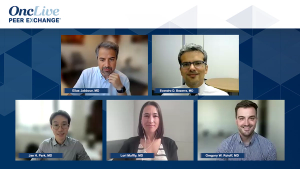
Experts from across oncology specialties discuss the long-term effects of the COVID-19 pandemic on patient care.

Gregory Roloff, MD, is a hematologist/oncologist at the University of Chicago Medicine in Illinois
Experts from across oncology specialties discuss the long-term effects of the COVID-19 pandemic on patient care.
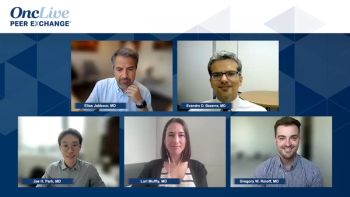
The key opinion leaders provide concluding insights and essential recommendations regarding the management of relapsed/refractory acute lymphoblastic leukemia.
Key opinion leaders address the availability of brexucabtagene autoleucel (brexu-cel) at their institutions and outline procedures for ensuring risk evaluation and mitigation strategy compliance and comprehensive training across multidisciplinary teams.
Acute lymphoblastic leukemia specialists explore resources and strategies to address the logistical hurdles of CAR-T therapy implementation, while also examining patient support programs designed to enhance treatment accessibility and adherence.
Experts in acute lymphoblastic leukemia examine the logistical challenges associated with CAR T-cell therapy delivery and assess the frequency of patient attrition due to manufacturing delays.
The panel explores laboratory parameters routinely monitored for CRS and ICANS, including monitoring frequency, and discusses prophylactic measures and safety management strategies employed to address these complications in CAR-T therapy.
Experts evaluate the frequency of severe cytokine release syndrome (CRS) and immune effector cell-associated neurotoxicity syndrome (ICANS) in CAR-T therapy, comparing their incidence to that observed with other immunotherapies such as bispecific antibodies.
The panel examines their strategies for consolidation or maintenance treatment following CAR T-cell therapy, while also considering whether CAR T-cell therapy can function as a standalone treatment modality.
Medical experts specializing in acute lymphoblastic leukemia explore emerging trends and potential future developments for CAR T-cell therapy in treating relapsed or refractory B-cell ALL.
The panel explores the potential impact of obecabtagene autoleucel on the treatment landscape and decision-making process for acute lymphoblastic leukemia, contingent upon its FDA approval.
A medical expert reviews the FELIX study, highlighting its key findings and characteristics while comparing and contrasting it with the ZUMA-3 trial in the context of CAR T-cell therapy for acute lymphoblastic leukemia.
The acute lymphoblastic leukemia experts analyze the sequencing of CAR T-cell therapy for patients with and without prior blinatumomab exposure, addressing potential concerns associated with using blinatumomab before CAR T-cell treatment.
Medical experts examine the importance of bridging therapies preceding CAR T-cell infusion, addressing their frequency of use and preferred therapeutic agents for this purpose.
The panel evaluates key patient characteristics and clinical factors influencing the decision to recommend CAR T-cell therapy as a treatment option in relapsed or refractory acute lymphoblastic leukemia.
A medical expert elaborates on the therapeutic role of brexucabtagene autoleucel in the management of relapsed or refractory B-cell acute lymphoblastic leukemia.
The panel examines the current positioning of CAR T-cell therapy within the treatment paradigm for Relapsed / Refractory Acute Lymphoblastic Leukemia, considering the distinctions between Philadelphia chromosome-positive and negative patients.
The panelists explore therapeutic strategies for adult patients diagnosed with relapsed or refractory B-cell acute lymphoblastic leukemia.
Medical experts outline the typical timeline for CAR T-cell therapy, encompassing the stages from initial cell collection through manufacturing to final patient infusion.
Key opinion leaders succinctly compare the dosing and lymphodepletion protocols for Brexucabtagene autoleucel, Tisagenlecleucel, and Obecabtagene autoleucel.
Dr. Lori Muffly explains the general mechanism of action in CAR T-cell therapy and compares the distinct features of Brexucabtagene autoleucel (Brexu-cel), Tisagenlecleucel (Tisa-cel), and Obecabtagene autoleucel (Obe-cel).
Evandro D. Bezerra, MD, provides an overview of current CAR T-cell therapies for relapsed/refractory B-cell acute lymphoblastic leukemia and explores emerging CAR T products under investigation.
Dr. Shah and faculty provide updates on emerging therapies, which exhibit promise for the treatment of relapsed or refractory acute lymphoblastic leukemia such as tisagenlecleucel and Obe-cel; obecabtagene autoleucel, preliminary outcomes of which were presented in the FELIX study at the 65th ASH Annual Meeting.
Dr. Shah and colleagues dissect the social determinants of health, including limited personal resources, frailty, distance to treatment facilities, therapeutic compliance, and other considerations that impact effective treatment sequencing for patients with relapsed or refractory ALL, including access to care and CAR-T cell availability.
Dr. Park and co-panelists review the patient and disease characteristics, including patient age, high pre-apheresis disease burden, and bridging response to inotuzumab or blinatumomab among other variables that might best support consideration of post-CART19 maintenance therapy.
Dr. Roloff and faculty assess outcomes from the retrospective, multicenter ROCCA analysis (Real-world Outcomes Collaborative of CAR-T in Adult ALL) and propose some social determinants of health SDoH variables that bear further investigation.
Dr. Roloff and colleagues offer expert opinion on optimizing treatment sequences for patients with relapsed or refractory ALL who have received two or more prior lines of therapy and the disease and patient factors that inform their treatment plans.
Panelists evaluate PFS, OS, and the prognostic significance of negative MRD.
Dr. Bijal and colleagues discuss the objectives, clinical outcomes, and safety profile of the Phase 2 ZUMA 3 clinical trial, which evaluated treatment of adult patients with relapsed or refractory, B-precursor, acute lymphoblastic leukemia with the anti-CD-19/anti-CD20 bispecific CAR-T cell therapy, KTE-X19 (brexucabtagene autoleucel).
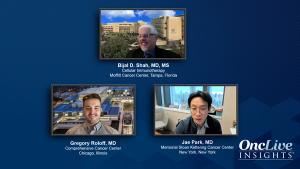
Drs. Roloff, Park, and Shah provide a brief overview of the current, CAR-T cell therapeutic landscape for relapsed or refractory acute lymphoblastic leukemia in adults with a particular focus on those who have completed two or more lines of prior therapy.
Faculty review the objectives of the 2023 ASH Insights Program on the Efficacy and Safety of Brexucabtagene Autoleucel CART19 Cell Therapy in Adults with Advanced Acute Lymphoblastic Leukemia.