

The European Medicines Agency’s Committee for Medicinal Products for Human Use has recommended approval for the use of trastuzumab deruxtecan monotherapy for adults with unresectable or metastatic HER2-low breast cancer.

Senior Editor, OncLive®
Jason Harris has worked in journalism for more than 20 years, including stints at daily newspapers and niche publications for oncology and cardiology. He is a senior editor for OncologyLive® and managing editor for Oncology Fellows and the annual Giants of Cancer Care® album. He also contributes to the OncLive On Air and OncFellows podcasts. Email: jharris@onclive.com
The European Medicines Agency’s Committee for Medicinal Products for Human Use has recommended approval for the use of trastuzumab deruxtecan monotherapy for adults with unresectable or metastatic HER2-low breast cancer.

The FDA has told AstraZeneca and MSD that the agency will extend the Prescription Drug User Fee Act date by 3 months to provide further time for a full review of the supplementary new drug application for olaparib plus abiraterone and prednisone or prednisolone for patients with mCRPC.
The FDA has issued an accelerated approval for the Agilent Resolution ctDx FIRST assay for plasma as a companion diagnostic for adagrasib.
Birtamimab demonstrated a significant survival benefit in patients with Mayo Stage IV amyloid light chain amyloidosis at month 9.

ASTRO has updated guidance for the use of radiation therapy and systemic therapy for patients who’ve undergone surgery for endometrial cancer. The guideline also considers the role of surgical staging and molecular profiling techniques in determining whether a patient should receive post-operative therapy.

Pembrolizumab induced treatment-related adverse effects that were generally mild or moderate in severity, according to finding from a pooled analysis of more than 4000 patients with melanoma, non–small cell lung cancer, or renal cell carcinoma.
Oncopeptides AB announced December 7, 2022, that the FDA has asked the company to withdraw melphalan flufenamide from the US market.

The Breast Cancer Index test reliably identified premenopausal women undergoing adjuvant endocrine therapy for early-stage, hormone receptor–positive breast cancer who would derive benefit from the addition of ovarian function suppression.
The European Medicines Agency has accepted a marketing authorization application for momelotinib as a treatment for patients with myelofibrosis.

Pharmaceutical manufacturer EQRx announced December 2, 2022, that the European Medicines Agency has accepted a marketing authorization application for the use of aumolertinib in EGFR-mutated non–small cell lung cancer and locally advanced or metastatic EGFR T790M mutation–positive NSCLC.

Fam-trastuzumab deruxtecan-nxki induced tumor reduction in more than 60% of patients with HER2-low gastric or gastroesophageal junction adenocarcinoma.
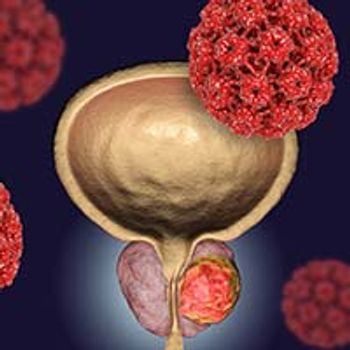
Six months of enzalutamide monotherapy in combination with salvage radiation therapy postponed prostate-specific antigen progression compared with SRT alone in men with PSA-recurrent, high-risk prostate cancer.

Afamitresgene autoleucel, a novel T-cell therapy, produced good clinical response lasting more than 4 years in patients with advanced synovial sarcoma or myxoid/round cell liposarcoma.

OncLive® and The Ruesch Center for the Cure of Gastrointestinal Cancers at Georgetown Lombardi Comprehensive Cancer Center, have recognized 4 gastrointestinal physician-scientists and a prominent patient advocate, naming them as 2022 Luminary Awards in GI Cancers.

The FDA has asked Clovis Oncology to limit use of rucaparib to second-line maintenance therapy for patients with recurrent ovarian cancer harboring BRCA mutations.

Autologous tumor lysate-loaded dendritic cell vaccination used in combination with standard-of-care treatment extended overall survival for patients with newly diagnosed glioblastoma as well as those with recurrent disease.

The United Kingdom’s National Institute for Health and Care Excellence has issued final guidance recommending the use of mobocertinib for patients with advanced non–small cell lung cancer harboring EGFR exon 20 insertion mutations who have already received platinum-based chemotherapy.

Osimertinib remains the preferred first-line therapy for patients with EGFR-mutated non–small cell lung cancer. However, for those with classic EGFR mutations, the day is fast approaching when physicians will add chemotherapy to first-line treatment with the EGFR TKI based on ctDNA results.

The National Institute for Health and Care Excellence has issued final guidance supporting use of neoadjuvant pembrolizumab in combination with chemotherapy, followed by adjuvant pembrolizumab, for adults with triple-negative breast cancer.

CA-125 levels increased as renal medullary carcinoma worsened and decreased with treatment response.

Fulvestrant plus palbociclib improved outcomes following an aromatase inhibitor plus palbociclib for patients with estrogen receptor–positive, HER2-negative advanced breast cancer with rising ESR1 mutation, according to updated findings from the phase 3 PADA-1 trial.

Lenvatinib plus pembrolizumab reduced the need for second-line therapy by 42.8% compared with sunitinib in patients with advanced renal cell carcinoma.
Ibrutinib induced a cumulative overall response rate of 90.0% in 3-year findings from the Belgian Ibrutinib Real‑World Data study of patients with previously untreated or relapsed/refractory chronic lymphocytic leukemia.

Lorlatinib improved progression-free survival and reduced 12-month cumulative incidence of central nervous system progression compared with crizotinib in patients with advanced ALK-positive non–small cell lung cancer irrespective of brain metastases at baseline.

Telisotuzumab vedotin in combination with erlotinib induced promising outcomes in patients with advanced, EGFR-mutated, c-MET-positive non–small cell lung cancer who were contraindicated for surgery or other approved therapies.
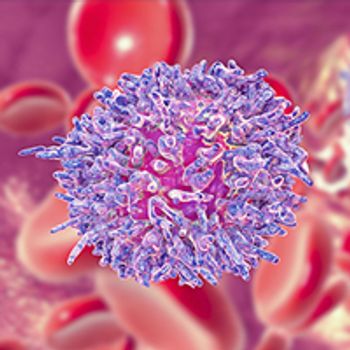
Ciltacabtagene autoleucel produced early, deep, and durable responses in patients with relapsed/refractory multiple myeloma treated at 8 sites in China.
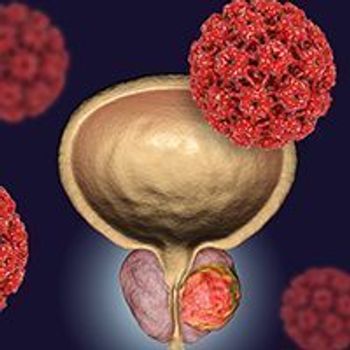
Highly elevated levels of antidrug antibodies against atezolizumab were associated with poorer clinical outcomes for patients who received atezolizumab plus bevacizumab for advanced hepatocellular carcinoma.

Treatment with adjuvant capecitabine following concurrent chemoradiotherapy resulted in superior failure-free survival compared with observation and CRT for patients with locally advanced nasopharyngeal carcinoma carrying at least 2 high risk factors.

Bevacizumab along with reirradiation extended progression-free survival compared with bevacizumab alone for patients with recurrent glioblastoma multiforme.

Chemoresection with mitomycin C, a nonsurgical treatment modality, significantly reduced the need for transurethral resection of bladder tumors or office biopsy and tumor fulguration following recurrence in patients with recurrent nonmuscle invasive bladder cancer.