
The FDA has granted a breakthrough therapy designation to pimicotinib for the treatment of patients with tenosynovial giant cell tumor who are not amenable for surgery.

Senior Editor, OncLive®
Jason Harris has worked in journalism for more than 20 years, including stints at daily newspapers and niche publications for oncology and cardiology. He is a senior editor for OncologyLive® and managing editor for Oncology Fellows and the annual Giants of Cancer Care® album. He also contributes to the OncLive On Air and OncFellows podcasts. Email: jharris@onclive.com
The FDA has granted a breakthrough therapy designation to pimicotinib for the treatment of patients with tenosynovial giant cell tumor who are not amenable for surgery.

Nanvuranlat, a first-in-class LAT1 inhibitor, induced a statistically significant improvement in progression-free survival compared with placebo in patients with advanced, pretreated refractory biliary tract cancer.

The United Kingdom’s National Institute for Health and Care Excellence has issued draft guidance supporting the use of axicabtagene ciloleucel for adults with diffuse large B-cell lymphoma and primary mediastinal large B-cell lymphoma following at least 2 previous lines of systemic therapy.

The FDA has granted a fast track designation to tamibarotene for the treatment of higher-risk myelodysplastic syndrome.
The risk for developing hepatocellular carcinoma appears to increase with subsequent generations for Americans of Mexican descent, according to findings from a study of US-born Hispanics/Latinos living in Los Angeles, California.

Fennec Pharmaceuticals announced an update to the National Comprehensive Cancer Network’s practice guidelines for Adolescent and Young Adult Oncology, calling for the use of sodium thiosulfate injection to reduce the risk for ototoxicity in pediatric patients receiving cisplatin.
The presence of anti-drug antibodies appeared to have no effect on efficacy or safety of durvalumab monotherapy or the STRIDE combination of durvalumab plus tremelimumab in patients with unresectable hepatocellular carcinoma.
Nivolumab in combination with chemotherapy or ipilimumab maintained a clinically meaningful overall survival benefit vs chemotherapy alone in patients with treatment-naïve advanced esophageal squamous cell carcinoma.

The Signatera molecular residual disease test was able to detect patients with stage II to IV colorectal cancer who were at an increased risk for recurrence and predict which patients were most likely to benefit from adjuvant chemotherapy.

Article
Patients who received MRI-guided stereotactic body radiotherapy for prostate cancer experienced fewer moderate acute physician-scored genitourinary and gastrointestinal adverse effects compared with those who received computed tomography–guided stereotactic body radiotherapy.

Neoadjuvant treatment with anti–PD-1 inhibitors induced high rates of complete response and reduced recurrence rates, according to a retrospective analysis of patients with localized mismatch repair-deficient or microsatellite instability–high colorectal cancer.

Results from a study of 318,549 Medicare beneficiaries with poor-prognosis cancers showed than Black and Hispanic patients were substantially less likely to receive any opioids or long-acting opioids than White patients at the end of life.

The European Commission has issued an orphan drug designation to duvelisib for the treatment of adult patients with peripheral T-cell lymphoma.

Erin K. Crane, MD, MPH, talked to Oncology Fellows about helping trainees care for their own health and wellness, navigate the politics surrounding gynecologic care, and the lessons she hopes they take away from the program.
The FDA has granted an orphan drug designation to LP-284, a novel small-molecule, next-generation acylfulvene, for the treatment of mantle cell lymphoma

Japan has approved durvalumab monotherapy and durvalumab plus tremelimumab for unresectable hepatocellular carcinoma, durvalumab plus tremelimumab and chemotherapy for unresectable, advanced, or recurrent non–small cell lung cancer, and durvalumab plus chemotherapy for curatively unresectable biliary tract cancer.
The FDA has approved FoundationOne Liquid CDx as a companion diagnostic for use with the selective TKI entrectinib. The assay identifies patients with ROS1-positive NSCLC or NTRK fusion–positive solid tumors who do not have a tissue sample available and who may be appropriate for entrectinib treatment.

The European Medicines Agency has validated an application for the use of trastuzumab deruxtecan for adults with previously treated unresectable or metastatic non–small cell lung cancer whose tumors have activating HER2 mutations.
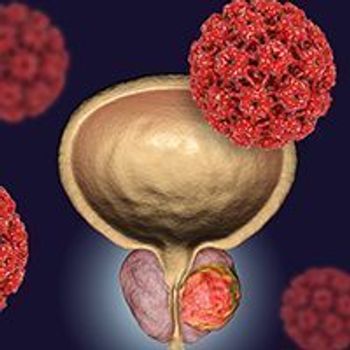
N-803, a novel IL-15 superagonist, in combination with intravesical Bacillus Calmette–Guérin induced an overall response in more than two-thirds of patients with non–muscle invasive bladder cancer.

The past decade has been a time of great progress in the research of Waldenström macroglobulinemia and the care of patients with the rare form of non-Hodgkin lymphoma.

Incidence of surgery refusal has increased by nearly 50% among Black and Hispanic women with potentially curable, nonmetastatic breast cancer over the past decade, according to findings from an analysis of Surveillance, Epidemiology, and End Results Program data.

INT230-6 demonstrated direct tumor killing in soft tissue sarcoma and elicits an anti-cancer immune response within the injected tumor both alone and in combination with ipilimumab.

Lori J. Pierce, MD harbored a love for science and a general desire to know things, and she was not shy about asking questions. She displayed a gift for math early in life, a trait she and her older sister, Karen, both inherited from their father, Melvin H. Pierce.
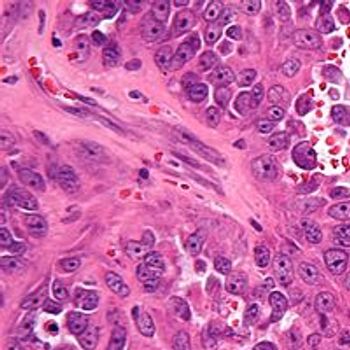
Moderately hypofractionated preoperative radiotherapy did not increase risk for major wound complication in patients with soft tissue sarcomas, according to findings from the single-arm, phase 2 trial HYPORT-STS.

Investigators may have discovered a key detail about renal medullary carcinoma that could have significant ramifications for patients.

Updated results from the phase 3 GIM 2 study confirm previous findings showing that fluorouracil should not be a part of adjuvant chemotherapy for patients with high-risk early breast cancer.
The FDA has granted a priority review to a supplemental biologics license applications for enfortumab vedotin and pembrolizumab used in combination for the treatment of patients with locally advanced or metastatic urothelial cancer who are not eligible to receive cisplatin-containing chemotherapy.
The United Kingdom’s National Institute for Health and Care Excellence has endorsed trastuzumab deruxtecan for use within the Cancer Drugs Fund for adult patients with HER2-positive, unresectable or metastatic breast cancer following at least 1 anti-HER2 treatment.
Glofitamab, an investigational CD20xCD3 T-cell engaging bispecific antibody, demonstrated promising results in patients with relapsed/refractory diffuse large B-cell lymphoma who received at least 2 prior lines of therapy.

The United Kingdom’s Medicines and Healthcare Products Regulatory Agency has accepted a marketing authorization application seeking approval for sugemalimab plus chemotherapy as first-line treatment for patients with metastatic non–small cell lung cancer.