
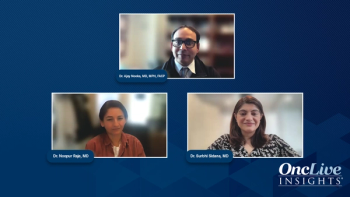
Surbhi Sidana, MD
Advertisement

Surbhi Sidana, MD, is an associate professor of medicine and associate director for Clinical Research in the Bone Marrow Transplantation and Cell Therapy Division at Stanford University in California.
Articles by Surbhi Sidana, MD
Early myeloma referral to academic centers helps patients access trials, avoid therapy pitfalls, and stay eligible for earlier CAR-T and bispecifics.
Experts weigh how to sequence myeloma therapies, highlighting where antibody-drug conjugates like belantamab fit when CAR-T or bispecific options aren’t feasible.
Explore how early-relapse multiple myeloma treatment shifts toward CAR T and bispecifics, weighing high-risk biology, kidney issues, logistics, and infection safety.
Surbhi Sidana, MD, discusses the FDA approval of BVd for relapsed or refractory multiple myeloma.
Surbhi Sidana, MD, discusses belantamab mafodotin-blmf with bortezomib and dexamethasone for adult patients with relapsed or refractory multiple myeloma.
Surbhi Sidana, MD, discusses the PFS and OS benefit of second-line cilta-cel in patients with relapsed/refractory multiple myeloma.
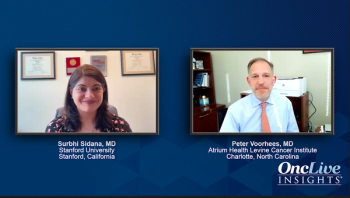
Experts share their closing thoughts and key take-home messages from the discussion, summarizing important insights and takeaways for enhancing patient care and treatment strategies.
Experts discuss strategies for managing and mitigating early vs late chimeric antigen receptor (CAR) T-cell therapy–related toxicities, offering advice to practitioners, and share additional clinical pearls on improving the overall CAR T process in academic and community settings.
Experts discuss how they manage chimeric antigen receptor (CAR) T-cell therapy follow-up care, highlighting the coordination between academic and community settings to ensure comprehensive monitoring and support for patients.
Experts discuss the challenges and barriers to early referral for chimeric antigen receptor (CAR) T-cell therapy, including logistical, financial, and patient-related factors that may impact timely access to treatment.
Experts discuss what they share with patients when counseling or introducing chimeric antigen receptor (CAR) T-cell therapy, focusing on the treatment process, potential benefits, risks, and expectations.
Experts discuss their optimal strategy for bridging therapy when preparing patients to receive chimeric antigen receptor (CAR) T-cell therapy. They focus on selecting therapies that maintain disease control while awaiting CAR T infusion.
Experts discuss when physicians should consider referring patients to chimeric antigen receptor (CAR) T-cell therapy for relapsed/refractory multiple myeloma (R/R MM). They emphasize the importance of early referral and access to CAR T in earlier lines of therapy while commenting on the similarities and differences in referral timing, particularly for patients treated in the community.
Experts discuss how they decide between utilizing cilta-cel vs ide-cel in multiple myeloma, considering factors like disease characteristics, patient factors, and product differences, while reviewing the final progression-free survival (PFS) analysis from the KarMMA-3 study with ide-cel and key takeaways from the ASH 2024 update on minimal residual disease (MRD) negativity rates from CARTITUDE-4 with cilta-cel and its impact on clinical practice.
Experts discuss their clinical approach to using chimeric antigen receptor (CAR) T-cell therapy in relapsed/refractory multiple myeloma (R/R MM), focusing on how they sequence CAR T with other treatment options like autologous hematopoietic stem cell transplantation (HSCT) and bispecific antibodies.
Experts discuss where chimeric antigen receptor (CAR) T-cell therapy currently fits in the treatment paradigm, highlighting the patient factors and disease characteristics that influence its use in clinical decision-making.
Surbhi Sidana, MD, discusses the unmet needs for patients with relapsed/refractory multiple myeloma who could be candidates for CAR T-cell therapy but have impaired renal function, and how clinical trials for these therapies have excluded this subset of patients.
Surbhi Sidana, MD, discusses the feasibility of administering idecabtagene vicleucel in patients with relapsed/refractory multiple myeloma with renal impairment.
Advertisement
Latest Updated Articles

Advertisement
Advertisement
Trending on OncLive
1
FDA Approves Denosumab Biosimilar for Skeletal-Related Events, GCTB, and Hypercalcemia of Malignancy
2
CNS Control and Daily Tolerability Guide Treatment Sequencing in HER2-Mutated NSCLC
3
Daraxonrasib Approval Signals a New Era for RAS-Targeted Therapy in Pancreatic Cancer
4
Tabelecleucel BLA Is Resubmitted to FDA for EBV+ Post-Transplant Lymphoproliferative Disease
5