


Breast Cancer
Latest News

Advertisement
Latest Videos






































































Advertisement
More News

Panelists discuss the results of the datopotamab deruxtecan (Dato-DXd) TROPION-Breast01 trial and its potential uses in clinical practice.
Panelists discuss the latest antibody-drug conjugate developments for HR+/HER2– metastatic breast cancer (mBC), including sacituzumab govitecan and trastuzumab deruxtecan.

The HyperVIEW X-ray system has received breakthrough device designation from the FDA for contrast-enhanced imaging for diagnosis of breast cancer.

Panelists discuss how sequential therapy selection for patients with HER2+ breast cancer with progressive brain metastases requires careful consideration of prior treatments, patterns of progression, symptom burden, and available clinical trials, while balancing the need for both systemic disease control and CNS -specific approaches.
Panelists discuss how the DESTINY-Breast12 trial evaluated trastuzumab deruxtecan (T-DXd) in patients with HER2+ metastatic breast cancer (mBC) with brain metastases, demonstrating encouraging intracranial responses and overall survival outcomes while maintaining a manageable safety profile consistent with previous T-DXd studies.

Amy M. Ahnert, MD, highlights newer shared risk factors for CVD and breast cancer and questions regarding personalized screening for the diseases.
Panelists discuss the use of alpelisib in light of the inavolisib approval and the impact of capivasertib (CAPItello-291 trial) on the treatment landscape and sequencing options for HR+/HER2– metastatic breast cancer (mBC).
Genotype-Directed Therapies for HR+/HER2– Advanced Breast Cancer
Published: | Updated:
Panelists discuss genotype-directed treatment options for advanced HR+/HER2– disease, including PI3K/AKT/mTOR inhibitors and antibody-drug conjugates (ADCs), their use based on recent data, impressions of these regimens, and how the recent first-line approval of inavolisib in combination with palbociclib and fulvestrant for PI3K-mutated HR+/HER2– metastatic breast cancer may change the treatment paradigm.
Amy M. Ahnert, MD, details the significance of findings on the link between CVD and breast cancer as well as next steps to further define the connection.

Panelists discuss how in this discussion the top 3 key points were patient-centric care, enhanced multidisciplinary coordination, and increased access and equity. In the next 3 to 5 years there will be more decentralized testing, potentially more practices participating in genomic profiling, the cost of testing will go down and the turnaround time will be shorter.
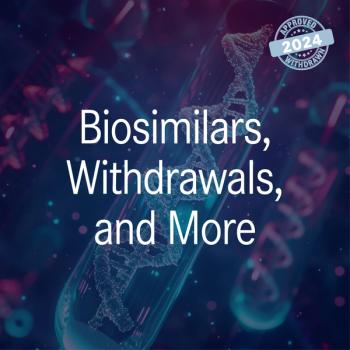
See this full list of regulatory decisions from 2024 regarding withdrawn agents, label updates, and new drug formulations.

Experts provide insights on the 2024 FDA approvals in several different fields including solid tumors and more in this list featuring the regulatory decisions.
Panelists discuss how treatment selection for patients with HER2+ breast cancer with brain metastases requires careful consideration of factors such as metastatic burden, symptomatology, and prior therapies, typically incorporating both local approaches and systemic agents with CNS activity while accounting for individual patient characteristics such as performance status, comorbidities, and preferences in developing personalized treatment plans.
Panelists discuss how patients with HER2+ breast cancer frequently develop brain metastases, with recent pivotal trials such as HER2CLIMB and DESTINY-Breast03 demonstrating improved intracranial responses with newer agents such as tucatinib, and how trastuzumab deruxtecan leads to evolving standards of care (SOC) that now incorporate these targeted therapies alongside traditional local therapies.

Julie Lang, MD, discusses real-world outcomes of the neoadjuvant KEYNOTE-522 regimen in patients with early-stage triple-negative breast cancer.
Panelists discuss how genotype-directed treatment options compare with fulvestrant, factors influencing the choice of therapy, and strategies for managing adverse events with this class of therapies.
Panelists discuss perceptions on the efficacy and safety data for proteolysis targeting chimeras (PROTACs) and the selective estrogen receptor modulator (SERM) lasofoxifene in the treatment of HR+/HER2– breast cancer.
Panelists discuss how decentralizing testing can address socioeconomic disparities by improving access to diagnostics for underserved populations. In-house testing reduces barriers like transportation challenges, lack of insurance, and limited availability of specialized tests, ensuring timely, equitable health care for all communities.
Panelists discuss how decentralizing biomarker testing improves access to targeted therapies and clinical trials for underserved populations by reducing geographic and systemic barriers, fostering equity in cutting-edge health care.

The top 5 videos of the week cover insights in lung cancer, multiple myeloma, breast cancer, and follicular lymphoma.

Encorafenib combination boosts survival in BRAF V600E+ mCRC, pertuzumab biosimilar BLA is under review for HER2+ breast cancer, and more from OncLive.

Kevin T. Nead, MD, MPhil, details findings on the association between prevalent CVD and breast cancer and next steps for investigating the connection.

Manish R. Patel, MD, and Gottfried E. Konecny, MD, detail findings from studies evaluating CLDN6-directed agents that showed signals of promising efficacy and tolerability.
Panelists discuss how trastuzumab deruxtecan’s (T-DXd's) key adverse events (AEs) include interstitial lung disease, neutropenia, and nausea/fatigue, emphasizing the importance of proactive monitoring, early intervention through coordinated multidisciplinary care, and comprehensive patient education with clear communication channels for reporting symptoms.
Advertisement
Advertisement
Trending on OncLive
1
FDA Approves Tucatinib Plus Trastuzumab/Pertuzumab as First-Line Maintenance in Advanced HER2+ Breast Cancer
2
VIR-5500 Receives FDA Fast Track Designation in mCRPC
3
Iberdomide Plus Daratumumab/Dexamethasone Yields Significant PFS Benefit in R/R Myeloma
4
FDA Approves Atezolizumab Plus Chemo for Stage III dMMR Colon Cancer
5